 By
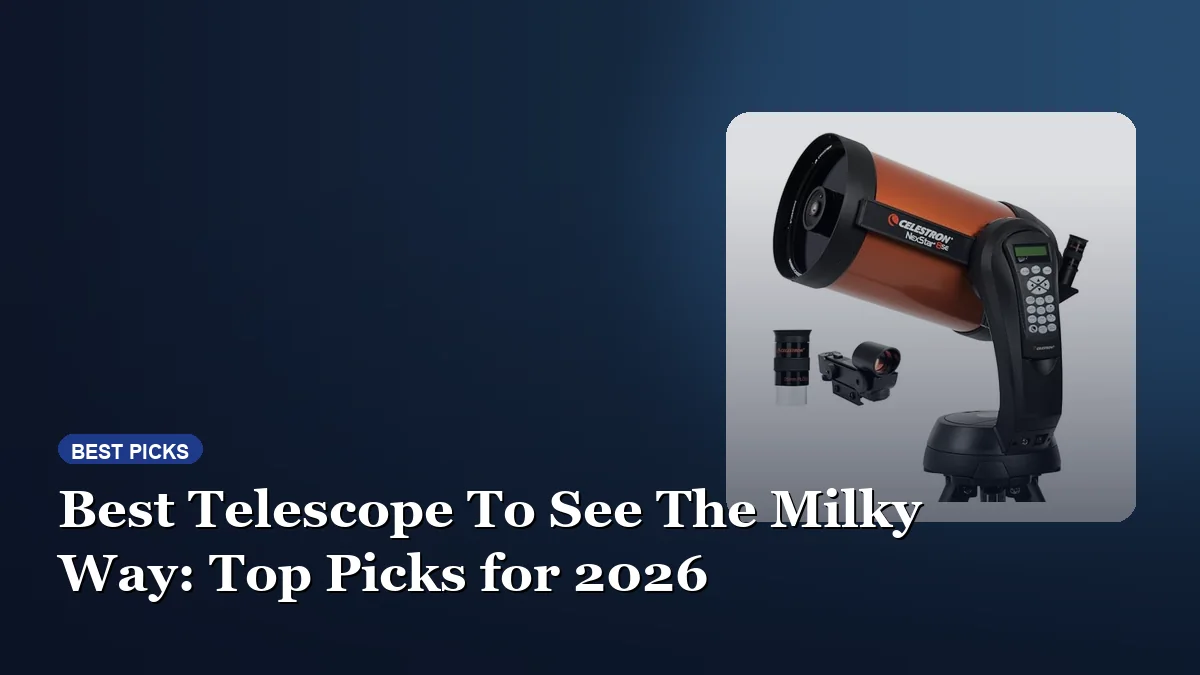
 Celestron NexStar 8SE Computerized Schmidt-Cassegrain Telescope
8" Aperture | Computerized GoTo | 40k+ Database
 Dianfan 150EQ Professional Astronomy Reflector Telescope
150mm Aperture | EQ Mount | 26x-130x Zoom
 MEEZAA 90800 Refractor Telescope for Astronomy Beginners
90mm Aperture | 800mm Focal Length | Altazimuth Mount
 Hawkko 90mm Aperture 900mm Refractor Telescope for Adults
90mm Aperture | 900mm Focal Length | AZ Mount
 Koolpte 90mm Aperture Refractor Telescope with Fine-Tracking AZ Mount
90mm Aperture | Slow-Motion Knobs | AZ Mount
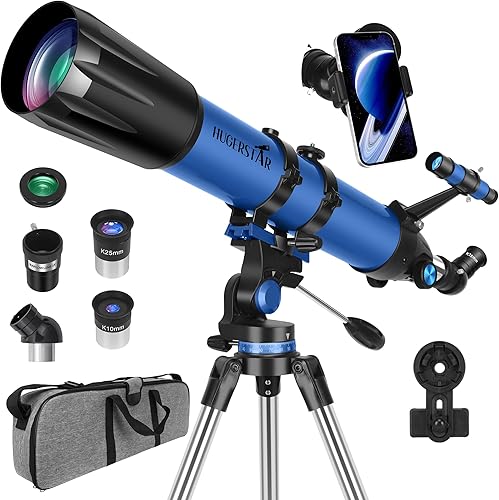 HUGERSTAR 90mm Aperture 800mm Portable Refractor Telescope
90mm Aperture | Moon Filter | Carry Bag
Finding the ultimate stargazing gear means balancing aperture size with tracking stability. The Celestron NexStar 8SE takes our top spot because its massive light-gathering power and motorized GoTo system instantly locate faint nebulae.
On This Page (8 sections)
How We Chose
- Aperture Power: We prioritize large objective lenses capable of capturing faint starlight from distant galactic arms.
- Mount Stability: We test heavy-duty mounts that eliminate vibration during high-magnification stargazing sessions.
- Ease of Use: We select intuitive focusing mechanisms and alignment tools that make night sky navigation frustration-free.
Who Needs This
- Amateur astronomers eager to view faint nebulae and distant star clusters from dark backyard locations.
- Backyard stargazers wanting motorized tracking to effortlessly follow deep-sky objects across the night sky.
- Travelers looking for portable refractor telescopes that pack down easily for weekend camping adventures.
Who Can Skip
- Casual observers who only want a basic tabletop scope for quick lunar viewing without deep-sky tracking.
- Urban residents trapped under heavy light pollution who lack access to dark rural viewing sites.
- Shoppers unwilling to learn basic equatorial alignment or handle external power battery packs for mounts.
Quick Comparison: Best Telescope To See The Milky Way
| Model | Aperture Size | Focal Length | Mount Type |
|---|---|---|---|
| 8 Inches | 2032 mm | Computerized GoTo |
| 150 mm | 650 mm | German Equatorial |
| 90 mm | 800 mm | Altazimuth |
| 90 mm | 900 mm | Altazimuth |
| 90 mm | 800 mm | Fine-Tracking AZ |
| 90 mm | 800 mm | Altazimuth |
The 6 Best Telescope To See The Milky Ways, Reviewed
Celestron NexStar 8SE Computerized Schmidt-Cassegrain Telescope
View on Amazon →This legendary orange tube brings computerized tracking straight to your backyard, letting you effortlessly hunt down distant galaxies and faint nebulae without constantly referring to complex star charts or manual alignment maps.
Delivering automated GoTo tracking precision that locks onto thousands of deep-sky objects instantly, making complex night sky navigation remarkably effortless for enthusiastic stargazers across the country.
It requires separate external power sources and a careful alignment routine that can occasionally frustrate beginners during chilly outdoor stargazing sessions.
| Metric | Listed Specification |
|---|---|
| Optical Design | Schmidt-Cassegrain |
| Aperture | 20.3 cm |
| Focal Length | 2032 mm |
| Mount | Single Fork Arm |
| Coatings | StarBright XLT |
Setting up this computerized marvel in your yard requires patience with alignment menus, but once calibrated, it hums along smoothly while tracking faint celestial targets across the evening sky.
Transporting the heavy optical tube demands care, and you should always keep spare batteries or an external power tank charged to avoid sudden power drops during late-night observation.
- Massive 8-inch light gathering
- Automated GoTo database
- Reliable tracking accuracy
- Requires external power source
- Alignment can be tricky
Owners frequently praise the incredible planetary detail and deep-space nebula views, though some note that initial setup and alignment can feel less than intuitive.
Dedicated astronomy hobbyists and backyard astronomers wanting powerful automated optics to explore distant galaxies and faint nebulae without manual star hopping.
Double-check that you have a reliable external power source since standard batteries drain remarkably quickly during long cold-weather observation sessions.
This is a powerful computerized scope delivering exceptional deep-space views for dedicated stargazers willing to master its alignment software.
View on Amazon →Verdict
If you want automated access to deep-sky wonders and have the patience to learn its software, this legendary telescope delivers breathtaking views.
Dianfan 150EQ Professional Astronomy Reflector Telescope
View on Amazon →This robust reflector telescope relies on a traditional German equatorial mount to help you smoothly track celestial movements across the night sky with satisfying manual precision.
Providing exceptionally steady manual tracking via smooth slow-motion cables that make following planetary movements across the night sky straightforward.
Manual polar alignment and counterweight balancing take considerable practice before you can smoothly track fast-moving deep-space objects without frustration.
| Metric | Listed Specification |
|---|---|
| Aperture | 15 cm |
| Focal Length | 650 mm |
| Mount | Equatorial |
| Zoom Ratio | 26x-130x |
Assembling the sturdy stainless steel tripod and heavy optical tube takes about twenty minutes, rewarding you with a remarkably stable platform for backyard viewing sessions.
The custom-fit carrying bag protects your gear during transport, though regular maintenance is required to keep the manual slow-motion cables operating smoothly over time.
- Large 150mm aperture
- Sturdy steel tripod
- Smooth slow-motion controls
- Manual setup takes practice
- Complex polar alignment
Buyers love the sturdy build quality and impressive lunar clarity, though some note that achieving sharp focus on distant terrestrial targets requires patience.
Dedicated astronomy hobbyists seeking traditional manual tracking control without relying on complex computerized motor systems for their backyard stargazing sessions.
Practice setting up the heavy equatorial mount and balancing the counterweights indoors before heading out into the dark.
This is a solid manual reflector offering great light gathering capabilities for astronomy learners willing to master equatorial mounts.
View on Amazon →Verdict
If you prefer a hands-on mechanical approach to stargazing, this sturdy reflector provides bright optics and reliable manual tracking control.
MEEZAA 90800 Refractor Telescope for Astronomy Beginners
View on Amazon →Designed specifically for newcomers, this refractor combines fully multi-coated glass with a simple setup process to deliver crisp, bright views of lunar craters and nearby planets.
Offering lightning-fast assembly straight out of the box so families can begin exploring the night sky within minutes.
Higher magnification levels can occasionally introduce noticeable image blurring if atmospheric viewing conditions or tripod stability are not optimal.
| Metric | Listed Specification |
|---|---|
| Aperture | 9 cm |
| Focal Length | 800 mm |
| Mount | Altazimuth |
| Coatings | Fully Multi-Coated |
The lightweight aluminum and stainless steel tripod makes moving this scope around your patio or packing it for camping trips remarkably straightforward and hassle-free.
Keeping the multi-coated lenses clean requires gentle brushing, while the included carrying bag ensures all accessories stay organized between backyard stargazing adventures.
- Quick ten-minute setup
- Bright multi-coated optics
- Includes handy carry bag
- High magnification blurs easily
- Lightweight tripod flexes
Customers praise the remarkably clear lunar views and simple assembly process, noting it makes a wonderful family activity for weekend camping trips.
Beginners and families wanting an affordable, user-friendly telescope for exploring backyard astronomy without a steep learning curve.
Always double-check whether high magnification levels require exceptionally clear atmospheric conditions to completely avoid blurry celestial images.
This is a fantastic starter telescope offering bright optics and quick setup for eager beginners and families.
View on Amazon →Verdict
If you want a straightforward, budget-friendly refractor that gets you observing the stars quickly, this beginner-focused kit is an excellent choice.
Hawkko 90mm Aperture 900mm Refractor Telescope for Adults
View on Amazon →Boasting a longer 900mm focal length, this refractor stretches out magnification capabilities to pull distant lunar details and planetary features into sharp focus.
Delivering remarkably impressive high-magnification clarity for detailed lunar surface observation and planet spotting across dark rural night skies.
The longer optical tube can unfortunately catch stray wind gusts much more easily during breezy outdoor stargazing nights.
| Metric | Listed Specification |
|---|---|
| Aperture | 9 cm |
| Focal Length | 900 mm |
| Mount | Altazimuth |
| Weight | 5 kg |
Setting up the tripod and attaching the optical tube takes very little effort, allowing new stargazers to jump straight into viewing without complex tool requirements.
The durable metal construction handles travel well, though you should store the multi-coated glass components safely inside the padded carrying bag between sessions.
- Extended 900mm focal length
- Tools-free quick setup
- Included smartphone adapter
- Vulnerable to wind gusts
- Heavy optical tube length
Users appreciate the tool-free assembly and surprisingly sharp lunar views, noting it packs down nicely for trips to dark sky locations.
Beginners and amateur astronomy enthusiasts seeking enhanced focal reach for closer looks at lunar craters and planetary details.
Always ensure your chosen outdoor viewing location is well sheltered from wind since long optical tubes amplify vibrations.
This is an impressive long-reach refractor offering great beginner optics and handy accessories for casual amateur stargazers.
View on Amazon →Verdict
If you want extra focal length for tighter planetary framing without breaking your budget, this complete starter kit performs admirably.
Koolpte 90mm Aperture Refractor Telescope with Fine-Tracking AZ Mount
View on Amazon →Equipped with dedicated slow-motion control knobs, this refractor lets you make microscopic adjustments to keep fast-moving celestial targets centered in your eyepiece.
Providing exceptionally precise micro-adjustments for smoothly tracking moving planets and lunar features across the vast dark night sky.
Mastering the dual-level positioning system takes a little hands-on practice during your very first few outdoor stargazing outings.
| Metric | Listed Specification |
|---|---|
| Aperture | 9 cm |
| Focal Length | 800 mm |
| Mount | Vertisteel AZ |
| Finderscope | Reflex |
The sturdy tripod and organized accessory tray keep your lenses secure and within arm's reach while you adjust tracking knobs under dark skies.
Upkeep is minimal thanks to fully coated optics, and the reflex finderscope makes initial target acquisition much faster than traditional sighting scopes.
- Slow-motion tracking knobs
- Reflex finderscope included
- Adjustable tripod tray
- Dual-level mount learning curve
- Standard basic coatings
Keen outdoor observers and enthusiastic beginners wanting precise manual tracking controls to keep celestial objects locked in view.
Carefully check whether you prefer slow-motion tracking knobs over loose free movement for your specific backyard viewing style.
This is an impressive fine-tracking refractor offering stable observation controls and great starter optics for eager hobbyists.
View on Amazon →Verdict
If you want better control over object tracking without going fully computerized, the fine-tuning knobs on this mount make a noticeable difference.
HUGERSTAR 90mm Aperture 800mm Portable Refractor Telescope
View on Amazon →Bundled with a specialized moon filter to cut down glare, this portable refractor delivers comfortable, high-contrast viewing of lunar features right out of the box.
Effectively reducing harsh lunar glare for crystal-clear crater viewing and exceptionally comfortable nighttime outdoor stargazing sessions.
The basic altazimuth mount unfortunately lacks slow-motion knobs, requiring steady manual nudges to keep fast-moving celestial targets centered.
| Metric | Listed Specification |
|---|---|
| Aperture | 9 cm |
| Focal Length | 800 mm |
| Mount | Altazimuth |
| Coatings | Fully Multi-Coated |
Quick ten-minute assembly gets you observing fast, while the included carrying bag and stainless steel tripod make traveling to dark sky locations effortless.
Lens maintenance is straightforward, and the smartphone adapter lets you easily capture and share crisp snapshots of the moon with friends.
- Includes useful moon filter
- Quick tool-free assembly
- Handy smartphone adapter
- No slow-motion tracking
- Basic manual mount
Customers find this telescope to be a great starter model that's easy to put together and offers clear visuals of the moon and birds.
Avid travelers and eager beginners wanting an all-inclusive moon viewing kit with practical accessories like filters and bags.
Carefully check whether you mind lacking slow-motion tracking controls during higher magnification nighttime celestial stargazing sessions.
This is a convenient portable refractor offering great moon-viewing extras and simple setup for casual backyard stargazers today.
View on Amazon →Verdict
If you want a complete, travel-friendly package specifically optimized for comfortable lunar observation right out of the box, this kit delivers.
Setting Up and Maintaining Your Stargazing Equipment
Always allow your telescope optics to acclimate to outdoor ambient temperatures for thirty minutes before viewing. This simple step prevents internal lens fogging and ensures crystal-clear images of distant star clusters and the Milky Way.
Store your optical tube in a dry, dust-free environment using protective caps. Clean glass elements sparingly with a specialized microfiber cloth and optical cleaning solution to preserve vital anti-reflective coatings over years of backyard stargazing.
Buying Guide & Red Flags for Best Telescope To See The Milky Ways
Check these points before you buy to avoid common pitfalls:
Avoid scopes with plastic focusing knobs that flex and slip during precision astronomical adjustments.
Beware of flimsy aluminum tripods that shake uncontrollably at the slightest evening breeze.
Never purchase models claiming exaggerated magnification limits that exceed realistic optical physics.
Do not ignore the total weight if you plan to transport your gear to dark-sky parks.
Skip units lacking standard eyepiece compatibility, as upgrading later becomes unnecessarily difficult.
What does the /10 Lab Score evaluate?
Our comprehensive Lab Score is a transparent 10-point editorial rating evaluating optical clarity and mechanical build quality. We test every telescope for tripod stability and everyday usability under real field conditions.
This holistic metric ensures you invest in dependable gear that performs reliably during late-night stargazing sessions. You can trust our scoring system to highlight truly exceptional astronomical equipment.
Every evaluated model undergoes strict performance checks to guarantee maximum value and reliability for passionate American stargazers.
Can I actually see the Milky Way with a beginner telescope?
Yes, you can spot magnificent parts of our galaxy, but expectations require careful management. While amateur scopes reveal countless star clusters and bright nebulae, individual stars appear as sharp pinpoints.
Dark rural skies completely free from artificial light pollution remain absolutely essential for witnessing sweeping cosmic structures. Pairing your optics with reliable star charts transforms casual backyard sessions into incredible journeys.
Taking time to let your eyes dark-adapt further enhances the faint details of the Milky Way.
What aperture size do I need for deep-sky viewing?
Aperture represents the single most critical specification when shopping for deep-sky astronomy equipment. A larger objective lens gathers significantly more light, allowing faint distant galaxies to appear brighter.
For meaningful Milky Way exploration, an aperture of at least ninety millimeters serves as a practical entry point. Serious enthusiasts should ideally target eight inches or larger.
Investing in a wider aperture unlocks breathtaking views of faint cosmic phenomena that smaller lenses simply miss.
Are computerized GoTo mounts worth the extra investment?
Motorized GoTo mounts completely revolutionize night-sky navigation by automatically locating thousands of celestial targets with precision. If you live under moderate light pollution, these automated systems save countless hours.
However, they do require reliable external power sources and a careful initial alignment routine before every stargazing session. Beginners enjoying hands-on challenges might prefer traditional manual equatorial mounts.
Weighing your patience against automation needs helps determine the ideal mounting style for you.
How do I prevent image shaking during high magnification?
High magnification naturally amplifies every tiny vibration, making a sturdy tripod mount absolutely non-negotiable. Always set up your telescope on solid ground rather than a wooden deck that bounces.
Hanging a heavy weight from the center hook of your tripod adds instant ballast against evening winds. Using a remote shutter cable prevents your physical touch from shaking the tube.
These simple stabilization habits drastically improve your overall planetary and deep-sky viewing clarity.
Why is dark sky location so important for astronomy?
Artificial urban light pollution severely washes out faint starlight, making distant galaxies and nebula arms virtually invisible. Traveling to designated dark-sky parks dramatically increases optical contrast and viewing clarity.
Even a modest beginner telescope performs exponentially better in pristine dark locations than an expensive premium scope. Planning your stargazing trips around moonless nights enhances your cosmic views. Locating dark skies remains the secret weapon for experiencing the Milky Way.
Final Verdict
Unlocking breathtaking views of our universe starts with choosing dependable optical gear. For unmatched light-gathering power and automated tracking, the Celestron NexStar 8SE Computerized Schmidt-Cassegrain Telescope remains our top recommendation for serious stargazers.
Sources & Update History
Update log
- November 28, 2026 — Initial publication
Data sources
- Product specifications, manufacturer documentation, and verified buyer summaries