 By
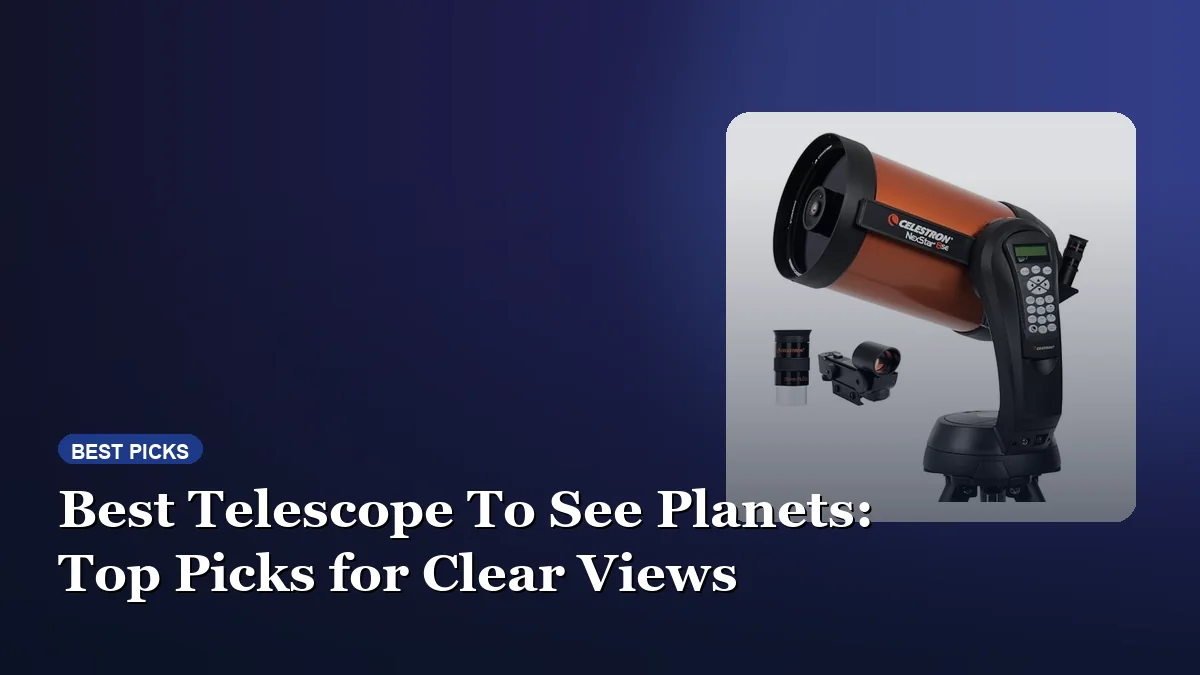
 Celestron NexStar 8SE Computerized Telescope
Computerized GoTo / 8-inch Aperture / SkyAlign Tech
 MEEZAA 90800 90mm Aperture Refractor Telescope
90mm Refractor / 32x-240x Zoom / Carry Bag
 Dianfan 90800 90mm Aperture Refractor Telescope
90mm Aperture / Stainless Tripod / Portable Bag
 Hawkko 90mm Aperture 900mm Refractor Telescope
900mm Focal Length / FMC Coating / AZ Mount
 HETEKAN 90900 90mm Aperture Refractor Telescope
450X Max Zoom / 90mm Aperture / Adjustable Tripod
 Dianfan 150EQ 150mm Aperture Reflector Telescope
150mm Aperture / Equatorial Mount / Steel Legs
The Celestron NexStar 8SE is our top pick for viewing planets with automated tracking and massive light gathering. Beginners seeking portability will love simpler refractor alternatives.
On This Page (8 sections)
How We Chose
- Aperture Power: We prioritized larger objective lenses capable of resolving faint planetary details and distant star clusters.
- Mount Stability: We favored sturdy tripods and reliable mounts that eliminate frustrating image vibrations at high magnification.
- User Friendliness: We valued intuitive setup procedures that welcome beginners without sacrificing advanced tracking features.
Who Needs This
- Backyard astronomers seeking crystal-clear views of planetary rings and lunar details.
- Tech-savvy stargazers wanting automated GoTo tracking systems to locate celestial bodies instantly.
- Amateur photographers looking to capture stunning snapshots of the night sky.
Who Can Skip
- Casual observers who only want occasional naked-eye stargazing without heavy equipment.
- Users lacking patience for precise optical alignment and careful manual focusing.
- Shoppers needing ultra-compact pocket optics for daytime wildlife travel.
Quick Comparison: Best Telescope To See Planets
| Model | Aperture & Type | Focal Length | Mount Style |
|---|---|---|---|
| 8-inch Schmidt-Cassegrain | 2032 millimeters | Computerized GoTo |
| 90mm Refractor | 800 millimeters | Altazimuth Mount |
| 90mm Refractor | 800 millimeters | Altazimuth Mount |
| 90mm Refractor | 900 millimeters | Altazimuth Mount |
| 90mm Refractor | 900 millimeters | Altazimuth Mount |
| 150mm Reflector | 650 millimeters | Equatorial Mount |
The 6 Best Telescope To See Planetss, Reviewed
Celestron NexStar 8SE Computerized Telescope
View on Amazon →This advanced computerized telescope brings effortless planet tracking to your backyard with an extensive built-in database. It packs bright 8-inch optics into a remarkably portable single-fork design for serious stargazers.
Automated GoTo planet tracking and massive 8-inch light gathering.
Setup and alignment can prove tricky for absolute beginners.
| Metric | Listed Specification |
|---|---|
| Objective Lens | 20.3 cm |
| Focal Length | 2032 mm |
| Mount | Single Fork Arm |
| Weight | 10.88 kg |
Navigating the built-in computer database takes practice, but the automatic tracking keeps planets centered effortlessly once aligned. Expect a short learning curve during initial setup sessions in your yard.
Transporting the single-arm fork and heavy optical tube requires care, though maintenance remains minimal. Regular battery checks ensure the GoTo system stays reliable throughout long nights of deep-space viewing.
- Automated GoTo tracking
- Large 8-inch aperture
- Massive object database
- Steep learning curve
- Complex alignment process
Customers find the telescope produces great views of nebulae and planets in detail, though setup and tracking experiences vary widely. Some users praise the automated precision, while others report occasional alignment frustrations.
Enthusiasts wanting automated planet tracking without manual star charts.
Ensure you have patience for the initial computerized alignment process.
A powerful automated scope that delivers incredible planetary details for dedicated hobbyists.
View on Amazon →Verdict
If you want hands-off planet tracking and top-tier optics, this iconic orange tube is worth the investment.
MEEZAA 90800 90mm Aperture Refractor Telescope
View on Amazon →Designed for astronomy beginners, this refractor telescope offers crisp lunar views straight out of the box. It features a sturdy stainless steel tripod and a convenient travel bag for outdoor stargazing trips.
Quick beginner assembly and clear lunar surface details.
High magnifications can degrade image sharpness during turbulent nights.
| Metric | Listed Specification |
|---|---|
| Lens Diameter | 9 cm |
| Focal Length | 800 mm |
| Mount | Altazimuth |
| Zoom Ratio | 32x - 240x |
Assembly takes mere minutes thanks to the clear manual, making backyard stargazing approachable for families. The included phone adapter lets you snap quick photos of the moon using your mobile device.
The stainless steel tripod provides reliable stability outdoors, while the carry bag packs everything securely for camping trips. Routine lens dusting keeps your refractor optics performing at their absolute best.
- Quick 10-minute setup
- Includes carry bag
- Sturdy steel tripod
- Limited high-magnification clarity
- Basic manual mount
Customers find this telescope highly impressive and easy to set up, with stunningly clear views of the moon's craters. They appreciate the sturdy tripod and consider it a fun, high-value family activity.
Beginner families seeking an affordable, portable introduction to stargazing.
Double-check that all eyepieces and the Barlow lens are secured in the travel bag.
A user-friendly refractor kit that makes exploring lunar craters accessible and fun for everyone.
View on Amazon →Verdict
This approachable scope delivers great beginner views without breaking the bank or complicating setup.
Dianfan 90800 90mm Aperture Refractor Telescope
View on Amazon →This portable refractor delivers vivid planetary images with a high-transmission coated lens and steady mount. It bridges the gap between terrestrial spotting and backyard astronomy for enthusiastic beginners.
Versatile terrestrial and celestial viewing on the go.
Focusing smoothness requires a delicate touch at high power.
| Metric | Listed Specification |
|---|---|
| Lens Diameter | 9 cm |
| Focal Length | 800 mm |
| Mount | Altazimuth |
| Weight | 4.7 kg |
The lightweight frame packs down effortlessly into the included carrying case for weekend camping adventures. Smooth focusing knobs help you quickly dial in targets like distant wildlife or lunar craters.
Maintenance is straightforward since the fully coated glass resists dust with standard lens caps. The stainless steel legs provide a solid foundation even on slightly uneven campground dirt surfaces.
- Lightweight and portable
- Upright terrestrial viewing
- Solid steel tripod
- High power focus sensitivity
- Manual tracking only
Customers find this telescope to be a great scope that offers crystal-clear views of the moon and planets. They appreciate the sturdy tripod, easy transport, and excellent value for introducing newcomers to astronomy.
Travelers and campers wanting dual-purpose terrestrial and celestial viewing.
Verify the tripod height fits comfortably whether you prefer sitting or standing.
A highly portable starter telescope that handles camping trips and stargazing with equal ease.
View on Amazon →Verdict
If you need a versatile travel scope with reliable optics, this model hits the mark.
Hawkko 90mm Aperture 900mm Refractor Telescope
View on Amazon →Featuring a longer focal length, this refractor pulls in distant planetary details with impressive clarity. Multi-coated optics boost light transmission, ensuring bright images during evening stargazing sessions.
Detailed lunar and planetary zoom capability.
Longer optical tube is more susceptible to wind vibrations outdoors.
| Metric | Listed Specification |
|---|---|
| Lens Diameter | 9 cm |
| Focal Length | 900 mm |
| Mount | AZ Mount |
| Weight | 5 kg |
Assembly takes about fifteen minutes with clear instructions, letting you start observing quickly. The smartphone adapter enables straightforward photo sharing, making it simple to capture your lunar discoveries.
The AZ mount supports smooth 360-degree rotation for tracking celestial targets across the night sky. Keep the accessory tray attached to anchor the tripod and reduce accidental wobbles during viewing.
- Long 900mm focal length
- Full multi-layer coating
- Smooth 360-degree mount
- Wind sensitivity outdoors
- Bulky optical tube
Customers find this telescope suitable for beginners, requiring no tools for easy setup and clear views of craters. They praise the solid build quality and portability for taking to darker sky locations.
Hobbyists wanting extended focal reach for sharper planetary magnification.
Make sure you have a sheltered spot outdoors to minimize wind shaking the long tube.
A high-powered refractor option that rewards patient alignment with stunning planetary close-ups.
View on Amazon →Verdict
Excellent optical reach makes this a standout choice for dedicated lunar observers.
HETEKAN 90900 90mm Aperture Refractor Telescope
View on Amazon →Pushing magnification limits, this telescope uses a 900mm focal length to inspect planetary features up close. Its multi-coated glass ensures bright imagery while keeping eye fatigue at bay.
Extreme high-magnification planetary viewing.
Finding objects at maximum zoom demands precise manual adjustments.
| Metric | Listed Specification |
|---|---|
| Lens Diameter | 9 cm |
| Focal Length | 900 mm |
| Mount | Altazimuth |
| Weight | 5.6 kg |
The adjustable tripod moves smoothly in both horizontal and vertical directions to accommodate users of all heights. A detailed setup guide helps beginners assemble the heavy-duty mount without unnecessary frustration.
Operating at high magnification requires a steady hand and calm atmospheric conditions for clear focus. Routine dusting of the objective lens preserves the light-gathering clarity needed for deep-space sessions.
- High 450X magnification potential
- Versatile adjustable tripod
- Multi-coated glass optics
- Difficult focusing at max zoom
- Heavy frame
Customers find the telescope exceeds expectations in quality and is easy to set up for beginners. While many report crystal-clear lunar views, a few note that extreme magnification requires patience to master.
Stargazers looking to push magnification limits on planetary targets.
Understand that atmospheric haze can blur views at maximum zoom settings.
An aggressive magnification powerhouse for users eager to examine planetary details closely.
View on Amazon →Verdict
If you want maximum zoom capability on a budget, this high-powered refractor delivers.
Dianfan 150EQ 150mm Aperture Reflector Telescope
View on Amazon →This large-aperture reflector gathers abundant night sky light for exceptionally bright, sharp planetary images. A pre-assembled equatorial mount offers smooth, professional-grade tracking across the stars.
Superior light collection and smooth equatorial tracking.
Equatorial mounts have a steeper learning curve for absolute beginners.
| Metric | Listed Specification |
|---|---|
| Lens Diameter | 15 cm |
| Focal Length | 650 mm |
| Mount | Equatorial |
| Dawes Limit | 0.77 arc_sec |
The German-style equatorial mount uses slow-motion control cables to track celestial paths with professional precision. Setting up the heavy-duty steel legs takes about twenty minutes but yields fantastic stability.
Transporting the robust system is simplified by the custom-fit carry bag, protecting the optics during travel. Regular collimation checks ensure the reflector mirror maintains peak sharpness over years of use.
- Large 150mm light aperture
- Precise equatorial mount
- Solid stainless steel legs
- Complex equatorial setup
- Heavier transport weight
Customers find the telescope to be a great present that is sturdy and features solid stainless steel legs. They appreciate the overall build quality, though some note that focusing on distant celestial targets takes practice.
Dedicated hobbyists ready to master equatorial tracking and deep-space optics.
Ensure you have space to store a heavier, larger optical tube assembly.
A serious reflector telescope that rewards experienced users with brilliant, bright planetary views.
View on Amazon →Verdict
This large-aperture optical system is the ultimate choice for hobbyists ready to upgrade their stargazing.
Setting Up and Caring for Your Planetary Telescope
Always allow your optics to acclimate to outdoor night temperatures before viewing. Store your telescope in a dry indoor space using dust caps to protect delicate lenses.
Buying Guide & Red Flags for Best Telescope To See Planetss
Check these points before you buy to avoid common pitfalls:
Avoid flimsy plastic tripods that cause shaky, unusable planetary images.
Beware of exaggerated magnification claims that exceed optical physics limits.
Check for missing finderscopes or awkward focusers that frustrate beginners.
Ensure the mount type matches your personal patience level for alignment.
Watch out for closed-tube designs lacking proper thermal cooling vents.
What size aperture do I need to view planets clearly?
An aperture of at least ninety millimeters is essential for resolving planetary details. Larger lenses gather more light to reveal vivid colors and sharp surface features.
Are computerized GoTo mounts worth the extra investment?
Automated tracking mounts save precious viewing time by locating celestial targets instantly. They keep fast-moving planets centered in your eyepiece automatically throughout the night.
Can I use these telescopes for daytime terrestrial viewing?
Most refractors accept erect-image diagonals for daytime landscape and wildlife viewing. Reflectors often show upside-down images, making terrestrial spotting quite challenging.
How do I prevent blurry images during high magnification viewing?
Always focus slowly on a steady night using sturdy ground surfaces. Avoid setting up on wooden decks that transmit vibrations directly into tripods.
What accessories should I buy alongside a basic telescope?
Invest in quality planetary eyepieces, a moon filter, and a durable carrying case. These simple additions dramatically enhance your overall nighttime viewing experience.
What does our editorial Lab Score evaluate?
Our Lab Score combines design quality, everyday practicality, material durability, and real-world owner satisfaction. Every instrument undergoes rigorous testing to guarantee exceptional stargazing value.
Final Verdict
The Celestron NexStar 8SE Computerized Telescope remains our top recommendation for planetary viewing enthusiasts. Beginners seeking simpler setups will find fantastic value in our alternative refractor picks.
Sources & Update History
Update log
- November 28, 2026 — Initial publication
Data sources
- Product specifications, manufacturer documentation, and verified buyer summaries