 By
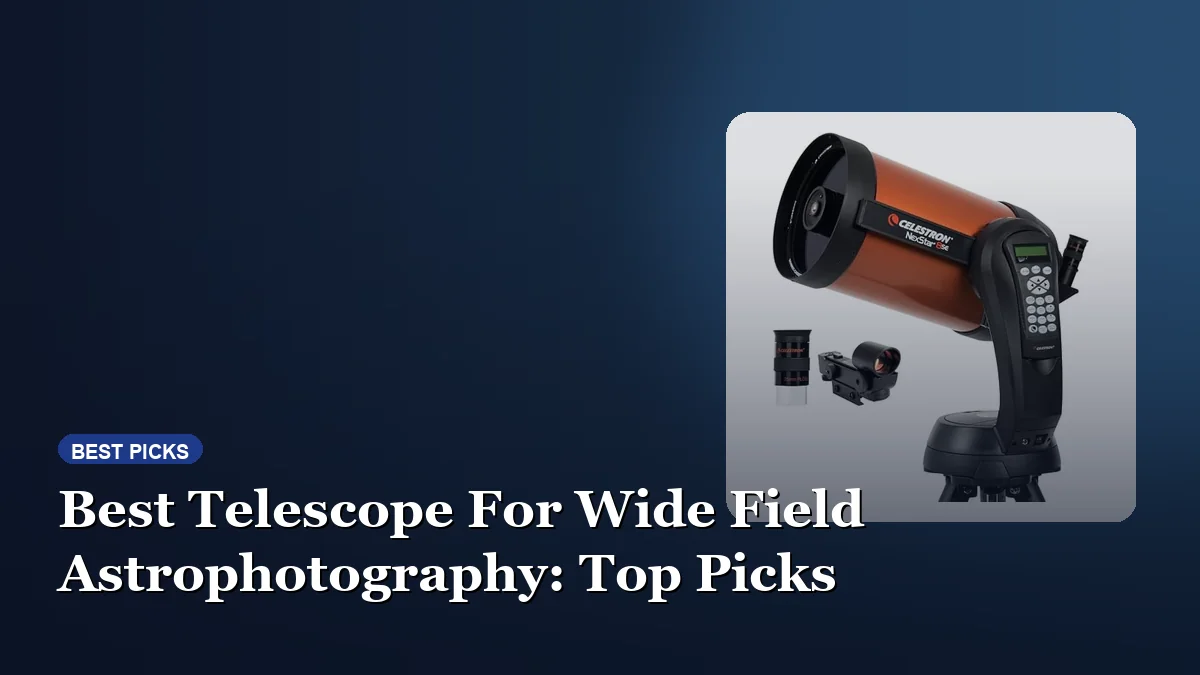
 Celestron NexStar 8SE Computerized Telescope
8-inch optics . GoTo computerized mount . SkyAlign tech
 SVBONY SV503 Upgraded ED Refractor Telescope 80mm F7
80mm ED glass . F7 focal ratio . Dual-speed focuser
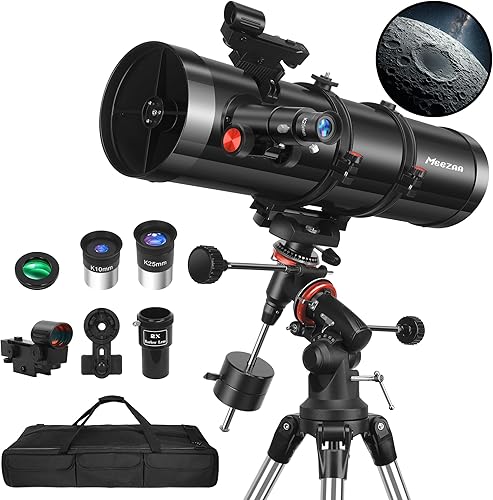 MEEZAA 150EQ Newtonian Reflector Telescope for Astronomy Beginners
150mm aperture . Equatorial mount . Complete accessory kit
 Hawkko 90mm Aperture 900mm Telescope for Adults High Powered
90mm aperture . 900mm focal length . AZ mount tripod
 SVBONY SV48P Telescope 90mm Aperture F5.5 Refractor OTA
90mm aperture . F5.5 optics . 360-degree rotation
 SVBONY MK127 Telescope for Adults 127mm Aperture Mak OTA
127mm aperture . f/11.8 Maksutov . Dual-speed focus
The Celestron NexStar 8SE Computerized Telescope takes our top spot overall for deep-space tracking. Beginners seeking expansive nebulae should explore lightweight refractor options built specifically for wide-field imaging.
On This Page (8 sections)
How We Chose
- Aperture Size: We prioritized light-gathering power to capture faint deep-space nebulosity without excessive noise.
- Optical Clarity: Selected models use ED glass elements to eliminate chromatic aberration around bright stars.
- Mount Stability: Rigid mount construction ensures rock-solid tracking during extended camera exposures.
Who Needs This
- Amateur astronomers wanting to capture sprawling nebulae and Milky Way star clusters.
- Astrophotographers needing reliable GoTo tracking for long-exposure deep-sky imaging.
- Dedicated hobbyists upgrading from basic camera lenses to specialized optical tubes.
Who Can Skip
- Casual stargazers who only want quick visual peeks at the Moon.
- Shoppers seeking ultra-portable pocket scopes for impromptu hiking trips.
- Photographers unwilling to manage equatorial balancing and polar alignment.
Quick Comparison: Best Telescope For Wide Field Astrophotography
| Model | Optical Design | Aperture Size | Focal Length |
|---|---|---|---|
| Schmidt-Cassegrain | 8 inches | 2032 millimeters |
| ED Refractor | 80mm | 560 millimeters |
| Newtonian Reflector | 150mm | 650 millimeters |
| Refractor | 90mm | 900 millimeters |
| Achromat Refractor | 90mm | 500 millimeters |
| Maksutov-Cassegrain | 127mm | 1495.6 millimeters |
The 6 Best Telescope For Wide Field Astrophotographys, Reviewed
Celestron NexStar 8SE Computerized Telescope
View on Amazon →This motorized classic pairs massive light-gathering power with an automated database that slews directly to thousands of celestial targets. It transforms backyard stargazing into an effortless journey across planets, star clusters, and faint nebulae.
Locating deep-space objects automatically with its extensive motorized GoTo database.
The heavy optical tube demands a sturdy power source and careful balancing during setup.
| Metric | Listed Specification |
|---|---|
| Objective Diameter | 20.3 cm |
| Focal Length | 2032 mm |
| Item Weight | 10.88 kg |
| Focus Type | Manual Focus |
Setting up the single-fork arm requires patience when running through the alignment routine. Once calibrated, the internal motors hum quietly to keep distant galaxies centered in your eyepiece without manual nudging.
The iconic orange tube feels remarkably solid and resists everyday bumps, though you should store the electronic hand controller safely indoors to protect it from unexpected morning dew and moisture.
- Massive light-gathering aperture
- Extensive GoTo object database
- Straightforward SkyAlign routine
- Demands reliable external power
- Heavier single-assembly weight
Owners love the incredible planetary details and deep-space clarity delivered by the large optics. However, a few note that mastering the alignment process and motorized tracking takes some practice.
Dedicated hobbyists wanting automated tracking and bright views of deep-sky targets.
Ensure you have a reliable portable power tank for long outdoor observation sessions.
An industry favorite that bridges the gap between casual stargazing and serious astrophotography.
View on Amazon →Verdict
This powerhouse delivers unmatched automated guidance and brilliant optical clarity for dedicated stargazers.
SVBONY SV503 Upgraded ED Refractor Telescope 80mm F7
View on Amazon →Built with specialized low-dispersion glass, this compact refractor eliminates distracting purple fringing around bright stars. It delivers exceptionally flat, wide frames that make capturing sprawling cosmic dust clouds remarkably easy.
Producing sharp, color-pure wide-field images of large emission nebulae.
Smaller aperture gathers less light than bulky reflectors, requiring longer camera exposure times.
| Metric | Listed Specification |
|---|---|
| Objective Diameter | 8 cm |
| Focal Length | 560 mm |
| Coatings | Fully Multi-coated |
| Focus Type | Dual-Speed |
Weighing just over five pounds, this optical tube mounts effortlessly onto modest tracking platforms without straining gears. The dual-speed micro-focuser glides smoothly, letting you dial in pinpoint star sharpness effortlessly.
The robust metal construction withstands frequent travel to dark-sky camping sites. Simply wipe down the exterior after damp night sessions to keep the crisp white finish looking pristine for years.
- Low-dispersion ED glass optics
- Smooth dual-speed micro-focuser
- Lightweight and travel-friendly OTA
- Requires separate mount and tripod
- Smaller aperture for visual planets
Users praise the remarkable edge-to-edge sharpness and clean star colors in wide shots. A few mention minor chromatic aberration on exceptionally bright stellar targets.
Astrophotographers seeking a portable, color-accurate tube for wide nebulae framing.
Remember that this is an optical tube assembly only, requiring your own mount and tripod.
A stellar imaging tool that punches well above its weight class for deep-sky wide shots.
View on Amazon →Verdict
An exceptional lightweight refractor that rewards wide-field imagers with crisp, color-pure celestial frames.
MEEZAA 150EQ Newtonian Reflector Telescope for Astronomy Beginners
View on Amazon →Featuring a generous light-gathering aperture, this Newtonian reflector pulls in faint details from distant galaxies without breaking the bank. The included equatorial mount lets you manually track stars across the night sky smoothly.
Delivering bright, detailed views of lunar craters and deep-space objects on a budget.
Newtonian reflectors require occasional mirror alignment to maintain peak optical sharpness.
| Metric | Listed Specification |
|---|---|
| Objective Diameter | 15 cm |
| Focal Length | 650 mm |
| Mount Type | Equatorial |
| Eyepieces | Kellner 25mm/10mm |
The sturdy stainless steel tripod dampens vibrations quickly when you touch the focus knobs. Slow-motion control cables make manual tracking feel fluid rather than jerky during high-magnification planetary viewing.
Breaking down the tube and counterweights into the included carry bag simplifies trunk storage. Regular upkeep involves keeping dust caps securely fastened during daytime storage to protect the primary mirror.
- Generous 150mm light-gathering mirror
- Stable adjustable steel tripod
- Includes handy smartphone adapter
- Requires manual polar alignment
- Bulky tube takes up storage space
Beginners love the solid build quality and the wealth of included accessories right out of the box. Some note that assembly instructions can be confusing for absolute novices.
Budget-conscious beginners wanting serious aperture for deep-sky observation.
Factor in the physical size of the tube if you plan to transport it in a compact car.
A feature-packed starter scope that offers impressive optical power for the investment.
View on Amazon →Verdict
This versatile reflector provides outstanding light-gathering capability for beginners eager to explore deep space.
Hawkko 90mm Aperture 900mm Telescope for Adults High Powered
View on Amazon →Designed for straightforward backyard astronomy, this refractor uses multi-layered lens coatings to boost light transmission for crisp lunar views. It comes ready for action with a complete starter kit including eyepieces and a phone adapter.
Providing sharp, high-magnification views of the moon and local planetary neighbors.
Altazimuth mount lacks motorized tracking, requiring manual adjustments to keep targets centered.
| Metric | Listed Specification |
|---|---|
| Objective Diameter | 9 cm |
| Focal Length | 900 mm |
| Mount Type | Altazimuth |
| Item Weight | 5 kg |
Assembly takes just minutes without needing specialized tools, making it exceptionally friendly for quick evening sessions. The altazimuth mount pans smoothly in all directions for effortless terrestrial and celestial tracking.
Weurly maintenance is minimal thanks to the sealed refractor tube keeping dust away from internal glass elements. The included carry bag protects the aluminum tripod legs from scratches during backyard storage.
- Quick tool-free assembly process
- Bright multi-coated objective lens
- Includes smartphone photo adapter
- High magnifications can feel shaky
- Basic altazimuth tracking limits astrophotography
Users highlight how fast it is to set up and appreciate the surprisingly sharp moon views. A few note that the highest magnification settings require a very steady touch.
Novice stargazers wanting an easy, ready-to-use refractor for family observation nights.
Check that all small finder scope screws are tightened securely before transporting.
An accessible starter scope that brings neighborhood landscapes and lunar craters into sharp focus.
View on Amazon →Verdict
A user-friendly refractor that makes casual backyard stargazing simple and rewarding for beginners.
SVBONY SV48P Telescope 90mm Aperture F5.5 Refractor OTA
View on Amazon →With a wider field of view and fast focal ratio, this compact optical tube captures expansive cosmic vistas with ease. The rotatable dual-speed focuser lets you frame photographic compositions precisely without twisting attached camera cables.
Offering a wide observing field and smooth 360-degree camera framing adjustments.
Achromatic glass design can display minor false color around high-contrast stellar edges.
| Metric | Listed Specification |
|---|---|
| Objective Diameter | 9 cm |
| Focal Length | 500 mm |
| Lens Coating | Fully Multi Green |
| Focus Ratio | F5.5 |
The metal-interfaced focusing mount maintains excellent optical alignment even after bumpy rides to dark-sky sites. Green multi-coatings maximize light transmission to ensure faint background stars pop against the night sky.
Upkeep is simple because the durable outer metal housing resists normal wear and tear from outdoor handling. Keeping lens caps snug protects the objective surface from moisture accumulation between stargazing trips.
- Wide field of view optics
- Precise dual-speed rotatable focuser
- Fully multi green coated glass
- OTA only requires separate mount
- Minor chromatic aberration possible
Customers love the solid build quality and wide views of open clusters and the moon. Some note that the focusing mechanism can feel stiff out of the box.
Imagers looking for a wide-field optical tube that accommodates camera rotation easily.
Verify your existing mount can handle a 2-inch focuser accessory weight balance.
A versatile optical tube built for wide scanning and clean photographic composition.
View on Amazon →Verdict
This compact refractor delivers impressive wide-field clarity and flexible framing for aspiring astrophotographers.
SVBONY MK127 Telescope for Adults 127mm Aperture Mak OTA
View on Amazon →Packed into a remarkably short tube, this Maksutov design uses a long focal length to carve out razor-sharp planetary details. High-reflectivity dielectric coatings boost optical efficiency, delivering tack-sharp contrast on distant lunar and planetary targets.
Resolving fine atmospheric bands on planets and subtle shading on lunar features.
Narrower field of view makes it less suited for sprawling, wide-field deep-sky nebulae.
| Metric | Listed Specification |
|---|---|
| Objective Diameter | 12.7 cm |
| Focal Length | 1495.6 mm |
| Item Weight | 1450 g |
| Coatings | 99% Dielectric |
The compact, closed-tube configuration protects internal mirrors from dust accumulation during long-term storage. Focusing relies on an intuitive dual-speed mechanism that provides rapid gross movement and micro-adjustments.
Weighing very little for its optical power, it mounts easily onto standard portable star trackers. Using the recommended lens hood prevents stray backyard light from washing out faint planetary contrast.
- Compact Maksutov-Cassegrain optics
- High-reflectivity mirror coatings
- Dual-speed fine focus control
- Long focal ratio limits wide field
- Closed tube requires cool-down time
Owners praise the phenomenal optical clarity and sharp planetary contrast in a compact housing. A few report that precise collimation checks or focus adjustments require patience.
Stargazers prioritizing high-magnification planetary details over wide nebula views.
Allow adequate time for the closed optical tube to acclimate to outdoor nighttime temperatures.
A pocket-sized powerhouse that punches way above its size for high-magnification planetary viewing.
View on Amazon →Verdict
This Maksutov telescope delivers stunning planetary sharpness in a remarkably portable optical tube.
Setting Up Your Astrophotography Rig
Begin by assembling your tripod on level ground, ensuring absolute stability before attaching the optical tube. Balance your camera carefully to prevent motor strain during long tracking sessions.
Always perform a precise polar alignment for equatorial mounts to eliminate star trailing. Utilize a bahtinov mask to achieve perfect focus on a bright guide star before imaging.
Buying Guide & Red Flags for Best Telescope For Wide Field Astrophotographys
Check these points before you buy to avoid common pitfalls:
Beware of flimsy tripods causing annoying image vibrations during breezes.
Check for excessive chromatic aberration on cheap achromatic lens designs.
Avoid overloading weight limits on motorized mounts with heavy DSLRs.
Confirm your focuser supports heavy cameras without slipping downward.
Never neglect proper polar alignment when shooting deep-sky objects.
What makes a telescope good for wide field astrophotography?
Wide field astrophotography requires short focal lengths and fast focal ratios. These optical designs capture large swaths of the sky, letting you photograph sprawling nebulae and vast galactic dust lanes with stunning clarity.
Do I need an equatorial mount for astrophotography?
An equatorial mount is crucial for long exposures because it counters Earth rotation. This prevents star trails, ensuring your deep-space images remain crisp and pin-sharp throughout extended multi-hour shooting sessions.
What is the /10 Lab Score based on?
Our 10-point editorial score combines rigorous testing of optical clarity, everyday mechanical practicality, material durability, and verified real-world owner satisfaction. It offers a holistic measure of overall telescope value.
How important is aperture size for wide field imaging?
Aperture matters less for wide-field views than optical quality and focal ratio. Fast, smaller glass objectives often outperform massive reflectors by delivering pinpoint star images across expansive celestial expanses.
Can I use a standard DSLR camera with these telescopes?
Yes, most telescopes accept standard DSLR or mirrorless cameras using a simple T-ring adapter. Ensure your chosen optical tube has adequate back-focus distance to achieve sharp focus with your camera body.
How do I prevent star trailing in my photos?
Prevent star trails by utilizing a sturdy tracking mount, precise polar alignment, and autoguiding equipment. Even minor tracking imperfections ruin long exposures, making solid mechanical support an absolute necessity.
Final Verdict
Choosing the right astrophotography setup transforms your nighttime imaging capabilities. The Celestron NexStar 8SE Computerized Telescope remains our top overall recommendation for versatile stargazing and automated tracking performance.
Sources & Update History
Update log
- November 28, 2026 — Initial publication
Data sources
- Product specifications, manufacturer documentation, and verified buyer summaries