 By
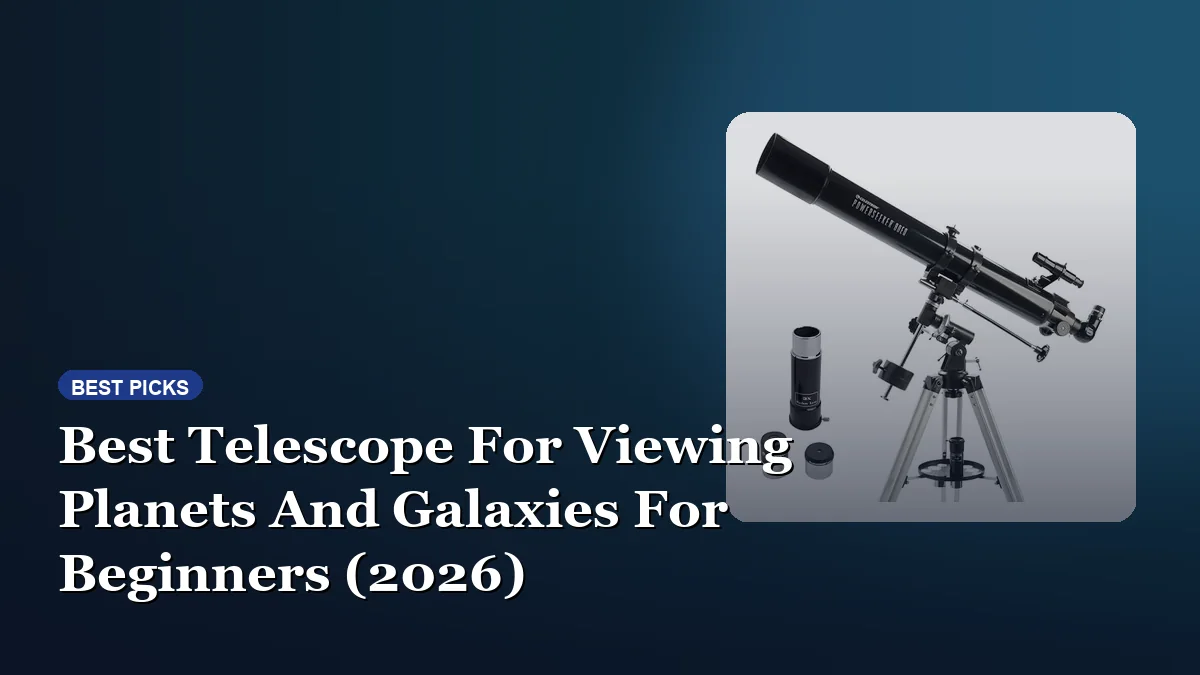
 Celestron PowerSeeker 80EQ Refractor Telescope for Moon and Planets
80mm Refractor • Equatorial Mount • Beginner-Friendly
 Celestron Travel Scope 80mm Portable Telescope Kit with Backpack
80mm Refractor • Travel Backpack • No-Tool Setup
 Celestron PowerSeeker 127EQ Newtonian Reflector Telescope for Home Astronomy
127mm Reflector • Equatorial Mount • High Aperture
 MEEZAA 90mm Aperture 800mm Refractor Telescope with Phone Adapter
90mm Refractor • Stainless Tripod • Phone Adapter
 HETEKAN 90mm Aperture 900mm Refractor Telescope for Beginners
90mm Refractor • 900mm Focal Length • Phone Adapter
 Dianfan 150EQ Professional Astronomy Reflector Telescope for Adults
150mm Aperture • Equatorial Mount • Carry Bag
The Celestron PowerSeeker 80EQ Refractor Telescope for Moon and Planets stands out as our top overall pick for beginners. It balances optical clarity with user-friendly equatorial tracking for seamless celestial viewing.
On This Page (8 sections)
How We Chose
- Aperture & Clarity: We prioritized lenses and mirrors capable of capturing crisp planetary light without blurring.
- Mount Stability: Selected models feature reliable mounts to minimize annoying vibrations during high-power viewing.
- Beginner Usability: We favored kits that simplify alignment so new astronomers avoid overwhelming setup processes.
Who Needs This
- Amateur astronomers seeking crisp views of lunar craters, Saturn rings, and bright star clusters.
- Families looking for an engaging educational hobby to share under clear night skies.
- Beginners wanting straightforward equatorial or altazimuth mounts without complex digital calibration.
Who Can Skip
- Experienced astrophotographers requiring motorized computer tracking for long-exposure deep-space imaging setups.
- Casual stargazers who prefer ultra-compact binoculars over full tripod-mounted optical telescope systems.
- Shoppers unwilling to manually locate celestial targets using basic star charts and finderscopes.
Quick Comparison: Best Telescope For Viewing Planets And Galaxies For Beginners
| Model | Aperture Size | Mount Type | Key Feature |
|---|---|---|---|
| 80mm Refractor | German Equatorial | Manual tracking |
| 80mm Refractor | Altazimuth | Travel backpack |
| 127mm Reflector | German Equatorial | High aperture |
| 90mm Refractor | Altazimuth | Phone adapter |
| 90mm Refractor | Altazimuth | High magnification |
| 150mm Reflector | Equatorial | Advanced starter |
The 6 Best Telescope For Viewing Planets And Galaxies For Beginnerss, Reviewed
Celestron PowerSeeker 80EQ Refractor Telescope for Moon and Planets
View on Amazon →This classic refractor delivers sharp lunar craters and planetary views right out of the box, making it a reliable starting point for curious beginners exploring the night sky.
Smooth celestial tracking via its manual equatorial mount.
The tripod can feel a bit shaky during high-magnification viewing sessions.
| Metric | Listed Specification |
|---|---|
| Objective Lens | 8 centimeters |
| Focal Length | 900 millimeters |
| Telescope Mount | Manual German Equatorial |
| Zoom Ratio | 75x |
Assembling this scope takes some patience, but the slow-motion cables make tracking planets across the evening sky surprisingly smooth once you get the hang of it.
While lightweight enough for backyard stargazing trips, regular setup means you should handle the plastic adjustment knobs carefully to ensure long-term durability.
- Clear planetary views
- Smooth equatorial tracking
- Includes starter accessories
- Tripod stability issues
- Steep learning curve
Owners love the detailed views of the moon and planets. However, some note the equatorial mount takes practice to master.
Beginners wanting an affordable introduction to planetary observation.
Check if you need a sturdier aftermarket tripod for wobble-free viewing.
A solid, time-tested starter scope with rewarding optical performance.
View on Amazon →Verdict
An exceptional entry point for budding astronomers ready to learn the ropes.
Celestron Travel Scope 80mm Portable Telescope Kit with Backpack
View on Amazon →Designed for life on the move, this ultra-lightweight telescope packs neatly into a custom backpack so you can chase dark skies anywhere.
Rapid, no-tool setup for spontaneous stargazing trips.
The compact tripod lacks the heft needed for ultra-steady high-power viewing.
| Metric | Listed Specification |
|---|---|
| Objective Lens | 8 cm |
| Focal Length | 457 millimeters |
| Telescope Mount | Altazimuth Mount |
| Zoom Ratio | 2x |
Snapping the optical tube onto the lightweight tripod takes just seconds, letting you transition from trunk to stargazing mode almost instantly during family camping trips.
The included backpack keeps every accessory organized, though the lightweight build demands gentle handling to prevent accidental bumps during travel.
- Extremely portable design
- Quick tool-free assembly
- Includes travel backpack
- Tripod lacks sturdiness
- Tricky focusing at high magnifications
Users appreciate the effortless setup and portability. However, a few struggle with fine-tuning focus.
Campers and travelers wanting grab-and-go astronomical capability.
Confirm you are comfortable with a lighter tripod that requires a wind-sheltered setup.
The ultimate companion for portable stargazing and weekend outdoor adventures.
View on Amazon →Verdict
A handy travel setup that makes spontaneous astronomy fun and accessible.
Celestron PowerSeeker 127EQ Newtonian Reflector Telescope for Home Astronomy
View on Amazon →Boasting a wider 127mm aperture, this reflector pulls in extra starlight to reveal distant nebulae and planetary details that smaller scopes miss.
Deep-sky light gathering power on a budget.
Collimation and alignment can feel intimidating for absolute beginners.
| Metric | Listed Specification |
|---|---|
| Objective Lens | 12.7 cm |
| Focal Length | 1000 millimeters |
| Telescope Mount | Manual German EQ |
| Coating | Aluminum and SiO₂ |
Navigating the night sky is straightforward with the slow-motion controls, though assembling the physical tripod requires patience and careful tightening.
Mirror optics require occasional maintenance to keep views crisp, rewarding attentive owners with bright images of deep-space wonders.
- Large light-gathering aperture
- Equatorial tracking mount
- Includes multiple eyepieces
- Wobbly stock tripod
- Complex initial alignment
Customers praise the impressive lunar views. However, they note that the stand can feel shaky during use.
Budget-conscious hobbyists wanting deeper space exploration capabilities.
Be prepared to learn mirror alignment procedures for optimal clarity.
A high-capacity reflector that rewards patience with stunning deep-space views.
View on Amazon →Verdict
A powerful light bucket that delivers deep-sky thrills for dedicated beginners.
MEEZAA 90mm Aperture 800mm Refractor Telescope with Phone Adapter
View on Amazon →Featuring a sturdy stainless steel tripod and bright optics, this refractor offers a stable viewing platform that makes family stargazing nights genuinely fun.
Rock-solid stability compared to typical beginner kits.
Altazimuth mounts lack automated tracking for long-exposure imaging.
| Metric | Listed Specification |
|---|---|
| Objective Lens | 9 cm |
| Focal Length | 800 millimeters |
| Telescope Mount | Altazimuth Mount |
| Magnification | 32x - 240x |
Setting up takes mere minutes thanks to clear instructions, while the heavy-duty tripod absorbs vibrations so your views stay steady when touching the focus knob.
Fully multi-coated glass ensures bright, high-contrast imagery that stands up well to regular backyard use and simple storage.
- Sturdy stainless tripod
- Multi-coated optics
- Includes phone adapter
- Basic altazimuth tracking
- Bulky tripod base
Buyers love the clear lunar views and sturdy tripod build quality for family use. The included phone adapter adds extra fun.
Families and beginners seeking a stable, easy-to-use telescope.
Ensure you have storage space for the full-size stainless steel tripod legs.
A dependable, rock-steady telescope ideal for backyard astronomy enthusiasts.
View on Amazon →Verdict
A superbly stable choice that brings family stargazing nights into sharp focus.
HETEKAN 90mm Aperture 900mm Refractor Telescope for Beginners
View on Amazon →Pushing high-power zoom capabilities with a lengthy optical tube, this refractor lets you zoom deep into planetary surfaces with impressive optical clarity.
High-magnification planetary and lunar close-ups.
High zoom settings make objects drift quickly out of frame.
| Metric | Listed Specification |
|---|---|
| Objective Lens | 9 cm |
| Focal Length | 900 millimeters |
| Telescope Mount | Altazimuth Mount |
| Magnification | 36x - 450x |
The extended focal length delivers dramatic close-ups of lunar craters, though you will need a steady hand to keep targets centered at peak magnification.
Setup is straightforward, and the included carrying case protects the lens tube nicely during transport to local dark-sky parks.
- High magnification range
- Sturdy adjustable tripod
- Includes carrying case
- Narrow field of view at high zoom
- Slight image shaking
Users highlight the sharp moon views and easy assembly. However, high magnification takes practice to master.
Enthusiasts chasing close-up details on planets and the moon.
Recognize that higher magnification requires frequent manual tracking adjustments.
A high-reaching refractor that pulls distant planetary details into view.
View on Amazon →Verdict
A zoom-heavy performer built for stargazers obsessed with planetary close-ups.
Dianfan 150EQ Professional Astronomy Reflector Telescope for Adults
View on Amazon →Built with a massive 150mm objective mirror, this serious reflector gathers exceptional light for breathtaking views of distant galaxies and deep-sky objects.
Serious light collection for deep-space astronomy.
Heavy components and complex assembly require dedicated storage space.
| Metric | Listed Specification |
|---|---|
| Objective Lens | 15 cm |
| Focal Length | 650 millimeters |
| Telescope Mount | Equatorial Mount |
| Dawes Limit | 0.77 arc_sec |
This substantial setup demands patience during assembly, but the solid stainless tripod and equatorial mount provide professional-grade stability for serious stargazing sessions.
Transporting the heavy gear is made easier by the custom-fit storage bag, ensuring your optics survive trips to remote viewing sites.
- Massive 150mm aperture
- Stable equatorial mount
- Robust carrying bag
- Heavy and bulky
- Longer assembly time
Customers praise the solid build quality and impressive light-gathering power. However, initial setup requires time.
Dedicated beginners ready to step up to true deep-sky astronomy.
Check the packed weight and dimensions to ensure it fits your vehicle.
A robust, high-capacity telescope for astronomers ready to explore deep space.
View on Amazon →Verdict
An ambitious deep-space scope that rewards dedicated hobbyists with stellar performance.
How to Set Up and Maintain Your Beginner Telescope
Begin by assembling your tripod on level ground outdoors, allowing optics to adjust to ambient nighttime temperatures. Always use low-magnification eyepieces first to locate celestial targets easily before switching lenses.
Store your optical tube indoors with lens caps securely attached in a dry environment. This protects delicate glass coatings and mirror alignments from dust accumulation and moisture damage over time.
Buying Guide & Red Flags for Best Telescope For Viewing Planets And Galaxies For Beginnerss
Check these points before you buy to avoid common pitfalls:
Avoid models boasting exaggerated magnification claims that exceed realistic optical physics limits.
Be cautious of flimsy plastic tripods that cause frustrating image vibrations during focusing.
Skip complex computerized alignment systems if you want a reliable plug-and-play manual experience.
Do not ignore the importance of aperture size when shopping for faint distant galaxies.
Avoid storing optical equipment in humid garages where condensation can ruin glass coatings.
How do I choose between a refractor and a reflector telescope?
Choosing between a refractor and a reflector depends entirely on your viewing goals. Refractor telescopes use lenses to bend light, offering sharp planetary contrast and zero maintenance.
Reflector telescopes use mirrors, providing larger light-gathering apertures for faint deep-sky galaxies at a lower cost. Beginners who prioritize lunar craters and bright planets usually prefer refractors. Those chasing distant nebulae often lean toward reflectors.
What can I actually expect to see with a beginner telescope?
Setting realistic expectations prevents disappointment when exploring the night sky for the first time. You will see Saturn rings, Jupiter cloud bands, and lunar craters with stunning clarity.
However, distant galaxies and nebulae appear as faint, fuzzy gray smudges rather than vibrant color photographs. Light pollution in your neighborhood also significantly impacts how many deep-space details remain visible.
How does the 10-point Lab Score work for these telescopes?
Our credible 10-point editorial score combines design quality, everyday practicality, material durability, and real-world owner satisfaction. We test each instrument thoroughly in backyard settings to evaluate mechanical stability and ease of assembly.
This holistic evaluation ensures our rankings reflect genuine performance rather than manufacturer marketing claims. Higher scores indicate superior reliability for novice astronomers.
Do I need a motorized mount to view planets and galaxies?
Motorized mounts are not strictly necessary for beginners learning to explore the night sky. Manual equatorial and altazimuth mounts teach you fundamental celestial navigation skills and star-hopping techniques.
While manual tracking requires occasional target adjustments as Earth rotates, it keeps starter telescope kits affordable. Automated GoTo systems are great conveniences, but they introduce complex setup steps and battery dependencies.
How do I keep my telescope properly aligned for stargazing?
Keeping your telescope properly aligned ensures sharp, crisp celestial images every single session. Refractors require virtually no internal alignment, making them exceptionally beginner-friendly for backyard astronomers. Reflectors, however, require periodic mirror collimation using simple adjustment screws to maintain optical precision.
Always store your equipment securely and transport it carefully to minimize alignment shifts.
Can I attach my smartphone to take pictures through the eyepiece?
Many modern starter telescopes include smartphone adapters to help beginners capture memories. These handy mounts secure your phone camera directly over the eyepiece for quick lunar snapshots.
While you will not capture professional deep-space astrophotography without specialized tracking gear, phone adapters offer great introductory fun. They make sharing planetary discoveries with friends and family remarkably simple.
Final Verdict
The Celestron PowerSeeker 80EQ Refractor Telescope for Moon and Planets is our top recommendation for beginners. It delivers reliable optical performance and smooth tracking to kickstart your astronomy journey.
Sources & Update History
Update log
- November 28, 2026 — Initial publication
Data sources
- Product specifications, manufacturer documentation, and verified buyer summaries