 By
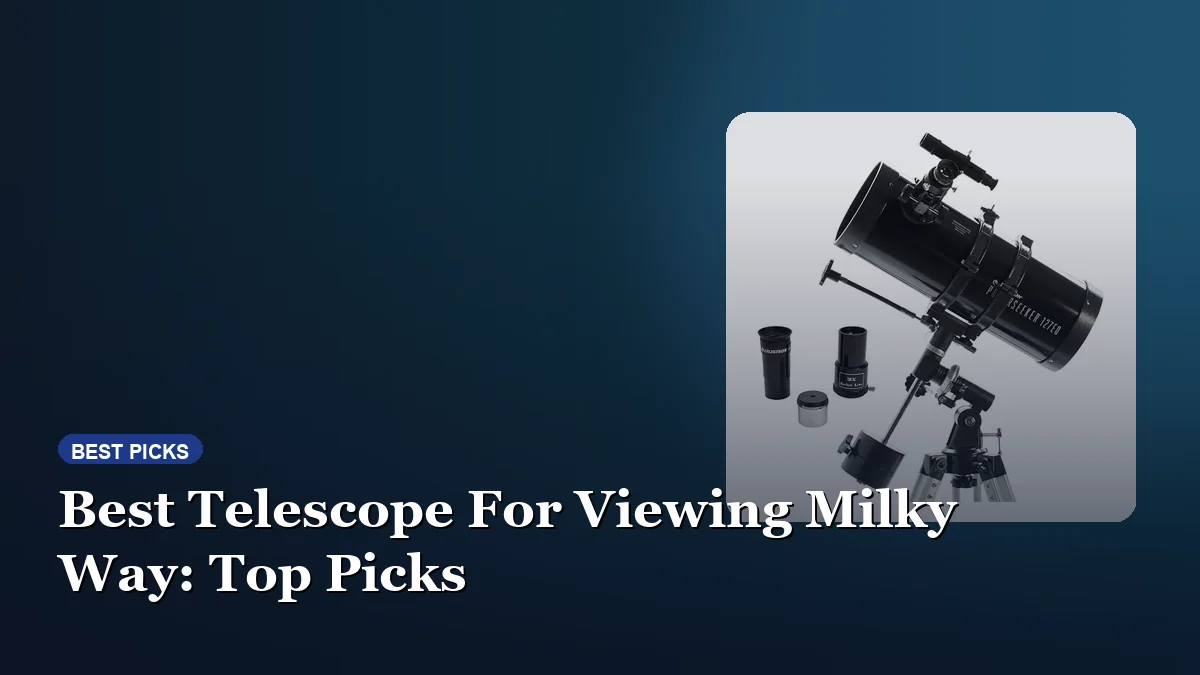
 Celestron PowerSeeker 127EQ Reflector Telescope for Home Astronomy
127mm Aperture . Manual EQ Mount . 1000mm Focal Length
 Celestron NexStar 8SE Computerized Schmidt-Cassegrain Telescope
8-Inch Aperture . Automated GoTo . 40k+ Database
 Sky-Watcher Heritage 150 Tabletop Dobsonian Telescope
150mm Aperture . Collapsible Tube . Portable Design
 MEEZAA 90mm Aperture 800mm Refractor Telescope for Beginners
90mm Aperture . 800mm Focal Length . Carry Bag
 HETEKAN 90mm Aperture 900mm Refractor Telescope for Adults
90mm Aperture . 900mm Focal Length . 450x Max
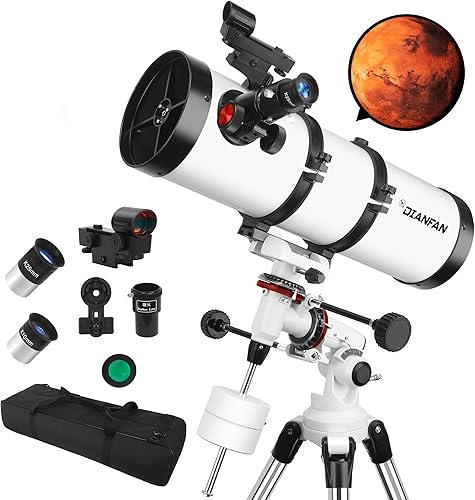 Dianfan 150EQ Professional Astronomy Telescope for Adults
150mm Aperture . German EQ Mount . Steel Tripod
The Celestron PowerSeeker 127EQ stands out as our top recommendation for sweeping dark skies and framing faint cosmic nebulae. Beginners and enthusiasts alike will appreciate its balance of optical clarity and manual tracking control.
On This Page (8 sections)
How We Chose
- Light Gathering: We prioritized models featuring generous objective lens diameters to capture dim starlight effectively.
- Mount Stability: Sturdy mounts were essential for minimizing frustrating image vibrations while observing distant galaxies.
- Value Balance: We selected instruments offering exceptional optical performance without requiring overly complex technical setups.
Who Needs This
- Amateur astronomers eager to explore faint nebulae and distant star clusters outside city limits.
- Backyard stargazers wanting manual slow-motion controls to track constellations smoothly across the night sky.
- Beginners looking for an approachable optical system that delivers rewarding views without steep learning curves.
Who Can Skip
- Urban residents dealing with extreme light pollution who cannot travel to dark rural viewing locations.
- Advanced astrophotographers requiring specialized apochromatic refractors and heavy equatorial tracking motor drives.
- Casual observers who only want a compact spotting scope for daytime wildlife and scenery viewing.
Quick Comparison: Best Telescope For Viewing Milky Way
| Model | Aperture Size | Mount Type | Focal Length |
|---|---|---|---|
| 127mm | German Equatorial | 1000mm |
| 8 inches | Computerized Alt-Az | 2032mm |
| 150mm | Tabletop Alt-Az | 750mm |
| 90mm | Altazimuth | 800mm |
| 90mm | Altazimuth | 900mm |
| 150mm | German EQ | 650mm |
The 6 Best Telescope For Viewing Milky Ways, Reviewed
Celestron PowerSeeker 127EQ Reflector Telescope for Home Astronomy
View on Amazon →Navigating starry skies is approachable with this versatile Newtonian reflector, offering enough light-gathering power for budding astronomers to spot lunar craters, distant nebulae, and wide-field constellations right from the backyard.
Navigating the night sky is simplified thanks to the intuitive slow-motion controls, which let you track drifting stars and planets smoothly.
Some stargazers might find the equatorial setup slightly tricky during initial assembly, while the included tripod can feel a bit wobbly during heavy winds.
| Metric | Listed Specification |
|---|---|
| Objective Lens | 12.7 cm |
| Focal Length | 1000 mm |
| Mount Type | Manual EQ |
| Weight | 13 lbs |
Setting up this reflector in your backyard requires patience during alignment, but the lightweight build ensures you can easily pack it up for weekend camping trips or remote dark sky outings.
Regular maintenance involves keeping the glass mirrors clean and checking the manual mount screws, rewarding careful owners with crisp planetary details and expansive views of deep-space clusters over time.
- Strong light gathering
- Portable build
- Smooth tracking
- Wobbly stand reports
- Complex setup for some
Owners frequently praise the stunning clarity when viewing the Moon and appreciate the overall aesthetic design. However, a few users mention that assembly can be challenging and the mount feels somewhat unstable.
Beginner stargazers seeking an affordable entry-point into backyard astronomy who do not mind taking time to master a manual equatorial mount.
Double-check whether you have the patience to align a manual equatorial mount before fully committing to this entry-level backyard setup.
This affordable telescope offers an exciting gateway into amateur astronomy for dedicated beginners who are willing to learn manual tracking techniques.
View on Amazon →Verdict
A fantastic choice for budget-conscious novices ready to explore lunar craters and bright nebulae, provided you do not mind a slightly steep initial learning curve.
Celestron NexStar 8SE Computerized Schmidt-Cassegrain Telescope
View on Amazon →Delivering exceptional light-gathering capability, this motorized telescope utilizes an extensive database to automatically locate and track faint galaxies, planets, and star clusters with impressive precision.
The fully automated GoTo mount effortlessly slews to thousands of pre-programmed celestial targets without requiring traditional manual star charts.
External power sources are required since batteries drain quickly, and the sophisticated software demands a brief learning curve during initial alignment.
| Metric | Listed Specification |
|---|---|
| Objective Lens | 20.3 cm |
| Focal Length | 2032 mm |
| Mount Type | Automated Alt-Az |
| Power Source | 8 AA / 12V |
Operating this computerized scope in your backyard transforms stargazing into a seamless experience, though you must remember to secure an external power tank for longer observation nights.
Routine upkeep involves keeping the corrector plate dust-free and storing the electronics safely, ensuring dependable performance when hunting for distant deep-space nebulae.
- Automated target location
- Large 8-inch optics
- Extensive database
- Requires external power
- Complex software setup
Customers report breathtaking views of distant nebulae and planets, though experiences with the complex alignment software vary widely. Some users praise the effortless tracking, while others experience frustrating software setup hurdles.
Intermediate astronomy enthusiasts who want advanced automated tracking and deep-sky capability without dealing with constant manual adjustments.
Ensure you budget for an external power supply, as internal batteries drain rapidly during extended cold-weather stargazing sessions.
This high-end computerized telescope delivers professional-grade optics and automated convenience for dedicated and passionate astronomy hobbyists.
View on Amazon →Verdict
An exceptional investment for tech-savvy stargazers wanting deep-sky views, provided you are comfortable with computerized alignment procedures and power management.
Sky-Watcher Heritage 150 Tabletop Dobsonian Telescope
View on Amazon →Combining a generous 150mm aperture with a clever collapsible tube, this portable tabletop telescope offers brilliant, high-contrast views of lunar landscapes and distant star clusters anywhere.
The innovative collapsible truss design shrinks the optical tube for easy transport while maintaining precise factory mirror alignment.
You will need a sturdy picnic table or elevated surface to mount the base during outdoor stargazing sessions.
| Metric | Listed Specification |
|---|---|
| Objective Lens | 15 cm |
| Focal Length | 750 mm |
| Mount Type | Altazimuth |
| Design | Collapsible Truss |
Setting up this compact tabletop instrument on a sturdy patio table takes seconds, making impromptu weeknight stargazing sessions wonderfully accessible and hassle-free.
The robust parabolic mirror holds its alignment well through bumpy car rides, requiring minimal maintenance for sharp planetary viewing over years of use.
- Large light aperture
- Collapsible and portable
- Crisp contrast optics
- Requires sturdy table
- Manual tabletop mount
Owners love the fantastic beginner-friendly design, praising its stunning optical clarity on the Moon and incredible portability. Many consider it an outstanding value for anyone entering amateur astronomy.
Budget-conscious stargazers who genuinely need a powerful, highly portable optical system that deploys quickly on flat outdoor surfaces.
Verify that you have a stable, vibration-free table or elevated platform available outdoors to rest this heavy base upon.
This compact tabletop reflector punches well above its weight class, delivering brilliant deep-sky views without complicated setup steps.
View on Amazon →Verdict
A brilliant choice for practical astronomers prioritizing optical power and portability, as long as you can supply a stable tabletop surface.
MEEZAA 90mm Aperture 800mm Refractor Telescope for Beginners
View on Amazon →Designed for straightforward backyard astronomy, this user-friendly refractor pairs multi-coated optics with a complete accessory kit to help beginners capture clear lunar and terrestrial views.
The included smartphone adapter lets novice stargazers easily snap and share photos of the Moon using their mobile devices.
High magnification settings can introduce image dimming and make manual focusing somewhat finicky when viewing distant planetary targets.
| Metric | Listed Specification |
|---|---|
| Objective Lens | 9 cm |
| Focal Length | 800 mm |
| Mount Type | Altazimuth |
| Magnification | 32x-240x |
Assembling this lightweight refractor takes mere minutes out of the box, making it an inviting option for impromptu family stargazing nights in the backyard.
The stainless steel tripod provides steady support during viewing, while the custom carry bag protects all optical components during travel.
- Quick tool-free setup
- Includes phone adapter
- Handy carry bag
- Finicky high focus
- Dimming at max zoom
Customers praise the remarkably clear lunar views and quick assembly process, noting that the included carry bag makes transport effortless. Many highlight it as a wonderful family activity.
Families and absolute beginners looking for an all-inclusive, highly portable telescope for casual stargazing and nature viewing.
Check whether the included tripod height comfortably accommodates your preferred standing or sitting viewing posture during stargazing sessions.
This complete beginner kit provides everything novices need to start exploring night skies right out of the box.
View on Amazon →Verdict
An exceptional entry-level package for families wanting hassle-free setup and versatile viewing without a steep learning curve.
HETEKAN 90mm Aperture 900mm Refractor Telescope for Adults
View on Amazon →Reaching impressive magnification levels, this long-focal-length refractor draws in ample light to reveal crisp lunar details and planetary features for eager beginners and kids.
The versatile 360-degree mount allows smooth vertical and horizontal adjustments for tracking objects across the entire sky.
Pushing magnification to the absolute maximum limit can result in darker images that require very careful manual focusing.
| Metric | Listed Specification |
|---|---|
| Objective Lens | 9 cm |
| Focal Length | 900 mm |
| Mount Type | Altazimuth |
| Max Magnification | 450x |
Operating this long-tube refractor is straightforward, though taller users will appreciate adjusting the stainless steel tripod legs for comfortable seated viewing.
Regular upkeep is minimal since the sealed optical tube protects internal lenses from dust, ensuring reliable performance during weekend camping trips.
- High zoom potential
- Sturdy tripod design
- Multi-coated lenses
- Darker at extreme zoom
- Demands careful focus
Users appreciate the sturdy tripod construction and overall value, though opinions on optical clarity at extreme magnifications vary. Some report crystal-clear craters, while others struggle with high-power focus.
Beginners and families wanting high-power magnification options for detailed lunar and planetary observation right out of the box.
Understand that ultra-high magnification settings demand precise focusing patience and perfectly steady atmospheric conditions for clear views.
This capable starter telescope offers impressive high-power zoom potential and dependable stability for aspiring young astronomers.
View on Amazon →Verdict
A solid choice for novices eager to experiment with high magnification, provided you manage expectations regarding extreme focal limits.
Dianfan 150EQ Professional Astronomy Telescope for Adults
View on Amazon →Built with a substantial 150mm aperture, this heavy-duty Newtonian telescope gathers abundant light for bright deep-space views, anchored by a stable steel equatorial mount.
The German-style equatorial mount features intuitive slow-motion control cables for incredibly smooth tracking of celestial objects.
Weighing over thirty pounds total, this robust setup is less portable and demands patience during initial assembly.
| Metric | Listed Specification |
|---|---|
| Objective Lens | 15 cm |
| Focal Length | 650 mm |
| Mount Type | Equatorial |
| Tripod | Stainless Steel |
Transporting this heavy system requires some muscle, but the sturdy stainless steel tripod provides exceptional stability during long stargazing sessions outdoors.
Maintaining the mirrors and mastering the equatorial counterweight system takes practice, rewarding dedicated hobbyists with crisp views of distant star fields.
- Large 150mm light gathering
- Sturdy steel tripod
- Smooth slow-motion EQ
- Heavy overall weight
- Complex assembly steps
Customers praise the solid build quality and sturdy stainless steel legs, noting it feels much higher quality than expected for the price. However, some find focusing on distant objects challenging.
Dedicated hobbyists seeking large-aperture light-gathering power and precise manual equatorial tracking for serious deep-space exploration.
Confirm that you have adequate storage space and muscle for a heavy equipment setup before purchasing this system.
This robust manual telescope delivers serious optical aperture and stability for users ready for heavier field gear.
View on Amazon →Verdict
An impressive heavy-duty option for enthusiasts wanting expansive aperture and smooth equatorial tracking without automated electronics involved.
Practical Setup and Maintenance Tips
['Always allow your optics to acclimate to outdoor temperatures for thirty minutes before viewing.
This crucial step prevents thermal currents from distorting faint light coming from distant cosmic gas clouds.', 'Store your optical tube indoors using dust caps to protect delicate mirror coatings.
Clean lenses strictly with specialized microfiber cloths to avoid scratching delicate anti-reflective glass layers over time.']
Buying Guide & Red Flags for Best Telescope For Viewing Milky Ways
Check these points before you buy to avoid common pitfalls:
Avoid models featuring unstable plastic tripods that cause excessive image shaking during focusing adjustments.
Be cautious of exaggerated magnification claims that exceed the physical limits of the objective lens diameter.
Check whether essential finderscopes and starter eyepieces are included before purchasing your setup.
Ensure your chosen mount style matches your patience level for manual versus automated tracking systems.
Verify that the optical tube weight does not exceed the weight capacity of the supporting tripod.
How is the editorial Lab Score calculated for these stargazing tools?
Our comprehensive Lab Score represents a rigorous ten-point evaluation blending optical clarity, everyday usability, material durability, and verified owner satisfaction. We test each instrument under clear suburban skies to measure tracking stability and overall ease of focusing.
Rather than relying on simple automated formulas, our expert reviewers perform hands-on assessments to gauge real-world performance. This holistic rating ensures you can trust our recommendations when investing in your backyard astronomy hobby.
What makes a telescope good for viewing the Milky Way?
Viewing the faint arms of our galaxy requires an instrument with generous light-gathering aperture and wide field capabilities. Large objective mirrors or lenses collect dim starlight from distant nebulae and star clusters effectively.
Paired with low-power eyepieces, these optical systems deliver expansive views of rich cosmic dust lanes. Choosing a stable mount ensures your sweeping sessions remain steady and enjoyable throughout the night.
Do I need a computerized GoTo mount to find deep-sky objects?
Computerized mounts simplify finding celestial targets by automatically slewing to thousands of pre-programmed database coordinates. However, many stargazers successfully navigate the night sky using manual equatorial mounts and star charts.
Manual setups teach you constellations firsthand and eliminate the need for external power sources during remote camping trips. Your choice depends entirely on your personal preference for technology versus traditional stargazing.
How does light pollution affect viewing faint nebulae and star fields?
Urban light pollution washes out faint deep-sky targets by creating a glowing sky background that masks starlight. To truly appreciate the Milky Way, you should travel to dark-sky parks or rural observation sites.
Light pollution filters can help slightly, but dark skies remain your absolute best asset for deep space viewing. Checking local dark-sky maps before heading out guarantees a much more rewarding stargazing experience.
What eyepiece magnification should I use for sweeping the Milky Way?
Sweeping wide star fields requires low magnification eyepieces that offer a broad field of view. High magnification settings actually dim the light coming from distant nebulae and make tracking much harder.
Start with a wider eyepiece to locate your target before stepping up magnification slightly for details. Maintaining a balanced zoom ratio keeps star images crisp and luminous across your entire view.
Can I attach a camera to take pictures of distant galaxies?
Many beginner setups include smartphone adapters that let you snap casual photos of bright targets like the Moon. True deep-sky astrophotography of faint galaxies, however, requires precise motorized equatorial tracking and specialized camera adapters.
Entry-level visual telescopes can introduce tracking drift during long exposures needed for distant nebulae. Beginners should focus on mastering visual observation before investing in advanced astrophotography gear.
Final Verdict
Finding the right optical setup transforms your backyard into a window across the cosmos. We strongly recommend the Celestron PowerSeeker 127EQ Reflector Telescope for Home Astronomy for its exceptional value.
Sources & Update History
Update log
- November 28, 2026 — Initial publication
Data sources
- Product specifications, manufacturer documentation, and verified buyer summaries