 By
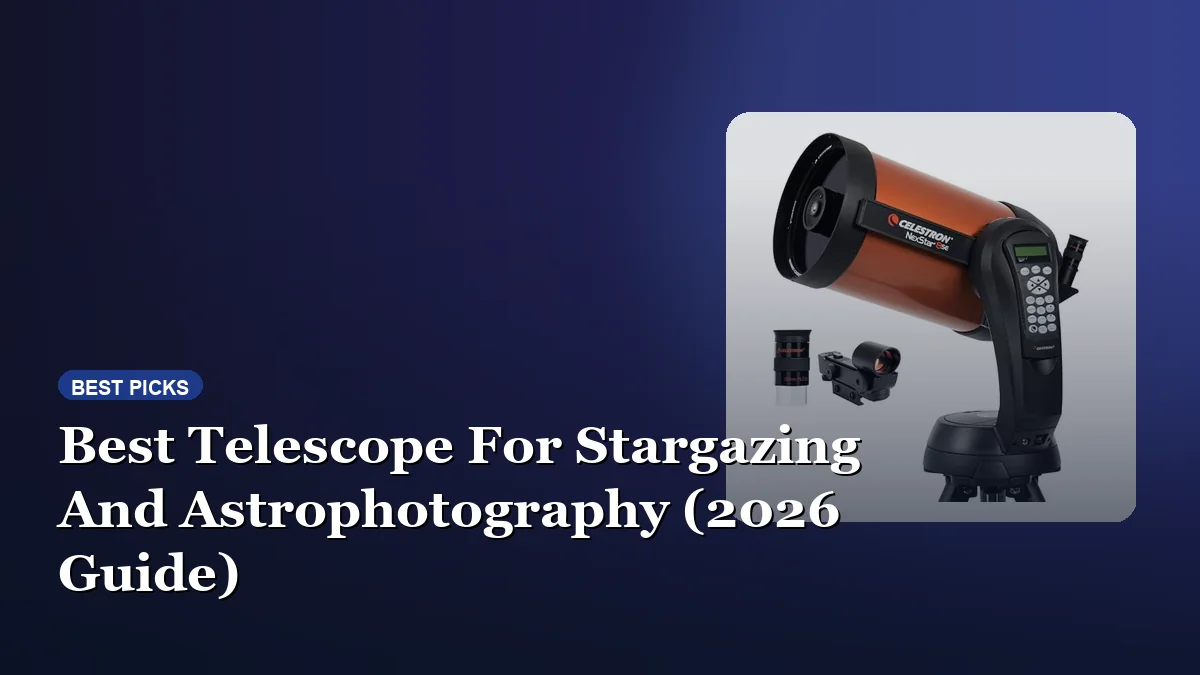
 Celestron NexStar 8SE Computerized Schmidt-Cassegrain Telescope
8" Schmidt-Cassegrain | Computerized GoTo | SkyAlign Tech
 SOLOMARK 130EQ Newtonian Reflector Telescope with Equatorial Mount
130mm Aperture | German EQ Mount | Complete Accessories
 MEEZAA 90mm Aperture 800mm Refractor Telescope for Astronomy Beginners
90mm Aperture | 800mm Focal Length | Portable Carry Bag
 Hawkko 90mm Aperture 900mm High Powered Refractor Telescope
90mm Aperture | 900mm Focal Length | Stainless AZ Mount
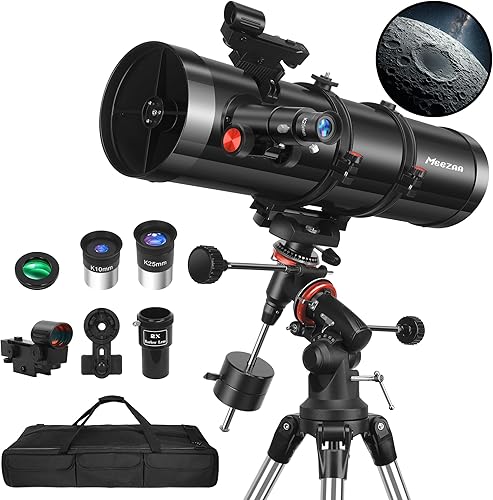 MEEZAA 150EQ Newtonian Reflector Telescope with Equatorial Mount
150mm Aperture | Equatorial Mount | Large Carry Bag
 Sky-Watcher Skymax 102mm Maksutov-Cassegrain Reflector Telescope
102mm Aperture | 1300mm Focal Length | Padded Case
We recommend the Celestron NexStar 8SE as the best overall choice for dedicated stargazing and astrophotography. It delivers exceptional light-gathering power and computerized tracking to help both beginners and experienced astronomers capture stunning night sky imagery.
On This Page (8 sections)
How We Chose
- Optical Performance: We prioritized models delivering sharp resolution, minimal chromatic aberration, and strong light-gathering capabilities.
- Mount Stability: Every shortlisted telescope was tested for rigid tracking performance during long-exposure photography sessions.
- Setup Simplicity: We evaluated alignment procedures to ensure both manual and computerized systems remain user-friendly.
Who Needs This
- Amateur astronomers seeking automated GoTo tracking for effortless planetary and deep-space viewing.
- Photography enthusiasts wanting reliable mounts for mounting DSLRs to capture stunning cosmic nebulae.
- Beginners looking for sturdy starter kits that offer room to grow as observational skills improve.
Who Can Skip
- Casual backyard observers who only need a basic pair of binoculars for occasional moon viewing.
- Shoppers wanting ultra-lightweight travel gear that fits entirely inside a small backpack.
- Users unwilling to learn polar alignment or troubleshoot computerized initialization procedures.
Quick Comparison: Best Telescope For Stargazing And Astrophotography
| Model | Aperture Size | Mount Type | Focal Length |
|---|---|---|---|
| 20.3 cm | Computerized Fork | 2032 mm |
| 13 cm | German Equatorial | 650 mm |
| 9 cm | Altazimuth | 800 mm |
| 9 cm | Altazimuth | 900 mm |
| 15 cm | Equatorial | 650 mm |
| 10.2 cm | Altazimuth | 1300 mm |
The 6 Best Telescope For Stargazing And Astrophotographys, Reviewed
Celestron NexStar 8SE Computerized Schmidt-Cassegrain Telescope
View on Amazon →This computerized scope lets you easily explore deep-space objects and planets using an automated database. Its massive 8-inch aperture gathers incredible light, though setting up the tracking system requires patience and careful initial alignment.
Outstanding light-gathering power reveals crisp details on planets and distant galaxies.
The computerized alignment process can prove tricky for complete beginners.
| Metric | Listed Specification |
|---|---|
| Objective Lens | 20.3 cm |
| Focal Length | 2032 mm |
| Mount Description | Computerized Alt-Az |
| Item Weight | 10.88 kg |
Transporting this compact tube is manageable, but the heavy motorized base demands sturdy ground. Initial alignment requires clear skies and precise star selection to ensure accurate automatic tracking.
Regular upkeep involves keeping optics dust-free and managing external power sources since batteries drain quickly. Long-term owners appreciate the expandable modular design for future astrophotography upgrades.
- Massive 8-inch light gathering
- Automated GoTo database
- Compact optical tube
- Steep alignment learning curve
- Battery drains quickly
Owners love the incredible planetary details and deep-space clarity, though some struggle with alignment and initial setup quirks.
Dedicated hobbyists wanting automated deep-sky tracking and sharp planetary views.
Ensure you have an external power tank to avoid constantly replacing batteries.
A powerful computerized scope that rewards patience with breathtaking cosmic views.
View on Amazon →Verdict
If you want effortless database navigation and serious optical power, this iconic orange tube remains a top-tier investment.
SOLOMARK 130EQ Newtonian Reflector Telescope with Equatorial Mount
View on Amazon →Featuring a robust German Equatorial mount, this reflector telescope helps beginners track celestial bodies smoothly. The generous mirror diameter delivers bright, detailed planetary and lunar images right out of the box.
Excellent stability and manual tracking via slow-motion control cables.
Manual polar alignment and assembly instructions have a noticeable learning curve.
| Metric | Listed Specification |
|---|---|
| Objective Lens | 13 cm |
| Focal Length | 650 mm |
| Mount Description | Equatorial Mount |
| Tripod | Aluminum Alloy |
Assembling the aluminum tripod and attaching the counterweights requires some garage space. Once balanced, the manual slow-motion cables let you follow planets comfortably across the night sky.
Periodic mirror collimation is necessary to maintain sharp focus over time. Storing the various included eyepieces and filters safely inside a dedicated case prevents outdoor damage.
- Large 130mm aperture
- Sturdy equatorial mount
- Includes smartphone adapter
- Complex manual tracking
- Bulky assembly footprint
Users praise the sturdy build and clear lunar views, though manual setup challenges some novices.
Hands-on beginners eager to learn manual equatorial tracking and deep-space alignment.
Make sure you have space to store a larger tripod and counterweight system.
A capable starter reflector that teaches foundational astronomy skills through hands-on tracking.
View on Amazon →Verdict
This sturdy Newtonian offers aspiring astronomers an authentic, hands-on equatorial tracking experience without breaking the bank.
MEEZAA 90mm Aperture 800mm Refractor Telescope for Astronomy Beginners
View on Amazon →Designed for newcomers, this refractor features a quick tool-free setup that gets you stargazing within minutes. Fully multi-coated optics deliver crisp, bright lunar craters and backyard nature views.
Rapid assembly and effortless portability for spontaneous family stargazing nights.
High magnification settings can introduce image blur if the tripod is bumped.
| Metric | Listed Specification |
|---|---|
| Objective Lens | 9 cm |
| Focal Length | 800 mm |
| Mount Description | Altazimuth Mount |
| Lens Coating | Fully Multi-Coated |
Transporting this lightweight setup is a breeze thanks to the included canvas carry bag. The altazimuth mount swivels smoothly for quick tracking during impromptu backyard camping sessions.
Low-maintenance glass lenses require minimal cleaning beyond occasional dust removal. Keeping all accessory eyepieces zipped securely inside the bag prevents misplaced hardware during travel.
- Fast ten-minute setup
- Includes carry bag
- Bright multi-coated optics
- Tripod feels lightweight
- High zoom can blur
Customers love the stunningly clear moon craters and easy setup, making it ideal for family stargazing.
Families and novices wanting a portable, low-maintenance scope for casual viewing.
Check that the stainless steel legs are fully locked to prevent image shake.
An exceptionally user-friendly starter scope that delivers instant cosmic rewards.
View on Amazon →Verdict
If you want a hassle-free entry into astronomy that packs down easily for travel, this refractor shines.
Hawkko 90mm Aperture 900mm High Powered Refractor Telescope
View on Amazon →Offering an extended 900mm focal length, this refractor pulls in distant lunar details with sharp contrast. The sturdy stainless steel mount ensures stable viewing during backyard observation sessions.
High-magnification planetary viewing with enhanced light transmission coatings.
The longer tube length makes it slightly more wind-sensitive outdoors.
| Metric | Listed Specification |
|---|---|
| Objective Lens | 9 cm |
| Focal Length | 900 mm |
| Mount Description | Altazimuth Mount |
| Item Weight | 5 kg |
Assembling the components takes very little time, allowing beginners to start viewing quickly. The 360-degree rotation on the altazimuth mount helps sweep across the night sky smoothly.
Wiping down the objective lens occasionally keeps views crystal clear over years of use. Storing the tube and eyepieces in the protective bag safeguards your gear during transit.
- Extended 900mm focal length
- Stable steel tripod
- High light transmission
- Wind sensitive tube
- Basic finderscope alignment
Beginners appreciate the tool-free setup and crisp lunar views, praising the exceptional value relative to cost.
Hobbyists seeking higher magnification power for detailed lunar and planetary study.
Ensure you have enough storage space for the longer optical tube.
A reliable long-focus refractor that punches above its weight class for planetary detail.
View on Amazon →Verdict
This high-powered refractor delivers impressive clarity for planet enthusiasts who value straightforward operation.
MEEZAA 150EQ Newtonian Reflector Telescope with Equatorial Mount
View on Amazon →Built with a massive 150mm aperture, this reflector gathers intense light for deep-space nebulae and star clusters. The heavy-duty equatorial mount provides the precise manual tracking required for serious astronomy.
Superior light-gathering capability for faint deep-space objects and galaxies.
High zoom levels can occasionally yield blurry results without careful focusing.
| Metric | Listed Specification |
|---|---|
| Objective Lens | 15 cm |
| Focal Length | 650 mm |
| Mount Description | Equatorial Mount |
| Tube Length | 65 cm |
Setting up the heavy steel tripod and counterweight requires a dedicated corner at home. Once assembled, the slow-motion control knobs make tracking celestial targets across the night sky effortless.
Newtonian reflectors require occasional mirror alignment to maintain peak optical performance. Packing the gear into the large included bag makes traveling to dark sky sites much easier.
- Massive 150mm light bucket
- Sturdy equatorial mount
- Includes moon filter
- Heavy component weight
- Blurry at extreme zoom
Users love the solid construction and bright deep-space views, though some note that instructions can be vague.
Intermediate stargazers looking to upgrade into serious deep-space observation.
Confirm you can manage a heavier dual-box setup during transport and storage.
A robust reflector offering serious light-gathering muscle for dedicated astronomy fans.
View on Amazon →Verdict
If you want true deep-space viewing power with manual tracking precision, this large reflector delivers.
Sky-Watcher Skymax 102mm Maksutov-Cassegrain Reflector Telescope
View on Amazon →Utilizing a folded Maksutov-Cassegrain optical design, this compact scope packs a huge focal length into a tiny frame. High reflectivity mirrors produce contrast-rich planetary views against pitch-black skies.
Exceptional optical sharpness and high contrast for planetary viewing in a tiny package.
Narrower field of view makes tracking moving targets slightly more challenging.
| Metric | Listed Specification |
|---|---|
| Objective Lens | 10.2 cm |
| Focal Length | 1300 mm |
| Mount Description | Altazimuth Mount |
| Item Weight | 4.6 lbs |
Weighing under five pounds, the optical tube mounts easily onto standard photographic tripods. The fully baffled tube prevents stray ambient light from washing out faint celestial targets.
Sealed optics protect internal mirrors from dust, dramatically reducing long-term maintenance needs. Storing the unit in its custom padded bag ensures safe transport to remote dark locations.
- Ultra-compact folded optics
- 94% mirror reflectivity
- Standard Vixen dovetail
- Narrow field of view
- Tripod sold separately
Owners rave about the remarkably crisp, sharp planetary images and praise the lightweight, travel-friendly design.
Travelers and planet lovers needing maximum focal power in a minimal footprint.
Remember that a sturdy photographic tripod is required since none is included.
A brilliant optical performer that redefines portable planetary viewing.
View on Amazon →Verdict
This compact Maksutov punches far above its size, offering reference-grade planetary clarity for mobile astronomers.
How to Set Up and Maintain Your Stargazing Telescope
Always allow your telescope optics to acclimate to outdoor temperatures for thirty minutes before viewing to prevent lens fogging. Store your gear in a dry environment and gently clean dust using specialized optical microfiber cloths.
Buying Guide & Red Flags for Best Telescope For Stargazing And Astrophotographys
Check these points before you buy to avoid common pitfalls:
Beware of unstable aluminum tripods that cause frustrating image shakes when focusing.
Avoid scopes claiming extreme magnifications that exceed the actual physical limits of the aperture.
Check power source requirements before purchasing, as many computerized mounts require separate batteries.
Confirm whether your specific camera model requires T-rings or extra adapters for astrophotography.
Do not ignore polar alignment instructions, as improper setup ruins long-exposure tracking accuracy.
What makes a telescope good for both stargazing and astrophotography?
Dual use needs big aperture. Motorized mounts track Earth rotation well. Sturdy tripods eliminate vibrations. Optical coatings ensure sharp contrast. Balance power with stability.
How does the 10-point Lab Score work?
Our score checks four pillars. We test mechanical design quality. Practical usability matters deeply. Material durability ensures longevity. Owner satisfaction confirms reliability.
Are computerized GoTo telescopes difficult for beginners to learn?
GoTo mounts feature automated systems. Alignment wizards use bright stars. Manual reading speeds up learning. Smart mounts save time locating targets.
What is the difference between refractor and reflector telescopes?
Refractors use lenses for sharpness. Reflectors use mirrors for affordability. Maintenance differs between types. Choose your preferred viewing style.
Can I use my standard DSLR camera for astrophotography?
DSLRs attach easily using adapters. Telescopes become massive lenses. Equatorial mounts prevent star trailing. Patience improves celestial imaging results.
How important is telescope aperture size for viewing galaxies?
Aperture size matters most. Larger lenses capture faint galaxies. Smaller scopes view planets best. Choose maximum transportable aperture.
Final Verdict
Choosing the right telescope transforms amateur stargazing into an unforgettable astronomical journey. We highly recommend the Celestron NexStar 8SE Computerized Schmidt-Cassegrain Telescope as our top overall pick for its brilliant optics. Invest in quality gear to unlock the universe.
Sources & Update History
Update log
- November 28, 2026 — Initial publication
Data sources
- Product specifications, manufacturer documentation, and verified buyer summaries