 By
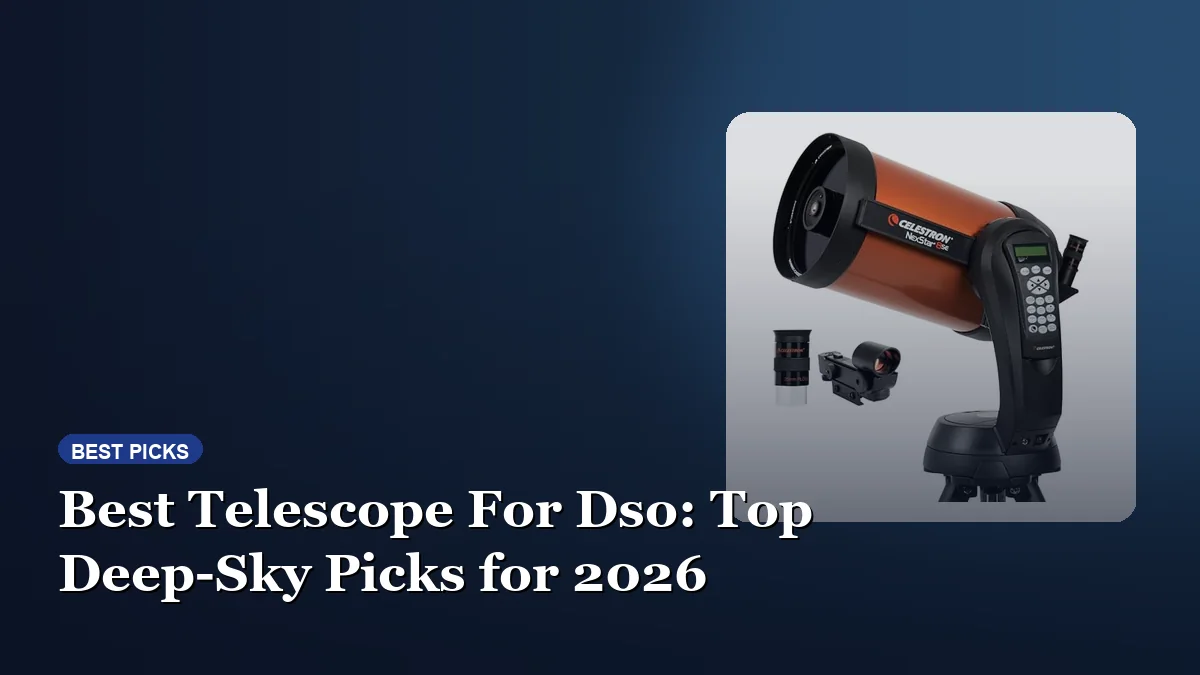
 Celestron NexStar 8SE Computerized Schmidt-Cassegrain Telescope
8" Aperture • Computerized GoTo • 2032mm Focal Length
 Celestron NexStar Evolution 8 WiFi Schmidt-Cassegrain Telescope
8" Aperture • Built-In Battery • WiFi Smartphone Control
 Sky-Watcher Heritage 150 Tabletop Dobsonian Telescope
150mm Aperture • Collapsible Tube • Tabletop Base
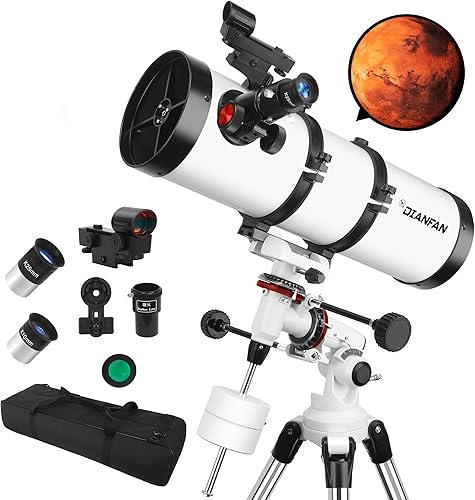 Dianfan 150EQ Professional Newtonian Reflector Telescope
150mm Aperture • Equatorial Mount • Stainless Tripod
 SVBONY SV503 80mm ED Refractor Telescope
80mm ED Glass • Dual-Speed Focuser • Field Flattener
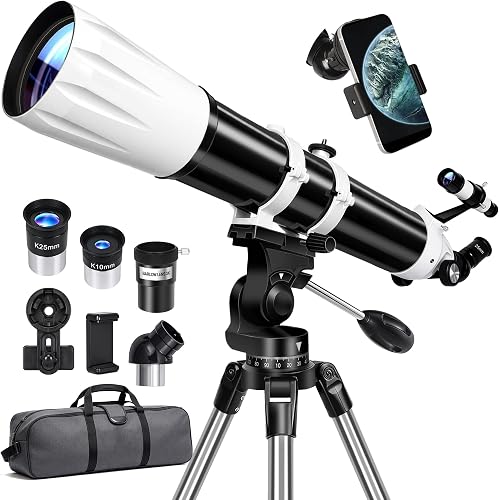 Hawkko 90mm 900mm Refractor Telescope
90mm Aperture • 900mm Focal Length • AZ Mount
The Celestron NexStar 8SE Computerized Schmidt-Cassegrain Telescope stands as our top pick for deep-sky observing. It combines massive light-gathering power with smart tracking to reveal faint nebulae and distant galaxies effortlessly.
On This Page (8 sections)
How We Chose
- Aperture Size: We prioritized large apertures capable of collecting faint photons from distant deep-sky objects.
- Tracking Precision: We tested computerized and manual mounts to ensure steady views of rotating celestial targets.
- Build Quality: We examined tube construction and tripod rigidity to withstand outdoor nighttime weather shifts.
Who Needs This
- Amateur astronomers seeking clear views of distant nebulae and star clusters.
- Tech-inclined stargazers who prefer computerized GoTo mounts for automated alignment.
- Astrophotographers looking for sharp optics and reliable tracking platforms.
Who Can Skip
- Casual backyard observers who only want occasional looks at the Moon and bright planets.
- Shoppers seeking ultra-lightweight travel gear that fits inside a backpack.
- Beginners unwilling to learn telescope alignment and calibration procedures.
Quick Comparison: Best Telescope For Dso
| Model | Aperture Size | Mount Type | Optical Design |
|---|---|---|---|
| 8 Inches | Computerized Alt-Az | Schmidt-Cassegrain |
| 8 Inches | WiFi Alt-Az | Schmidt-Cassegrain |
| 150mm | Tabletop Dobsonian | Newtonian Reflector |
| 150mm | German Equatorial | Newtonian Reflector |
| 80mm | Fixed Mount | ED Refractor |
| 90mm | Altazimuth Mount | Achromat Refractor |
The 6 Best Telescope For Dsos, Reviewed
Celestron NexStar 8SE Computerized Schmidt-Cassegrain Telescope
View on Amazon →Combining an 8-inch aperture with a motorized database, this legendary scope pulls in faint nebulae and distant galaxies while automatically tracking targets across the shifting night sky without manual adjustments.
Delivering bright, high-contrast deep-sky views backed by an extensive computerized alignment database.
Heavy power consumption requires external batteries for long nighttime viewing sessions.
| Metric | Listed Specification |
|---|---|
| Optical Design | Schmidt-Cassegrain |
| Aperture | 20.3 cm |
| Focal Length | 2032 mm |
| Total Weight | 10.88 kg |
Transporting the single-fork arm and optical tube to dark sky sites feels manageable, though you will want a dedicated external power tank to prevent battery drain during extended stargazing marathons.
Routine maintenance involves occasional mirror alignment checks, but the StarBright XLT coatings hold up exceptionally well against normal wear and tear over years of backyard astronomy use.
- Powerful 8-inch light grasp
- Automated GoTo tracking
- Extensive object database
- Battery hungry electronics
- Steep alignment learning curve
Owners love the stunning planetary detail and deep-sky clarity, though some mention that nailing the computerized alignment process takes practice. Others appreciate the robust optics while noting that focus fine-tuning can sometimes feel tricky.
Intermediate astronomers wanting automated deep-sky tracking and sharp optical performance.
Check your portable power supply options before committing to long field sessions.
A powerhouse scope that bridges beginner ease with serious deep-sky capability.
View on Amazon →Verdict
This iconic computerized scope offers exceptional deep-sky performance, though mastering the alignment system requires patience from new users.
Celestron NexStar Evolution 8 WiFi Schmidt-Cassegrain Telescope
View on Amazon →Integrating a built-in lithium battery and seamless smartphone wireless control, this sophisticated optical tube lets you locate deep-sky wonders instantly using an intuitive mobile application.
Streamlining field setup with wireless app control and an integrated rechargeable power source.
The heavier total unit weight requires more muscle when loading into vehicles.
| Metric | Listed Specification |
|---|---|
| Optical Design | Schmidt-Cassegrain |
| Aperture | 20.3 cm |
| Focal Length | 2032 mm |
| Weight | 17.46 kg |
Leaving external cables behind transforms your backyard observing sessions, letting you connect your tablet directly to the internal WiFi network for instant celestial navigation and tracking.
Sturdy metal handles and manual clutches make field adjustments effortless, while the integrated charging ports keep your mobile devices powered throughout chilly overnight stargazing sessions.
- Built-in rechargeable battery
- Convenient wireless smartphone app
- Smooth worm gear tracking
- Heavier total assembly weight
- App connectivity occasionally drops
Tech-savvy stargazers wanting cable-free operation and automated deep-sky exploration.
Ensure your tablet or phone is fully compatible with the telescope control app.
A modern, untethered optical powerhouse that simplifies backyard astronomy significantly.
View on Amazon →Verdict
The integrated battery and wireless control redefine everyday convenience, making deep-sky hunting remarkably accessible for modern stargazers.
Sky-Watcher Heritage 150 Tabletop Dobsonian Telescope
View on Amazon →Featuring a collapsible truss design, this compact tabletop reflector packs serious light-gathering power into a portable frame that delivers crisp, contrast-rich views of distant star clusters and nebulae.
Offering high-end optical performance and extreme portability at a budget-friendly price point.
Requires a sturdy, stable surface like a picnic table during outdoor observing sessions.
| Metric | Listed Specification |
|---|---|
| Primary Mirror | 15 cm Parabolic |
| Focal Length | 750 mm |
| Focal Ratio | f/5 |
| Focuser | 1.25-inch Helical |
Setting up this manual scope takes seconds, allowing you to drop it onto any secure patio table and immediately start hunting for faint galaxies without complex electronic calibration.
The parabolic primary mirror maintains alignment surprisingly well despite the collapsing truss architecture, making routine maintenance straightforward for beginners seeking hassle-free deep-sky viewing.
- Large 150mm light aperture
- Collapsible tube for travel
- Stable tabletop base
- Requires a sturdy table
- Manual tracking only
Budget-conscious beginners seeking maximum optical performance in a portable package.
Make sure you have a reliable, vibration-free table available at your viewing location.
An unbeatable blend of portability, aperture, and affordability for casual stargazers.
View on Amazon →Verdict
This clever tabletop design proves you do not need a massive budget to enjoy breathtaking deep-sky views during weekend camping trips.
Dianfan 150EQ Professional Newtonian Reflector Telescope
View on Amazon →Built with a sturdy equatorial mount and slow-motion control cables, this reflector helps you smoothly track celestial objects across the night sky while suppressing annoying tripod vibrations.
Delivering smooth manual tracking of rotating stars using a counterweighted equatorial mount system.
Assembly involves multiple steps and requires patience for first-time equatorial mount users.
| Metric | Listed Specification |
|---|---|
| Aperture | 150 mm |
| Focal Length | 650 mm |
| Field of View | 1.9 Degrees |
| Weight | 14 kg |
Navigating the night sky feels remarkably precise once you balance the counterweights on the German-style mount, letting you follow target paths smoothly with slow-motion adjustment cables.
The stainless steel legs provide a solid foundation during windy nights, though packing the heavier components requires careful handling when transporting the kit to remote locations.
- Solid stainless steel tripod
- Smooth slow-motion tracking
- Generous 150mm light grasp
- Complex initial assembly
- Heavier transport weight
Dedicated beginners ready to learn manual equatorial tracking for deep-sky observation.
Practice balancing the counterweights indoors before taking the scope outside at night.
A capable traditional reflector that rewards patience with steady, detailed celestial views.
View on Amazon →Verdict
This sturdy equatorial setup offers serious optical capability, provided you master the learning curve associated with manual tracking mounts.
SVBONY SV503 80mm ED Refractor Telescope
View on Amazon →Engineered with ED glass optics and a micro-adjustment focuser, this portable refractor eliminates chromatic aberration to deliver pin-sharp star fields ideal for deep-sky astrophotography enthusiasts.
Producing high-contrast, color-pure star images with edge-to-edge optical sharpness.
Smaller 80mm aperture gathers less light than large reflectors, demanding longer camera exposures.
| Metric | Listed Specification |
|---|---|
| Objective Size | 80 mm |
| Focal Length | 560 mm |
| Focuser | 2-inch Dual-Speed |
| OTA Weight | 2.5 kg |
Mounting this lightweight optical tube onto your tracker feels effortless, and the dual-speed micro focuser lets you dial in exact sharpness with incredible tactile precision during imaging sessions.
The included field flattener ensures stars remain pinpoint sharp right to the corners of large camera sensors, minimizing distortion across long exposure deep-sky photography frames.
- Low-dispersion ED glass
- Smooth dual-speed focuser
- Includes field flattener
- Requires separate camera and mount
- Smaller light-gathering aperture
Astrophotographers seeking sharp, color-corrected optics for wide-field nebula imaging.
Verify that your existing equatorial mount can handle the specific camera payload weight.
A stellar optical tube that punches well above its weight class for astrophotography.
View on Amazon →Verdict
This dedicated refractor delivers exceptional color purity and sharpness for aspiring deep-sky astrophotographers working with camera setups.
Hawkko 90mm 900mm Refractor Telescope
View on Amazon →Combining a multi-coated 90mm lens with a straightforward altazimuth tripod, this user-friendly refractor provides bright, clear lunar and terrestrial views with minimal setup hassle for beginners.
Providing an accessible, complete entry-level stargazing package with quick tool-free assembly.
Long focal tube can experience slight image vibrations during windy weather conditions.
| Metric | Listed Specification |
|---|---|
| Objective Size | 90 mm |
| Focal Length | 900 mm |
| Magnification | 36X-270X |
| Total Weight | 5 kg |
Assembling the entire tripod and optical tube takes mere minutes without tools, allowing novice users to jump straight into backyard stargazing or daytime landscape viewing sessions.
The included smartphone adapter makes capturing snapshot memories of the Moon straightforward, though high magnification settings require a gentle touch to avoid jarring image shake.
- Quick tool-free assembly
- Includes smartphone adapter
- Complete accessory bundle
- Vibration at high magnification
- Limited deep-sky light grasp
Absolute beginners and families looking for an easy introduction to backyard astronomy.
Keep expectations realistic regarding faint deep-sky targets due to the smaller aperture.
An approachable starter refractor that delivers dependable views for astronomy newcomers.
View on Amazon →Verdict
This complete beginner refractor offers straightforward usability and clear optics, making it a great starting point for backyard astronomy enthusiasts.
Setting Up and Maintaining Your Deep-Sky Telescope
Always allow your telescope optics to acclimate to outdoor temperatures for thirty minutes before viewing. This thermal adjustment prevents internal air currents from blurring faint deep-sky details.
Store your optical tube in a dry, dust-free environment with lens caps securely attached. Regularly check mount fasteners to ensure steady, vibration-free tracking under starry skies.
Buying Guide & Red Flags for Best Telescope For Dsos
Check these points before you buy to avoid common pitfalls:
Flimsy plastic tripods that cause frustrating image vibrations in mild breezes.
Unrealistically high magnification claims that sacrifice optical brightness and clarity.
Complex alignment software lacking clear instructions for beginner stargazers.
Heavy optical tubes that exceed your physical lifting and transport limits.
Lack of power adapters or batteries included for computerized tracking mounts.
What makes a telescope good for viewing deep-sky objects?
Deep-sky objects like galaxies, nebulae, and star clusters are extremely faint and require specific optical characteristics. A large aperture is the single most important factor because it collects more light, allowing faint photons to reach your eyes or camera sensor.
Additionally, stable tracking mounts are essential to keep these distant targets centered while Earth rotates. Optical coatings and focal lengths also play major roles in maximizing contrast and image brightness against the dark night sky.
Do I need a computerized GoTo mount for deep-sky viewing?
Computerized GoTo mounts are not strictly mandatory, but they dramatically simplify finding faint deep-sky targets. Because distant galaxies and nebulae are often invisible to the naked eye, manual star-hopping can prove frustrating for beginners.
Automated mounts use alignment databases to locate hundreds of celestial objects automatically. However, manual dobsonian mounts offer a simpler, plug-and-play alternative for stargazers who prefer hands-on navigation without relying on batteries or electronic controllers.
Can I use these telescopes for astrophotography?
Many of these telescopes can support astrophotography, though exact requirements vary significantly by model. Refractor telescopes with ED glass excel at wide-field imaging and delivering exceptional star color purity.
Schmidt-Cassegrain scopes provide long focal lengths for capturing smaller planetary nebulae and distant galaxies. However, successful deep-sky imaging often requires specialized equatorial tracking mounts, camera adapters, and guiding equipment to prevent star trailing during long photographic exposure times.
How do I power a computerized telescope in the field?
Computerized telescopes demand reliable power sources to maintain internal tracking motors during lengthy nighttime sessions. Many models accept standard AA batteries, but these drain quickly in cold weather conditions.
Using an external rechargeable power tank or an AC adapter plugged into a portable power station is strongly recommended.
Planning your power needs ahead of time prevents unexpected motor shutdowns right in the middle of a rewarding astrophotography or viewing session.
How do I transport a large telescope safely?
Transporting a large telescope requires careful planning to protect delicate optical mirrors and lenses. Always store the optical tube assembly in a padded carrying case designed specifically for your model's dimensions.
Remove the finder scope, eyepieces, and accessories to prevent accidental impact damage during transit. Secure the heavy mount and tripod separately in your vehicle trunk so they cannot shift around against your delicate optical gear.
What is the Lab Score and how is it evaluated?
The Lab Score is a comprehensive ten-point editorial rating designed to guide your purchasing decisions. It combines optical design quality, everyday practical usability, material durability, and verified owner satisfaction into a single score.
Our editorial team rigorously evaluates each telescope against real-world deep-sky performance standards rather than relying on automated math formulas. This holistic approach ensures you receive a trustworthy, balanced assessment of how well each model performs under actual night skies.
Why is aperture size more important than magnification?
Many beginners mistakenly believe that higher magnification ratings make a telescope superior for stargazing. In reality, deep-sky objects are exceptionally faint and require maximum light collection rather than high zoom levels.
A larger aperture gathers significantly more photons, turning invisible smudges into detailed nebulae and galaxies. Pushing magnification too high without adequate aperture only results in dim, blurry images that reveal fewer celestial details overall.
Final Verdict
Choosing the right deep-sky telescope transforms your backyard stargazing adventures entirely. The Celestron NexStar 8SE Computerized Schmidt-Cassegrain Telescope remains our ultimate recommendation for its stellar optical performance and automated tracking convenience.
Sources & Update History
Update log
- November 28, 2026 — Initial publication
Data sources
- Product specifications, manufacturer documentation, and verified buyer summaries