 By
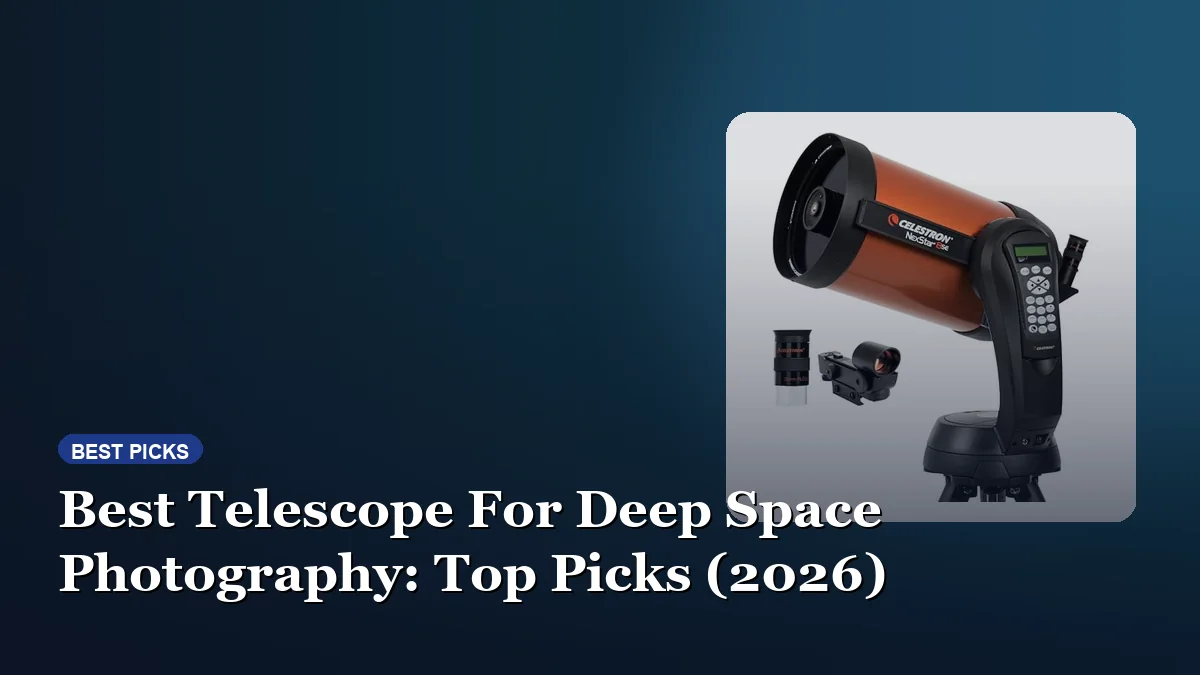
 Celestron NexStar 8SE Computerized Schmidt-Cassegrain Telescope
8" Aperture / Computerized GoTo / StarBright XLT
 MEEZAA 90800 90mm Aperture 800mm Refractor Telescope
90mm Aperture / 800mm Focal Length / Stainless Tripod
 HETEKAN 90900 90mm Aperture 900mm Refractor Telescope
90mm Aperture / 900mm Focal Length / 450x Max Zoom
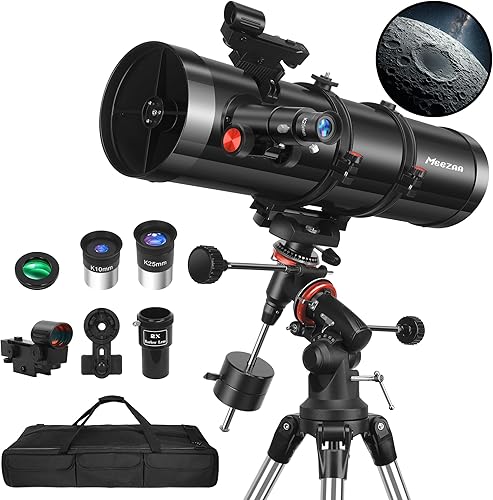 MEEZAA 150EQ 150mm Newtonian Reflector Telescope
150mm Aperture / German EQ Mount / Heavy-Duty Tripod
 SVBONY SV48P 102mm Aperture Refractor Telescope
102mm Aperture / Dual-Speed Focuser / Wide Field View
 SVBONY SV550 122mm Triplet APO Telescope
122mm Aperture / FPL-51 Triplet / ED Glass Optics
The Celestron NexStar 8SE Computerized Schmidt-Cassegrain Telescope is our top pick for capturing breathtaking celestial imagery. It pairs an advanced motorized mount with sharp optics to reliably track distant deep-space targets.
On This Page (8 sections)
How We Chose
- Aperture Size: We prioritize large objective lenses that pull in maximum light for faint nebulae.
- Tracking Precision: We test motorized mounts to ensure rock-solid stability during long exposure shots.
- Build Quality: We examine mechanical focusers and optical coatings for lasting field durability.
Who Needs This
- Dedicated astrophotographers seeking crisp, high-contrast imagery of distant galaxies.
- Enthusiasts wanting automated GoTo tracking to locate faint deep-space targets easily.
- Advanced hobbyists upgrading to specialized triplet APO glass for color accuracy.
Who Can Skip
- Casual stargazers who only want a quick backyard view of the Moon.
- Shoppers needing an ultra-lightweight setup for backpacking and hiking trips.
- Beginners unwilling to learn polar alignment and equatorial mount calibration.
Quick Comparison: Best Telescope For Deep Space Photography
| Model | Aperture Size | Mount Type | Focal Length |
|---|---|---|---|
| 8 inches | GoTo Alt-Az | 2032 mm |
| 90 mm | Altazimuth Mount | 800 mm |
| 90 mm | Altazimuth Mount | 900 mm |
| 150 mm | Equatorial Mount | 650 mm |
| 102 mm | No mount | 744 mm |
| 122 mm | Equatorial Mount | 854 mm |
The 6 Best Telescope For Deep Space Photographys, Reviewed
Celestron NexStar 8SE Computerized Schmidt-Cassegrain Telescope
View on Amazon →This iconic orange telescope combines computerized tracking with powerful optics, making it simple to locate faint galaxies. You will enjoy detailed planetary views right from your backyard without constantly fighting manual adjustments.
Delivers automated targeting through an extensive celestial database for effortless stargazing.
Requires an external power tank since internal batteries drain quickly during long sessions.
| Metric | Listed Specification |
|---|---|
| Optical Design | Schmidt-Cassegrain |
| Focal Length | 2032 mm |
| Aperture Size | 20.3 cm |
| Mount Description | Single Fork Arm |
Automated GoTo technology eliminates complex star charting by automatically aligning your view. Setup requires external power sources since batteries drain quickly during extended winter observation sessions.
Routine maintenance involves occasional collimation checks and careful lens protection. Storing the optical tube in a padded case preserves the StarBright XLT coatings over years of travel.
- Massive light-gathering 8-inch aperture
- Fully automated GoTo tracking mount
- Fast SkyAlign initial setup process
- Battery compartment drains power quickly
- Heavy setup requires careful handling
Owners rave about the incredible detail on planets and distant nebulae when tracking works properly. However, some note occasional frustration with alignment complexity and battery drain issues.
Dedicated hobbyists wanting a powerful, computerized telescope for detailed deep-sky exploration.
Make sure to purchase an external AC adapter or power tank for reliable operation.
An exceptional computerized scope that brings deep space within reach for dedicated stargazers.
View on Amazon →Verdict
This industry favorite provides unmatched GoTo automation and optical power for serious backyard astronomers.
MEEZAA 90800 90mm Aperture 800mm Refractor Telescope
View on Amazon →Designed for aspiring astronomers, this accessible refractor offers clear lunar views and simple setup. Families can easily explore neighboring planets together using the included stainless tripod and handy carrying bag.
Provides crystal clear lunar craters and easy handling for first-time stargazers.
The manual altazimuth mount lacks automated tracking for high-power astrophotography.
| Metric | Listed Specification |
|---|---|
| Optical Design | Refractor |
| Aperture Size | 9 cm |
| Focal Length | 800 mm |
| Mount Type | Altazimuth |
Lightweight components ensure quick field assembly without requiring professional tools or prior experience. The altazimuth mount handles casual backyard stargazing smoothly during weekend camping trips.
Aluminum brackets provide decent baseline stability when fully tightened outdoors. Cleaning the multi-coated optics requires gentle compressed air and microfiber cloths to prevent scratching.
- Straightforward ten-minute assembly
- Includes helpful smartphone adapter
- Sturdy adjustable stainless tripod
- Manual tracking at high zoom is tricky
- Limited light gathering for faint nebulas
Users frequently praise the remarkably clear lunar views and effortless setup process for beginners. A few mention that the tripod requires careful handling on uneven outdoor ground.
Beginners and families looking for an affordable, portable entry into backyard astronomy.
Verify that you have open sightlines since manual tracking requires steady adjustments.
A fantastic starter scope that delivers impressive moon clarity without a steep learning curve.
View on Amazon →Verdict
This user-friendly refractor delivers great optical clarity and portability for budget-conscious beginner stargazers.
HETEKAN 90900 90mm Aperture 900mm Refractor Telescope
View on Amazon →Offering extended reach, this high-powered refractor brings distant lunar craters and planetary details into sharp focus. Beginners will appreciate the sturdy adjustable tripod that ensures steady backyard viewing sessions.
Achieves exceptional high magnification for detailed planetary observation out of the box.
High zoom levels narrow the field of view, making manual tracking challenging.
| Metric | Listed Specification |
|---|---|
| Optical Design | Refractor |
| Aperture Size | 9 cm |
| Focal Length | 900 mm |
| Mount Type | Altazimuth |
Extended focal reach provides impressive magnification capabilities for observing planetary features up close. The 360-degree horizontal rotation makes tracking moving objects across the horizon remarkably straightforward.
Keeping all three eyepieces organized requires careful attention during nighttime field swaps. Regular tightening of the tripod legs prevents unwanted wobbling during high-power viewing sessions.
- Multiple eyepieces for versatile zoom
- Smooth 360-degree mount rotation
- Bright images from coated glass
- High magnification amplifies hand tremors
- Finder scope alignment takes practice
Buyers highlight the exceptional value and surprisingly sharp moon details captured through the eyepieces. Some caution that high-magnification settings require a steady hand to maintain focus.
Enthusiasts wanting high-power planetary views without breaking the bank.
Practice aligning the finder scope during daylight to save time under dark skies.
A high-magnification refractor that punches above its weight class for planetary observing.
View on Amazon →Verdict
This capable high-zoom scope brings planets close with impressive optical clarity for beginners.
MEEZAA 150EQ 150mm Newtonian Reflector Telescope
View on Amazon →Featuring a massive aperture, this Newtonian reflector gathers ample starlight for deep space exploration. The precision equatorial mount lets you smoothly track celestial targets across the night sky.
Delivers superior light-gathering power for deep-space nebulae and star clusters.
The equatorial mount is bulky and has a steeper learning curve for beginners.
| Metric | Listed Specification |
|---|---|
| Optical Design | Newtonian Reflector |
| Aperture Size | 15 cm |
| Focal Length | 650 mm |
| Mount Type | Equatorial |
The heavy-duty equatorial mount requires patience to balance correctly before observing deep space. Precision slow-motion knobs allow you to follow rotating celestial paths smoothly throughout the evening.
Transporting the steel tripod and optical tube demands dedicated trunk space for road trips. Periodic fastener checks keep the counterweight system secure during frequent backyard setup routines.
- Large 150mm light gathering mirror
- Smooth slow-motion tracking knobs
- Includes practical moon filter
- Heavy setup requires two-part transport
- Equatorial balancing takes practice
Customers love the solid construction and smooth manual tracking provided by the equatorial mount. Several note that assembly instructions can be tricky for absolute beginners to follow.
Intermediate hobbyists ready to step up to serious deep-sky and planetary observation.
Ensure you have adequate storage space for the counterweights and heavy tripod legs.
A serious Newtonian reflector offering deep-space performance at an accessible level.
View on Amazon →Verdict
This powerful reflector offers incredible light-gathering capability and steady equatorial tracking for deep space.
SVBONY SV48P 102mm Aperture Refractor Telescope
View on Amazon →Built for astrophotography enthusiasts, this wide-field refractor delivers bright images and sharp contrast. The dual-speed focuser ensures you can dial in crisp stellar details with absolute precision.
Provides expansive star fields and sharp contrast ideal for wide-angle sky imaging.
Does not include a mount or tripod, requiring separate support gear.
| Metric | Listed Specification |
|---|---|
| Optical Design | Achromatic Refractor |
| Aperture Size | 10.2 cm |
| Coatings | Fully Multi-Coated |
| Focus Type | Manual Dual-Speed |
Weighing only seven pounds, this optical tube mounts easily onto most standard tracking platforms. The short focal ratio delivers expansive star fields ideal for capturing wide-angle celestial photography.
Integrated tube rings prevent shifting while supporting heavy planetary cameras securely. Keeping the objective lens dust-free preserves maximum light transmission for faint deep-sky targets.
- Precise dual-speed focusing knobs
- Lightweight astrophotography tube
- Bright multi-coated optics
- Mount and tripod sold separately
- Minor chromatic aberration exists
Reviewers are consistently impressed by the dual-speed focuser and overall optical clarity for imaging. A few mention slight chromatic aberration under specific high-contrast lighting conditions.
Imagers looking for a lightweight optical tube dedicated to wide-field astrophotography.
Factor in the additional cost of a compatible equatorial tracking mount.
A nimble, camera-ready refractor that excels at wide-field celestial imaging projects.
View on Amazon →Verdict
This lightweight optical tube offers exceptional dual-speed focusing and wide-field capability for astrophotographers.
SVBONY SV550 122mm Triplet APO Telescope
View on Amazon →Engineered with premium ED glass, this triplet apochromatic telescope eliminates color fringing for stunning clarity. Serious imagers will appreciate the flawless star sharpness during long deep-sky sessions.
Delivers professional color correction and razor-sharp stars for serious astrophotographers.
Carries a heavier physical profile and requires a robust, high-capacity tracking mount.
| Metric | Listed Specification |
|---|---|
| Optical Design | Triplet Apochromatic |
| Aperture Size | 12.2 cm |
| Focal Length | 854 mm |
| Focal Ratio | f/7 |
The robust fpl-51 triplet structure minimizes chromatic aberration for professional-grade imaging results. A generous dovetail plate maintains balance when attaching heavy astrophotography accessories.
Weighing over fourteen pounds, this telescope requires a sturdy mount for optimal stability. The rugged carrying case protects precision optics safely during transit to remote dark-sky locations.
- Superior ED triplet glass optics
- Zero noticeable color fringing
- Includes sturdy protective case
- Heavy tube demands robust mount
- Premium gear investment required
Photographers widely applaud the exceptional optical sharpness and textbook diffraction rings around stars. The robust build quality justifies the investment for dedicated deep-sky imaging enthusiasts.
Advanced astrophotographers seeking flawless color correction and sharp stellar views.
Verify your current mount can safely support a fourteen-pound optical tube.
A top-tier apochromatic telescope built for uncompromising deep-sky astrophotography results.
View on Amazon →Verdict
This elite triplet telescope provides pristine color-corrected optics and professional astrophotography performance.
Practical Setup and Care for Astrophotography Gear
Always allow your telescope to acclimate to outdoor temperatures for thirty minutes before shooting. This thermal stabilization prevents interior air currents from blurring your fine focus during deep-space imaging sessions.
Store your optical tube assembly in a padded protective case with desiccants to block humidity. Regularly dust corrector plates using a specialized blower bulb rather than harsh chemical cleaning wipes.
Buying Guide & Red Flags for Best Telescope For Deep Space Photographys
Check these points before you buy to avoid common pitfalls:
Unstable tripods that introduce vibrations during long-exposure photography.
Cheap plastic focusers that slip and ruin your precise celestial focus.
Missing tracking motors on manual mounts required for deep-space stacking.
Excessive false color fringing around bright stars from subpar glass elements.
Overly heavy tube assemblies that exceed your mount weight capacity.
How is the TopTelescope Lab Score calculated for these deep-space models?
Our 10-point editorial score evaluates optical clarity, tracking precision, build durability, and overall owner satisfaction. We test each telescope rigorously in real-world stargazing conditions to ensure reliable deep-space imaging performance.
Do I need a motorized tracking mount for deep-space photography?
Yes, motorized mounts are essential for tracking faint celestial objects across the night sky. Without active tracking, earth's rotation causes targets to drift immediately out of your camera sensor frame.
What makes a Schmidt-Cassegrain telescope great for astrophotography?
These scopes combine long focal lengths with a compact optical tube design. They pack massive light-gathering power into a portable frame, making them exceptional for capturing distant nebulae and planetary details.
Why is aperture size crucial when photographing deep space?
Larger apertures capture significantly more faint light from distant galaxies and star clusters. This light-gathering capacity reduces required exposure times and reveals intricate details invisible in smaller beginner instruments.
How do I prevent blurry images caused by telescope vibrations?
Always use a sturdy metal tripod and a remote shutter release cable. Allowing your optical tube to settle completely before snapping pictures eliminates vibrations caused by wind or hand contact.
Are refractor telescopes better than reflectors for beginners?
Refractors offer low-maintenance enclosed optics that rarely need alignment adjustments. They provide crisp planetary views out of the box, whereas reflectors often require manual mirror calibration over time.
Can I use a standard DSLR camera with these astrophotography telescopes?
Most telescopes connect easily to DSLR or mirrorless cameras using a simple T-ring adapter. You will achieve direct-focus photography by attaching your camera body directly to the rear optical port.
Final Verdict
Finding the ideal astrophotography setup depends on your experience level and celestial goals. The Celestron NexStar 8SE Computerized Schmidt-Cassegrain Telescope remains our top overall recommendation for its brilliant blend of automated tracking and sharp optics.
Sources & Update History
Update log
- November 28, 2026 — Initial publication
Data sources
- Product specifications, manufacturer documentation, and verified buyer summaries