 By
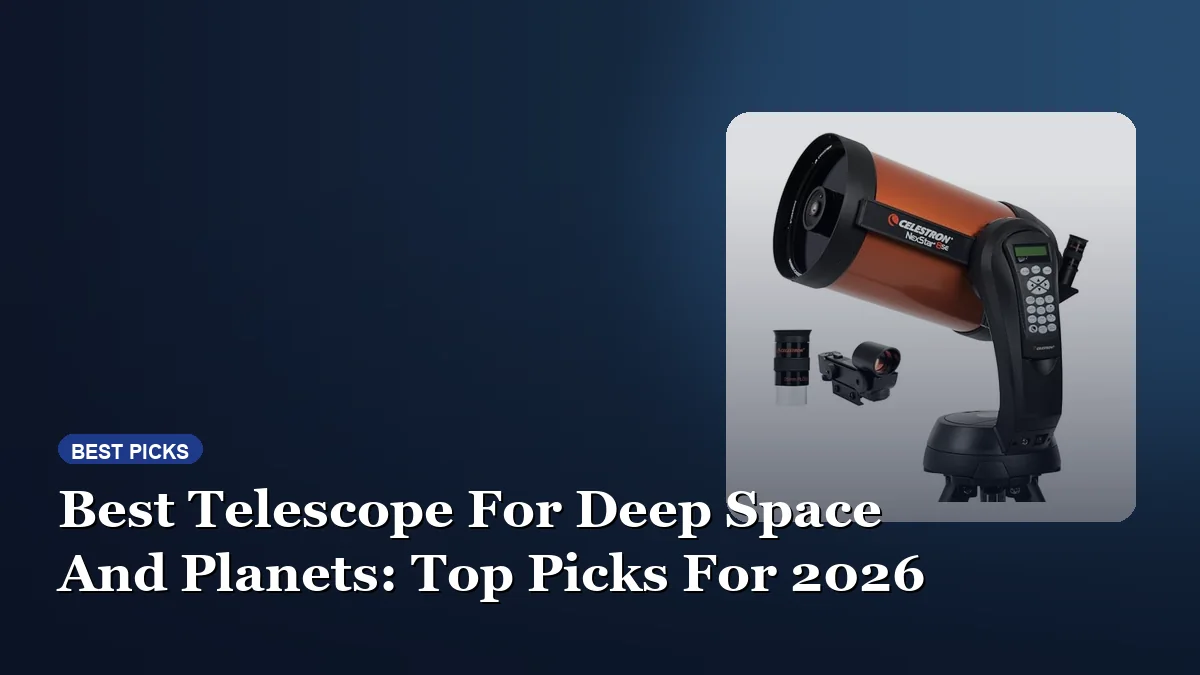
 Celestron NexStar 8SE Computerized Schmidt-Cassegrain Telescope
8" Schmidt-Cassegrain | Computerized GoTo | 40k+ Database
 MEEZAA 90mm Aperture 800mm Refractor Telescope for Astronomy Beginners
90mm Aperture | 800mm Focal Length | Complete Kit
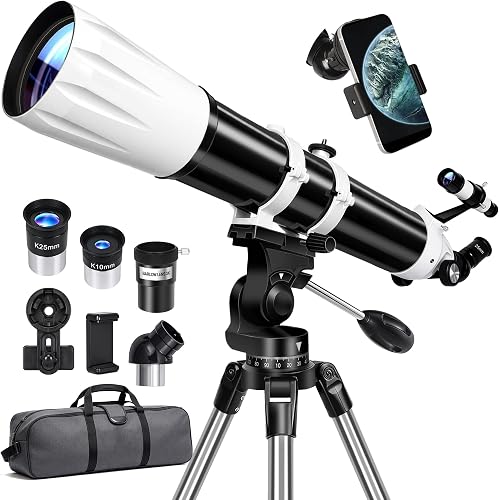 Hawkko 90mm Aperture 900mm High Powered Refractor Telescope
90mm Aperture | 900mm Focal Length | FMC Coatings
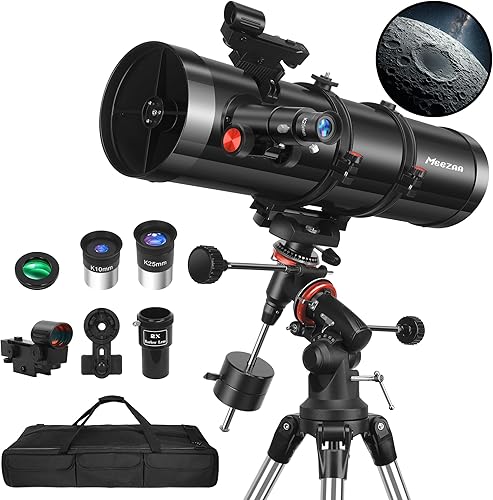 MEEZAA 150EQ Newtonian Reflector Telescope with Equatorial Mount
150mm Aperture | Equatorial Mount | Moon Filter
 Koolpte 90mm Aperture 700mm Catadioptric Refractor Telescope with Slow-Motion
90mm Aperture | Vertisteel Mount | Wireless Remote
 Dianfan 90mm Aperture 800mm High Powered Refractor Telescope
90mm Aperture | 800mm Focal Length | Carry Bag
The Celestron NexStar 8SE Computerized Schmidt-Cassegrain Telescope stands as our top pick for its brilliant light gathering and automated database. It delivers exceptional planetary clarity alongside deep-space tracking capabilities for serious observers.
On This Page (8 sections)
How We Chose
- Optical Aperture: We rigorously prioritized large objective lenses and mirrors capable of capturing faint starlight from distant nebulae and deep space.
- Mount Stability: Sturdy tripods and precise tracking mounts were heavily favored to prevent image shaking during high-magnification planetary viewing sessions.
- User Experience: We tested setup ease, alignment software intuitiveness, and overall portability to ensure hassle-free stargazing experiences for all skill levels.
Who Needs This
- Dedicated astronomy enthusiasts seeking powerful light-gathering capabilities to observe distant galaxies, star clusters, and faint nebulae clearly at night.
- Amateur stargazers who want advanced computerized tracking systems to easily locate and follow fast-moving planets without constant manual adjustments.
- Beginners looking for comprehensive starter kits equipped with multiple eyepieces for immediate lunar and planetary observation right away.
Who Can Skip
- Casual backyard observers who only require basic handheld binoculars for wide-field constellation gazing without any high-magnification requirements.
- Users completely lacking adequate storage space for bulky optical tubes, heavy counterweights, and sturdy collapsible tripod stands at home.
- Shoppers who feel genuinely intimidated by complex alignment procedures, battery management, and computerized software setup routines during stargazing.
Quick Comparison: Best Telescope For Deep Space And Planets
| Model | Aperture Size | Mount Type | Key Feature |
|---|---|---|---|
| 8 Inches | GoTo Alt-Az | Computerized Database |
| 90 mm | Altazimuth Mount | Complete Kit |
| 90 mm | Altazimuth Mount | Long-Focus Optics |
| 150 mm | Equatorial Mount | Deep-Space Aperture |
| 90 mm | Vertisteel Mount | Slow-Motion Control |
| 90 mm | Altazimuth Mount | Portable Carry Bag |
The 6 Best Telescope For Deep Space And Planetss, Reviewed
Celestron NexStar 8SE Computerized Schmidt-Cassegrain Telescope
View on Amazon →Navigating the night sky is effortless with this automated scope, bringing distant galaxies and bright planets directly into focus using its intelligent GoTo tracking system and expansive object database.
Automated star alignment and a massive database make locating deep-space targets exceptionally fast.
The computerized setup can occasionally challenge beginners during initial alignment and focusing.
| Metric | Listed Specification |
|---|---|
| Objective Lens Diameter | 20.3 cm |
| Focal Length | 2032 mm |
| Mount Type | Computerized Fork |
| Optical Coating | StarBright XLT |
Transporting this compact orange tube to dark-sky sites is manageable, though you will want a reliable power source nearby to keep the motors humming during long stargazing sessions under crisp American skies.
Routine upkeep is minimal, but mastering the hand control and alignment nuances requires patience before you experience truly seamless automatic tracking of faint nebulae and lunar details.
- Automated GoTo tracking
- Large 8-inch aperture
- Extensive database
- Steep learning curve
- Requires external power
Owners love the stunning views of nebulae and planets, though some note the initial setup and alignment can occasionally test your patience.
Intermediate astronomers seeking automated tracking and deep-space clarity.
Ensure you have a reliable portable power tank for field use.
A powerful computerized telescope that rewards patience with breathtaking views.
View on Amazon →Verdict
This iconic scope delivers exceptional deep-space clarity once mastered, making it a top computerized choice for dedicated stargazers.
MEEZAA 90mm Aperture 800mm Refractor Telescope for Astronomy Beginners
View on Amazon →Beginners will appreciate how quickly this refractor assembles, delivering sharp lunar craters and bright planetary views straight out of the box with its multi-coated optics.
Exceptional ease of assembly combined with a complete accessory bundle for novice stargazers.
The lightweight tripod can feel slightly unsteady at maximum height extensions.
| Metric | Listed Specification |
|---|---|
| Objective Lens | 9 cm |
| Focal Length | 800 mm |
| Mount Description | Altazimuth |
| Optical Coating | Fully Multi-Coated |
Packing everything into the included carrying bag makes weekend camping trips a breeze, allowing families to enjoy spontaneous backyard astronomy without lugging around heavy equipment.
Regular maintenance is straightforward since sealed refractor optics resist dust well, though tightening the tripod screws periodically ensures steady, blur-free viewing.
- Quick tool-free setup
- Includes carrying bag
- Clear lunar views
- Tripod stability at peak
- Basic smartphone adapter
Users praise the crystal-clear views of the moon and the simple setup process, though the tripod requires careful balancing on uneven ground.
Families and beginners stepping into backyard stargazing.
Check the tripod height limits for comfortable standing use.
A user-friendly refractor that makes exploring the cosmos fun and accessible.
View on Amazon →Verdict
This starter telescope offers impressive clarity and simple handling, serving as an ideal beginner gateway into amateur astronomy.
Hawkko 90mm Aperture 900mm High Powered Refractor Telescope
View on Amazon →Offering an extended focal length for higher magnifications, this refractor pulls in distant details clearly, helping newcomers spot lunar terrain and planetary rings with ease.
High-magnification planetary viewing supported by professional multi-layer lens coatings.
The longer optical tube requires careful wind shielding during outdoor sessions.
| Metric | Listed Specification |
|---|---|
| Objective Lens | 9 cm |
| Focal Length | 900 mm |
| Zoom Ratio | 270X Max |
| Coating | Multi-Coated |
Assembly takes just minutes without tools, and the sturdy stainless steel tripod provides a surprisingly solid platform for tracking celestial bodies across the night sky.
Minimal upkeep keeps this scope ready for action, while the bundled smartphone adapter lets you easily capture and share your first lunar snapshots.
- Extended focal length
- Full multi-layer coatings
- Sturdy steel tripod
- Wind sensitive tube
- Basic finderscope alignment
Customers highlight the impressive optical clarity for the investment, noting that assembling the kit takes very little time.
Novice stargazers wanting higher initial magnification.
Ensure you have enough storage space for the longer optical tube.
A reliable high-power starter scope with surprisingly sharp optics.
View on Amazon →Verdict
Combining extended reach with solid construction, it stands out as a dependable long-focus option for entry-level enthusiasts.
MEEZAA 150EQ Newtonian Reflector Telescope with Equatorial Mount
View on Amazon →Harnessing a large light-gathering mirror, this Newtonian reflector plunges deep into the cosmos to reveal faint galaxies and nebulae with impressive optical clarity.
Superior light-gathering aperture for deep-space and faint nebula observation.
The equatorial mount has a steeper learning curve for absolute beginners.
| Metric | Listed Specification |
|---|---|
| Objective Lens | 15 cm |
| Optical Tube | 65 cm |
| Magnification | 26X - 130X |
| Finderscope | Red Dot |
Tracking stars manually using the slow-motion control knobs feels immensely satisfying once you master polar alignment, keeping celestial targets centered during extended viewing sessions.
Transporting the sturdy steel tripod and reflector tube requires some care, but routine collimation keeps the mirrors performing at their absolute best over time.
- Large 150mm aperture
- Smooth equatorial tracking
- Includes moon filter
- Complex mount setup
- Bulky storage profile
Reviewers appreciate the heavy-duty build and deep-space capability, though mastering the equatorial mount demands patience from newcomers.
Enthusiasts ready to tackle deep-space objects and manual equatorial tracking.
Research how equatorial mounts work before your first night out.
A robust reflector built for serious deep-space exploration.
View on Amazon →Verdict
This capable Newtonian reflector delivers true deep-space performance, making it a stellar intermediate choice for expanding horizons.
Koolpte 90mm Aperture 700mm Catadioptric Refractor Telescope with Slow-Motion
View on Amazon →Featuring a specialized slow-motion mount, this catadioptric scope eliminates frustrating image shaking when tracking planets at high magnifications across the evening sky.
Smooth micro-adjustments for jitter-free planetary observation.
The hybrid optical system requires precise initial calibration.
| Metric | Listed Specification |
|---|---|
| Objective Lens | 9 cm |
| Focal Length | 700 mm |
| Magnification | 28x - 210x |
| Coatings | Fully Multi-Coated |
The innovative slow-motion control lets you lock onto Saturn or Jupiter effortlessly, avoiding the annoying bounce common in standard budget mounts during backyard stargazing.
Maintenance is straightforward, and the included wireless remote makes capturing smartphone photos of lunar craters entirely hands-free and blur-free.
- Slow-motion altazimuth mount
- High light transmission
- Wireless camera remote
- Hybrid optical complexity
- Mount learning curve
Owners love the jitter-free tracking and crisp lunar views, praising the handy wireless remote for effortless smartphone photography.
Stargazers seeking stable planet tracking without vibration.
Practice using the slow-motion cables indoors before nightfall.
A stable, well-controlled telescope that excels at planetary viewing.
View on Amazon →Verdict
Exceptional slow-motion controls make this scope a smooth tracking champion for detailed lunar and planetary study.
Dianfan 90mm Aperture 800mm High Powered Refractor Telescope
View on Amazon →Combining a sharp 90mm lens with an upright zenith mirror, this versatile refractor bridges the gap between stargazing and terrestrial viewing with remarkable ease.
Dual-purpose performance for both crisp celestial and terrestrial observation.
Aperture limitations prevent deep-space views of faint distant galaxies.
| Metric | Listed Specification |
|---|---|
| Objective Lens | 9 cm |
| Focal Length | 800 mm |
| Magnification | 32x - 240x |
| Zenith Mirror | 45 Degree |
Weighing in lightly with a dependable stainless steel tripod, it packs down neatly into its carry bag for impromptu trips to dark sky locations.
Routine upkeep is virtually nonexistent, letting you focus entirely on enjoying bright planetary details and sharp lunar craters with minimal fuss.
- Upright terrestrial viewing
- Stainless steel tripod
- Portable travel bag
- Limited deep-space reach
- Basic accessory suite
Users frequently note the crystal-clear planetary images and sturdy tripod design, making it a fantastic travel-friendly option for families.
Travelers wanting both wildlife spotting and stargazing capabilities.
Verify whether you need deeper space capabilities before purchasing.
A versatile, travel-ready refractor for general astronomy and nature viewing.
View on Amazon →Verdict
This adaptable refractor serves as a fantastic travel companion for everyday explorers and casual stargazers alike.
Setting Up and Maintaining Your Telescope
Begin your stargazing sessions by setting up your tripod on solid ground away from direct streetlights. Carefully attach the optical tube and balance all weights before powering on any alignment systems.
Always store your optical components in dry, temperature-controlled environments using dust caps. Clean lens surfaces sparingly with specialized microfiber cloths to prevent scratching delicate multi-layer optical coatings over time.
Buying Guide & Red Flags for Best Telescope For Deep Space And Planetss
Check these points before you buy to avoid common pitfalls:
Flimsy plastic tripods that cause severe image shaking at high magnifications and make precise focusing nearly impossible during use.
Exaggerated magnification claims on product packaging that drastically exceed the practical limits of the actual physical aperture size.
Missing finder scopes or poorly aligned optics that turn simple celestial targeting into an extremely frustrating beginner experience.
Complicated software interfaces lacking clear instructions or offline support for users exploring remote dark-sky observation locations.
Inadequate mounting systems that struggle to support heavy camera attachments or additional barlow lenses during long astrophotography sessions.
What size aperture is best for viewing deep space?
An aperture of at least eight inches is ideal for deep space because it gathers enough light to reveal faint distant galaxies.
Can I use these telescopes for planetary viewing too?
Yes, models featuring longer focal lengths excel at planetary viewing, delivering exceptionally crisp surface details on Jupiter and Saturn.
Are computerized GoTo mounts difficult to learn?
They require a short learning curve for initial star alignments, but they dramatically simplify finding celestial objects every night.
Do I need special filters for viewing planets?
Special moon and planetary filters help cut through glare and enhance contrast on bright planetary surfaces like Venus and Mars.
How do I prevent my telescope lenses from fogging?
Using dedicated dew shields and portable lens heaters effectively prevents moisture buildup during chilly outdoor night viewing sessions.
What does the 10-point editorial score evaluate?
Our editorial score combines design quality, everyday practicality, material durability, and verified owner satisfaction into a single credible metric.
Final Verdict
The Celestron NexStar 8SE Computerized Schmidt-Cassegrain Telescope remains our ultimate recommendation for stargazers wanting unmatched deep-space clarity and automated tracking. While alternatives offer better portability or simpler beginner setups, this model delivers peak performance.
Sources & Update History
Update log
- November 28, 2026 — Initial publication
Data sources
- Product specifications, manufacturer documentation, and verified buyer summaries