 By
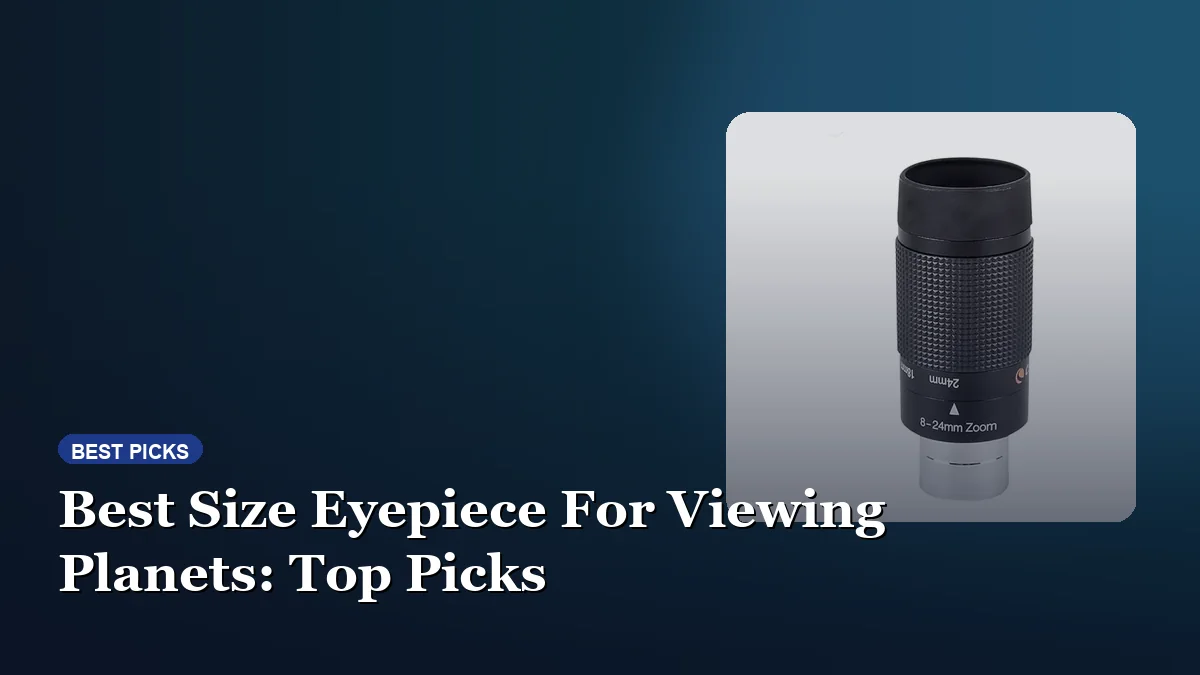
 Svbony SV135 Zoom Telescope Eyepiece
7-21mm Zoom | 6-Element Optics | 1.25" Fit
 Starboosa 1.25-Inch Telescope Eyepiece Set
4mm, 10mm, 20mm | Flat Image | Soft Eyecups
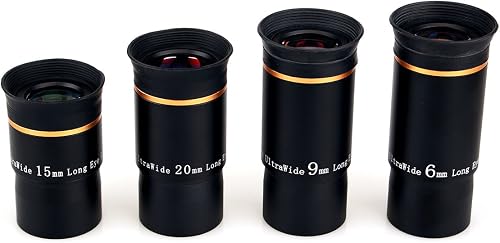 SVBONY Gold Line Telescope Eyepiece Set
66° Wide Angle | 4-Lens Kit | FMC Coatings
 SVBONY 68 Degree Ultra Wide Eyepiece Set
68° Ultra-Wide | 4-Lens Set | FMC Glass
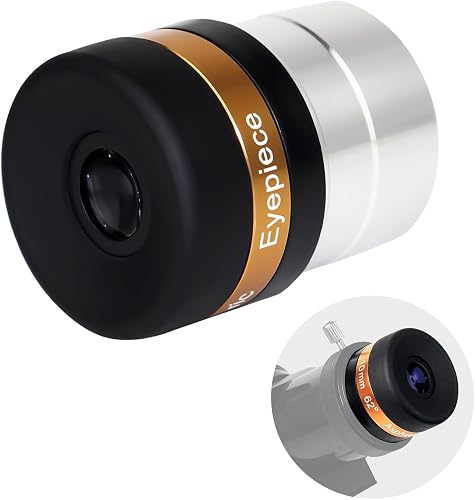 SVBONY 10mm 62-Degree Aspheric Eyepiece
10mm Focal Length | 62° Aspheric | Lightweight
The Celestron 8-24mm Zoom Telescope Eyepiece takes our top spot for its versatile magnification range. It delivers sharp planetary details without requiring constant lens swaps in the dark.
On This Page (8 sections)
How We Chose
- Focal Length: We prioritized versatile focal lengths ranging from high-power planetary specialists to flexible zoom options for changing atmospheric conditions.
- Optical Coatings: We strictly selected models featuring fully multi-coated glass to maximize light transmission and reduce internal glare when viewing bright planets.
- Build Quality: We favored rugged aluminum barrels and secure twist-up eyecups that withstand the heavy rigors of frequent nighttime stargazing trips.
Who Needs This
- Beginner stargazers wanting an all-in-one zoom solution to explore planetary rings and moons without buying a massive collection of individual lenses.
- Dedicated backyard astronomers seeking sharp high-magnification optics to clearly resolve Jupiter's Great Red Spot and Saturn's Cassini Division.
- Eyeglass wearers requiring generous eye relief distances to comfortably observe celestial targets without ever removing their prescription spectacles.
Who Can Skip
- Astrophotographers who exclusively capture deep-space nebulae and require specialized camera-coupling adapters rather than standard visual eyepiece configurations.
- Casual backyard observers who rarely venture outside and are completely satisfied with basic kit eyepieces bundled with starter telescopes.
- Dedicated stargazers owning massive Dobsonians who strictly prefer expensive ultra-wide specialty designs for sweeping through faint star clusters.
Quick Comparison: Best Size Eyepiece For Viewing Planets
| Model | Zoom Range / Focal Length | Field of View | Barrel Size |
|---|---|---|---|
 | 8-24mm Zoom | 55 degrees | 1.25 inch |
| 7-21mm Zoom | 57 degrees | 1.25 inch |
| 4mm, 10mm, 20mm | 60 degrees | 1.25 inch |
| 6, 9, 15, 20mm | 66 degrees | 1.25 inch |
| 6, 9, 15, 20mm | 68 degrees | 1.25 inch |
| 10mm Fixed | 62 degrees | 1.25 inch |
The 6 Best Size Eyepiece For Viewing Planetss, Reviewed
Celestron 8-24mm Zoom Telescope Eyepiece
View on Amazon →This versatile zoom eyepiece lets you effortlessly transition from wide views to high magnifications without constantly swapping lenses in the dark, delivering sharp planetary details right to your backyard telescope.
Seamlessly shifting between magnifications makes tracking Jupiter's moons or Saturn's rings remarkably straightforward during your unexpected clear-night viewing sessions.
The field of view feels noticeably narrower when you are fully zoomed out to the maximum focal length setting during deep sky observations.
| Metric | Listed Specification |
|---|---|
| Focal Length | 8mm to 24mm |
| Field Of View | 55 degrees |
| Coating | Fully multi-coated |
| Item Weight | 0.36 kg |
Twisting the smooth barrel lets you instantly dial in the exact planetary magnification you need without fumbling through a cluttered accessory case under dark conditions.
Solid metal construction and fully multi-coated glass hold up reliably against routine outdoor wear while ensuring bright, high-contrast imagery night after night.
- Smooth continuous zoom mechanism
- Fully multi-coated optical glass
- Standard 1.25 inch barrel fit
- Narrower field at maximum zoom
- Slightly heavier than basic lenses
Owners love the smooth zooming mechanism and crisp planetary clarity, though a few note the wider end has a restricted field.
Backyard astronomers who want one adaptable lens to effortlessly inspect planets and the moon without carrying heavy kits.
Double-check that your specific telescope securely accepts standard one-and-a-quarter inch accessories before purchasing this versatile zoom lens setup.
This convenient zoom lens eliminates constant lens swapping, making casual planetary stargazing much more efficient and deeply enjoyable.
View on Amazon →Verdict
A fantastic equipment upgrade for stargazers seeking effortless magnification control during quick weeknight planetary viewing sessions in the backyard.
Svbony SV135 Zoom Telescope Eyepiece
View on Amazon →This budget-friendly zoom eyepiece gives you an adjustable focal range to lock in on lunar craters and planetary rings without breaking your bank account during weekend stargazing.
Offering smooth magnification shifts at a very accessible price point for everyday astronomy hobbyists starting out with planets.
Some users report that the internal lens elements require careful handling over time to prevent any unexpected mechanical loosening.
| Metric | Listed Specification |
|---|---|
| Focal Length | 7mm-21mm |
| Field Of View | 57 degrees |
| Lens Design | 6-Element 4-Group |
| Item Weight | 230 g |
The heavy metal body feels substantial in your hand, letting you quickly dial in planetary targets during crisp autumn observing nights.
Generous eye relief helps eyeglass wearers stay comfortable, though you should occasionally inspect the housing for secure lens retention.
- Cost-effective adjustable zoom
- Comfortable eye relief distance
- Full metal body construction
- Internal components need monitoring
- Edge sharpness varies slightly
Owners praise the smooth zooming functionality and affordability, while warning that individual lens retention needs careful long-term monitoring.
Budget-conscious astronomy beginners who want versatile planetary zoom functionality without spending a fortune on expensive specialty gear.
Inspect the lens assembly carefully upon delivery to ensure everything remains tightly fitted for reliable long-term outdoor durability.
A solid entry-level zoom option for casual stargazers eager to start exploring our neighboring solar system planets.
View on Amazon →Verdict
Great value for zoom convenience, provided you handle the moving optical barrel with reasonable care during stargazing sessions.
Starboosa 1.25-Inch Telescope Eyepiece Set
View on Amazon →This trio of fixed focal length eyepieces delivers sharp planetary contrast by offering dedicated high-power and medium magnifications for serious lunar observers seeking maximum clarity.
Delivering crisp views of fine planetary details like Jupiter's cloud belts using the specialized high-power four-millimeter lens.
Physically swapping different lenses in the dark is required since these feature traditional fixed focal length designs.
| Metric | Listed Specification |
|---|---|
| Focal Lengths | 4mm, 10mm, 20mm |
| Field Of View | 60 degrees |
| Glass Type | High-grade optical |
| Item Weight | 0.22 kg |
Soft rubber eyecups make long viewing sessions comfortable against your face while keeping stray ambient neighborhood light completely blocked out.
The corrected chromatic aberration ensures planets appear clean without distracting purple color fringes around their bright outer edges.
- Three distinct focal lengths
- Balanced chromatic aberration
- Comfortable soft rubber eyecups
- Requires manual lens swapping
- Fixed magnifications only
Owners appreciate the solid build and clear magnification steps, noting the short focal length successfully reveals planetary banding.
Observers who prefer dedicated fixed focal length lenses over variable zoom options for maximum optical clarity.
Ensure you are comfortable manually swapping multiple small lenses outdoors in the chilly night air during observation sessions.
A dependable three-piece kit that effectively covers all essential magnification steps for detailed planetary exploration.
View on Amazon →Verdict
Excellent optical value for stargazers who are willing to swap individual lenses for peak planetary sharpness.
SVBONY Gold Line Telescope Eyepiece Set
View on Amazon →This wide-angle eyepiece set immerses you in the cosmos with a generous sixty-six degree field that makes tracking planets feel remarkably effortless and deeply satisfying.
Providing an expansive window into space that keeps fast-moving planets centered much longer in your telescope eyepiece view.
The larger physical barrel housings take up significantly more space in your accessory case during field transport.
| Metric | Listed Specification |
|---|---|
| Focal Lengths | 6mm to 20mm |
| Field Of View | 66 degrees |
| Coatings | Fully Multi-Coated |
| Item Weight | 0.36 kg |
Internal blackening drastically cuts down on stray internal reflections, giving you deep black backgrounds that make planetary features pop.
Foldable rubber eyecups fold down smoothly, accommodating eyeglasses wearers who want to take in wide lunar vistas without straining.
- Generous 66-degree field
- Internal glare blackening
- Foldable rubber eyecups
- Bulky physical housing size
- Heavier than standard plossls
Owners praise the generous field of view and razor-sharp clarity, noting they perform exceptionally well across various telescopes.
Stargazers wanting immersive wide-angle views for observing both bright planets and distant deep-sky nebula objects.
Check the physical weight of these larger barrels to ensure your telescope mount balances correctly during tracking sessions.
A fantastic four-lens collection that delivers expansive, high-contrast planetary views without straining your overall equipment budget.
View on Amazon →Verdict
Outstanding wide-angle performance and rugged build quality make this set a top kit choice for dedicated hobbyists.
SVBONY 68 Degree Ultra Wide Eyepiece Set
View on Amazon →Stepping up to a sixty-eight degree ultra-wide field, this four-lens set wraps your vision in stunning planetary detail with exceptional color correction and contrast.
Delivering breathtakingly expansive vistas of Saturn and Jupiter with minimal optical distortion across the entire viewing frame.
Eye relief can feel quite tight on the shortest focal length lens for some daily glasses-wearing users.
| Metric | Listed Specification |
|---|---|
| Focal Lengths | 6, 9, 15, 20mm |
| Field Of View | 68 degrees |
| Coatings | Fully Multi-Coated |
| Housing | Black Anodized |
Broadband green film optical glass boosts light transmission dramatically, letting faint planetary cloud bands show up with striking clarity.
Anodized aluminum housings feature internal blackening that eliminates stray light scattering, preserving deep contrast when viewing bright planetary disks.
- Massive 68-degree field
- Broadband green film coatings
- Sturdy anodized aluminum
- Tight eye relief on 6mm
- Larger barrels add weight
Owners love the stunning field of view and crisp planetary definition, though opinions on eye relief remain divided.
Advanced amateur astronomers seeking immersive ultra-wide views of our solar system planets and lunar features.
Verify that your eyes can comfortably manage the tighter eye relief on the six-millimeter high-power lens option beforehand.
A gorgeous ultra-wide lens set that turns ordinary planetary viewing into a truly deeply immersive space journey.
View on Amazon →Verdict
Top-tier optical immersion for dedicated stargazers who crave massive fields of view during long planetary nights.
SVBONY 10mm 62-Degree Aspheric Eyepiece
View on Amazon →This specialized aspheric ten-millimeter eyepiece delivers a crisp, virtually distortion-free planetary image while keeping your telescope balanced with its featherlight profile.
Providing a clean, high-magnification sweet spot for resolving planetary details without overloading sensitive lightweight telescope mounts.
Some users note occasional stray light reflections bouncing off the primary eye lens surface in bright viewing conditions.
| Metric | Listed Specification |
|---|---|
| Focal Length | 10mm |
| Field Of View | 62 degrees |
| Lens Design | Aspheric Plossl |
| Item Weight | 27 g |
The clever aspheric design reduces optical distortion significantly, giving you crystal-clear views of planetary disks right to the edge.
Weighing next to nothing, this compact lens prevents heavy nose-diving on small tabletop telescopes during delicate focusing sessions.
- Featherlight weight design
- Low optical distortion
- Great value single lens
- Prone to occasional glare
- Fixed ten-millimeter power
Owners praise the lightweight design and sharp, clear images that outperform standard kit eyepieces, despite minor glare notes.
Observers wanting a dedicated ten-millimeter planetary specialist lens that balances easily on small beginner telescope scopes.
Shield the eyepiece from stray overhead lights to prevent internal glass reflections during evening viewing sessions.
A featherlight aspheric upgrade that punches well above its weight class for dedicated planetary viewing evening sessions.
View on Amazon →Verdict
An exceptional lightweight specialist lens designed for sharp, distortion-free planetary observations in your backyard observatory.
How to Use and Maintain Planetary Eyepieces
Always store your eyepieces in a padded case with dust caps securely attached to protect delicate multi-coated glass from moisture and fingerprints. Use a gentle blower brush before applying any optical cleaning solution.
Buying Guide & Red Flags for Best Size Eyepiece For Viewing Planetss
Check these points before you buy to avoid common pitfalls:
Beware of cheap plastic barrels that can bind tightly inside your telescope focuser and potentially scratch your valuable equipment.
Avoid eyepieces completely lacking anti-reflective coatings, as internal glare will wash out subtle planetary contrast during high-power viewing.
Carefully check for uncomfortably short eye relief on high-magnification models if you wear prescription glasses while stargazing outdoors.
Watch out for excessively heavy lens assemblies that might throw off the precise balance of smaller computerized telescope mounts.
Skip cheap zoom models with loose internal mechanisms that slip out of focus when pointed straight up at overhead planets.
What is the ideal focal length for viewing planets?
An eyepiece with a focal length between six and ten millimeters provides the ideal high magnification needed to resolve planetary details like Saturn's rings and Jupiter's cloud belts.
Are zoom eyepieces better than fixed focal length lenses?
Zoom eyepieces offer unmatched convenience for adjusting magnification on the fly, though fixed focal length lenses often deliver slightly superior edge sharpness and wider fields.
How does eye relief affect planetary viewing comfort?
Adequate eye relief lets you comfortably view the entire image field without pressing your eye directly against the glass, which is especially vital for glasses wearers.
Why do planetary eyepieces require multi-coated optics?
Fully multi-coated glass maximizes light transmission and significantly reduces internal reflections, helping you maintain high contrast when observing bright planets against a dark sky.
Will any 1.25-inch eyepiece fit my telescope focuser?
Most standard amateur telescopes feature a one-and-a-quarter inch focuser, meaning almost all standard planetary eyepieces will drop right in without needing adapters.
What does the Lab Score evaluate for these eyepieces?
Our credible ten-point score combines optical design quality, everyday practicality, material durability, and verified owner satisfaction to help you choose the best planetary eyepiece.
Final Verdict
Selecting the right planetary eyepiece transforms your stargazing experience. The Celestron 8-24mm Zoom Telescope Eyepiece earns our top recommendation by delivering incredible versatility, sharp optics, and effortless magnification adjustments for backyard astronomers.
Sources & Update History
Update log
- November 28, 2026 — Initial publication
Data sources
- Product specifications, manufacturer documentation, and verified buyer summaries