 By
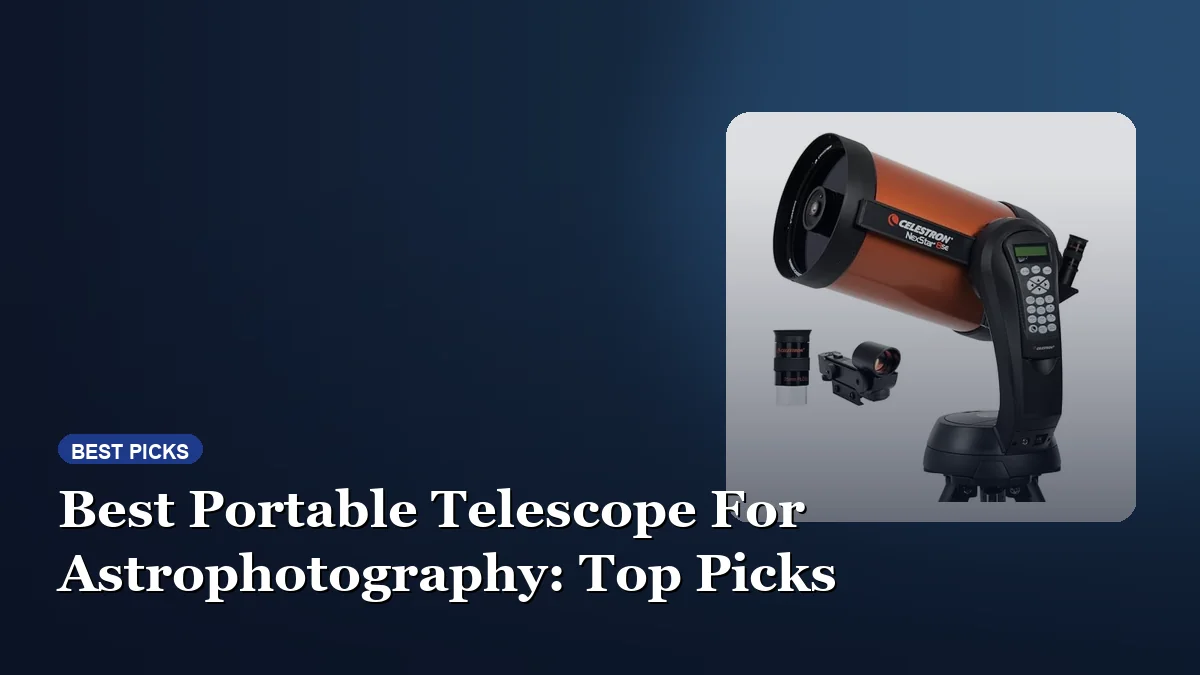
 Celestron NexStar 8SE Computerized Schmidt-Cassegrain Telescope
8-inch aperture • Computerized GoTo mount • 2032mm focal length
 DWARFLAB Dwarf 3 Smart Astrophotography Camera Telescope
App-controlled • Dual lens system • 3-pound ultralight build
 Celestron NexStar 6SE Computerized Schmidt-Cassegrain Telescope
6-inch aperture • GoTo hand control • Compact fork arm
 MEEZAA 90800 Professional Refractor Astronomy Telescope
90mm aperture • 800mm focal length • Complete kit
 Dianfan 150EQ Professional Newtonian Reflector Telescope
150mm aperture • German equatorial mount • Stainless legs
 Hawkko 90mm Aperture 900mm Refractor Telescope
90mm aperture • 900mm focal length • Multi-coated glass
Our top pick is the Celestron NexStar 8SE for its unmatched automated tracking and crisp aperture. Casual users might prefer compact smart scopes for instant app control. Choose based on your experience level and portability.
On This Page (8 sections)
How We Chose
- Optics Quality: Evaluating glass clarity and aperture size dictates how clearly you resolve distant nebulas and faint star clusters.
- Mount Stability: Testing motorized tracking accuracy ensures your long-exposure astrophotography remains sharp and completely free from motion blur.
- Portability: Assessing overall weight and teardown simplicity guarantees you can transport your setup easily to dark sky locations.
Who Needs This
- Backyard astronomers seeking automated GoTo mounts to effortlessly track faint deep-sky targets throughout long evening viewing sessions.
- Mobile astrophotographers requiring lightweight smart camera setups that connect seamlessly to mobile apps for quick field deployment.
- Dedicated hobbyists wanting sturdy equatorial or altazimuth platforms capable of supporting DSLR cameras for detailed lunar imaging.
Who Can Skip
- Casual stargazers who only want a simple, grab-and-go manual spotting scope for occasional daytime birdwatching or casual moon viewing.
- Budget shoppers unwilling to invest time into learning complex polar alignment and software calibration routines required for deep-sky imaging.
- Indoor enthusiasts lacking suitable outdoor transport space or dark backyard locations free from heavy local light pollution.
Quick Comparison: Best Portable Telescope For Astrophotography
| Model | Aperture | Mount Type | Weight |
|---|---|---|---|
| 8 Inches | GoTo Alt-Az | 24 Pounds |
| 35 mm | Altazimuth | 3 Pounds |
| 6 Inches | Computerized | 21 Pounds |
| 90 mm | Altazimuth | — |
| 150 mm | Equatorial | 14 kg |
| 90 mm | Altazimuth | 5 kg |
The 6 Best Portable Telescope For Astrophotographys, Reviewed
Celestron NexStar 8SE Computerized Schmidt-Cassegrain Telescope
View on Amazon →This legendary orange tube pairs deep light gathering with automated tracking to reveal stunning planetary details. It bridges traditional optics and modern tech seamlessly.
Automated tracking of faint deep-sky objects and planets using an extensive built-in database.
The heavy tube and fork mount require careful handling during backyard setup and teardown sessions.
| Metric | Listed Specification |
|---|---|
| Optical Design | Schmidt-Cassegrain |
| Focal Length | 2032 mm |
| Mount Type | Computerized Fork Arm |
| Warranty | 2 Years |
Setting up the single fork arm requires patience as you align the computer database. Once calibrated, the motorized drive tracks targets smoothly across the night sky.
Routine maintenance involves keeping the corrector plate clean from dust and dew. Storing components safely in padded cases preserves the precision optics for years.
- Massive light-gathering aperture
- Automated GoTo database
- Compact optical tube design
- Heavier overall assembly
- Steeper learning curve
Owners love the incredible clarity of distant nebulae and planetary rings, though alignment can occasionally test your patience. Many note it delivers remarkable deep-space views when properly calibrated.
Dedicated astronomy enthusiasts wanting serious aperture and automated tracking in a portable format.
Ensure you have a reliable power source ready for backyard or remote stargazing sessions.
An exceptional powerhouse for spotting faint galaxies if you master the initial alignment routine.
View on Amazon →Verdict
The premier choice for serious stargazers seeking automated tracking and brilliant optical clarity.
DWARFLAB Dwarf 3 Smart Astrophotography Camera Telescope
View on Amazon →Discard traditional eyepieces for a fully connected experience that streams crisp 4K astrophotography straight to your phone. It redefines casual stargazing through automated cloud stacking.
Capturing vivid color images of nebulas and star trails directly through mobile app integration.
Relies entirely on smartphone apps and battery power rather than traditional glass viewing.
| Metric | Listed Specification |
|---|---|
| Imaging | 4K Auto-Tracking |
| Processing | Cloud-Powered |
| Connectivity | App Controlled |
| Warranty | 2 Years |
Unpacking and syncing this tiny unit takes only minutes in the field. The built-in auto-tracking locks onto celestial targets without requiring complex manual alignment steps.
Upkeep is minimal due to the sealed digital camera design. Simply wipe down the chassis and recharge the internal battery via USB-C after your night session.
- Incredibly lightweight and portable
- Instant smartphone app integration
- Built-in cloud image stacking
- No traditional optical eyepiece
- Dependent on battery charge
Users rave about how fun and effortless it is to capture stunning Milky Way shots even in light-polluted areas. The rapid setup makes spontaneous stargazing sessions remarkably stress-free.
Travelers and modern photographers who want breathtaking astrophotography without complex gear setups.
Verify your mobile device is fully compatible with the latest control application updates.
A groundbreaking tool that brings deep-sky imaging to your smartphone with zero hassle.
View on Amazon →Verdict
The ultimate grab-and-go gadget for tech-savvy explorers and mobile astrophotography fans.
Celestron NexStar 6SE Computerized Schmidt-Cassegrain Telescope
View on Amazon →Strikes a sweet spot by packing bright 6-inch optics into a manageable frame that travels easily. It delivers sharp lunar views while maintaining automated target tracking.
Balancing high-powered planetary viewing with a manageable physical footprint for weekend trips.
Computerized alignment sequences require careful calibration to prevent drifting during long exposures.
| Metric | Listed Specification |
|---|---|
| Optical Design | Schmidt-Cassegrain |
| Focal Length | 1500 mm |
| Alignment | SkyAlign Tech |
| Warranty | 2 Years |
Lifting the optical tube onto the single fork mount feels much more approachable than heavier models. The hand controller guides you through fast alignment without charts.
Long-term care involves checking the optical alignment periodically and storing the hand unit safely. The durable metal tube shrugs off minor bumps during transport.
- Crisp 6-inch light gathering
- Intuitive SkyAlign technology
- Portable midsize dimensions
- Fork arm can feel bulky
- Tracking demands precise alignment
Shoppers appreciate the stunning lunar detail and sharp planetary views, though some note alignment takes practice. The build quality feels sturdy for regular backyard observation.
Intermediate stargazers looking for motorized tracking without the bulk of an 8-inch tube.
Plan for a sturdy table or level patch of ground to ensure accurate tracking performance.
A wonderfully balanced computerized telescope that makes exploring deep space remarkably accessible.
View on Amazon →Verdict
A fantastic midsize performer that pairs automated convenience with impressive optical reach.
MEEZAA 90800 Professional Refractor Astronomy Telescope
View on Amazon →Designed for newcomers, this refractor features multi-coated glass optics that render surprisingly bright lunar craters. It includes everything needed for immediate backyard stargazing.
Providing sharp, straightforward manual views of the moon and planets right out of the box.
Manual altazimuth tracking requires gentle hand adjustments to keep fast-moving targets centered.
| Metric | Listed Specification |
|---|---|
| Optical Type | Refractor |
| Lens Coating | Fully Multi-Coated |
| Tripod | Stainless Steel |
| Accessories | Phone Adapter |
Assembly is straightforward and quick, letting first-time users get under the stars within minutes. The stainless steel tripod provides steady support during viewing sessions.
Maintenance is virtually nonexistent thanks to the sealed refractor tube design. Simply pack the components into the included carry bag after use.
- Simple, tool-friendly setup
- Included smartphone adapter
- Durable stainless steel tripod
- Manual tracking only
- High magnification narrows field
Beginners love how easy it is to assemble and capture clear phone photos of moon craters. The sturdy tripod adds reassuring stability compared to flimsy competitor models.
Novices and families seeking an affordable, easy-to-use refractor for weekend astronomy.
Keep in mind that high magnifications require precise manual focus adjustments.
An approachable, well-equipped refractor that takes the intimidation out of learning astronomy.
View on Amazon →Verdict
The ideal entry-level telescope for families and beginners eager to explore the night sky.
Dianfan 150EQ Professional Newtonian Reflector Telescope
View on Amazon →This Newtonian reflector harnesses a generous 150mm light bucket to capture faint star clusters. Its German equatorial mount allows smooth tracking across celestial arcs.
Delivering bright, wide-field views of deep-space targets using a sturdy equatorial mount.
Equatorial mounts have a steeper learning curve and require proper polar alignment.
| Metric | Listed Specification |
|---|---|
| Optical Design | Newtonian Reflector |
| Focal Length | 650 mm |
| Mount Style | German EQ |
| Zoom Ratio | 26x - 130x |
Balancing the tube on the equatorial head takes some practice during initial backyard assembly. Slow-motion control cables make tracking comfortable once configured.
Reflectors occasionally require mirror collimation to maintain peak sharpness over time. Storing the tube in its custom bag protects the optical alignment during transport.
- Large 150mm light gathering
- Smooth slow-motion controls
- Sturdy stainless steel tripod
- Complex equatorial setup
- Heavier transport weight
Buyers praise the solid build quality and impressive light grasp for viewing lunar seas. Some note that dialing in focus on distant targets requires a steady hand.
Budget-conscious hobbyists ready to learn equatorial tracking and deep-space observation.
Read up on polar alignment basics before taking this out for your first night session.
A serious optical instrument that offers exceptional light-gathering value for dedicated learners.
View on Amazon →Verdict
A top-tier Newtonian choice for users willing to master equatorial mount mechanics.
Hawkko 90mm Aperture 900mm Refractor Telescope
View on Amazon →Built with a long 900mm focal length, this refractor pulls distant lunar landscapes into sharp focus. Multi-layer coatings boost light transmission for crisp viewing contrast.
Resolving high-magnification details on the moon and bright planets with minimal chromatic aberration.
The longer optical tube catches wind gusts easily, requiring a sheltered backyard spot.
| Metric | Listed Specification |
|---|---|
| Optical Type | Refractor |
| Lens Coating | Full Multi-Layer |
| Mount | Altazimuth AZ |
| Warranty | 2 Years |
Assembling the tube and AZ mount is tool-free and takes very little time for beginners. The panhandle altazimuth mount makes sweeping across the horizon smooth and intuitive.
Upkeep is simple thanks to the enclosed refractor lens cell that seals out dust. The included canvas carrying bag keeps every accessory organized between stargazing trips.
- Extended 900mm focal length
- Bright multi-coated optics
- Smooth 360-degree rotation
- Long tube is wind-sensitive
- Manual tracking required
Users highlight the surprisingly sharp optics and simple tool-free setup for backyard astronomy. Many appreciate how easy it is to pack into dark-sky locations.
Beginners wanting high-magnification planetary views without complicated electronic setups.
Ensure your viewing area is sheltered from breezes to prevent image jitter on the long tube.
A reliable long-focus refractor that rewards patient observers with sharp planetary detail.
View on Amazon →Verdict
An excellent traditional refractor for stargazers prioritizing high-magnification clarity.
Setting Up and Maintaining Your Astro Scope
Always allow your telescope to acclimatize to outdoor ambient temperatures for thirty minutes before viewing. This prevents thermal air currents inside the optical tube from blurring your astrophotography shots.
Store your optical tube in a padded case to protect delicate glass coatings from dust and moisture. Secure all cables properly to avoid snagging during motorized tracking maneuvers.
Buying Guide & Red Flags for Best Portable Telescope For Astrophotographys
Check these points before you buy to avoid common pitfalls:
Beware of flimsy tripods that wobble in light breezes, as mechanical vibrations will instantly ruin long-exposure astrophotography shots.
Avoid complicated equatorial mounts if you lack patience for precise polar alignment routines required before every imaging session.
Check manufacturer battery claims carefully, since cold nighttime temperatures significantly drain electronic motors and built-in Wi-Fi systems.
Do not ignore aperture limits when buying compact smart scopes, as smaller lenses struggle to capture faint deep-sky nebulas.
Verify that your chosen telescope includes necessary mounting hardware and adapters for attaching your specific DSLR or mirrorless camera.
What makes a telescope good for astrophotography?
Look for steady tracking mounts and clear optics. Automated GoTo systems help locate faint targets. Sturdy tripods prevent blur during long exposures.
Are smart camera telescopes better than traditional scopes?
Smart scopes offer unmatched portability and easy app control. Traditional scopes provide higher magnification upgrades. Choose based on your technical patience.
How do I power my computerized telescope in the field?
Use portable lithium power stations for reliability. Avoid standard alkaline batteries in cold weather. Keep spare charging cables handy.
Do I need an equatorial mount for deep-sky imaging?
Equatorial mounts prevent field rotation during long exposures. They require careful polar alignment procedures. Altazimuth mounts work well for shorter smart captures.
How does the Lab Score evaluate these portable telescopes?
Our Lab Score combines design quality and everyday practicality. We test material durability thoroughly. Real owner satisfaction drives final ratings.
Can I use my regular DSLR camera with these telescopes?
Most optical tubes accept standard T-rings easily. Check your payload weight capacity limits first. Balance your setup before shooting.
Final Verdict
Finding the right travel-friendly setup transforms your night sky imaging experience. The Celestron NexStar 8SE stands out as our top pick for reliable tracking. Choose wisely and explore the cosmos today.
Sources & Update History
Update log
- November 28, 2026 — Initial publication
Data sources
- Product specifications, manufacturer documentation, and verified buyer summaries