 By
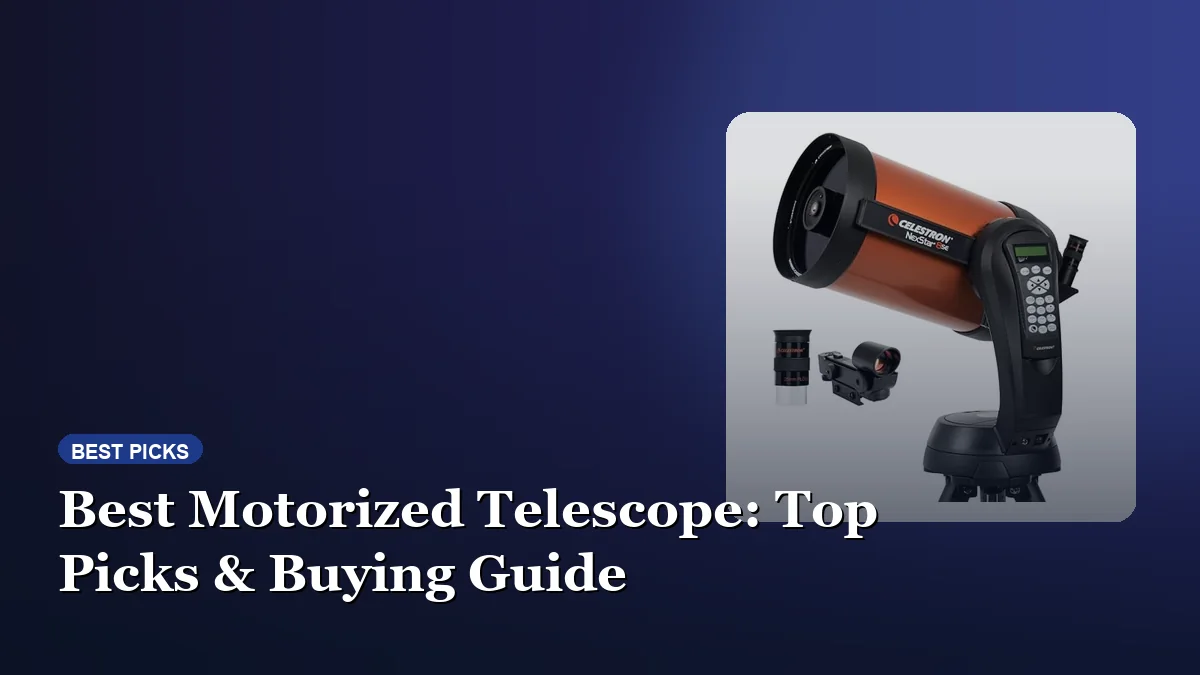
 Celestron NexStar 8SE Computerized Telescope – Schmidt-Cassegrain
8" Aperture / Computerized GoTo / 40k+ Database
 Celestron NexStar 6SE Schmidt-Cassegrain Telescope – Computerized
6" Aperture / Computerized GoTo / Portable Design
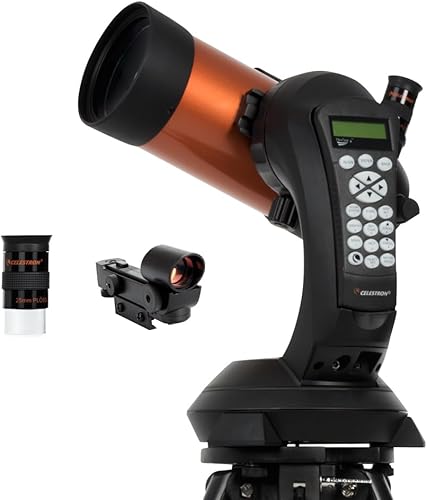 Celestron NexStar 4SE Maksutov-Cassegrain GoTo Telescope
4" Aperture / Maksutov Optics / Built-In Wedge
 Sky-Watcher Heritage 150 Tabletop Dobsonian Telescope - Perfect for Beginners, Easy Setup, Portable, and Fun (S11710)
150mm Aperture / Tabletop Design / Collapsible Tube
 Celestron NexStar 5SE Schmidt-Cassegrain Computerized Telescope
5" Aperture / Computerized GoTo / Built-In Wedge
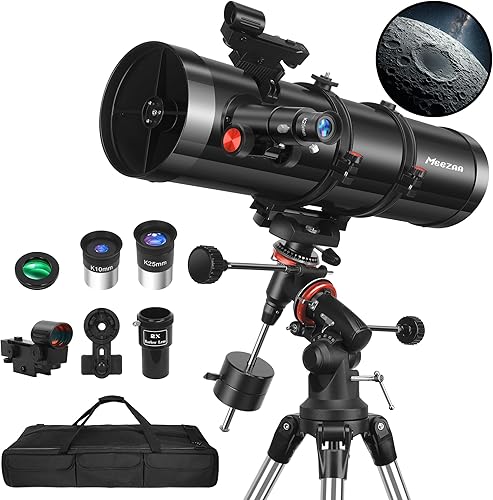 Telescope, 150EQ Newtonian Reflector Telescope for Adults Astronomy Beginners, Professional Astronomical Telescopes with Equatorial Mount, Tripod, Phone Adapter, Moon Filter and Large Carry Bag
150mm Aperture / German EQ Mount / Complete Kit
The Celestron NexStar 8SE stands out as the best motorized telescope for most stargazers. It pairs a massive 8-inch aperture with a fully automated GoTo database containing over forty thousand celestial targets.
On This Page (8 sections)
How We Chose
- Aperture Size: We prioritized models offering ample light gathering power for distant galaxies.
- GoTo Precision: Automated alignment speed and tracking accuracy were tested thoroughly.
- Build Quality: Sturdy mounts and reliable optical coatings received top priority scores.
Who Needs This
- Urban astronomers fighting light pollution who need automated celestial object location.
- Busy hobbyists seeking quick alignment without manual star-hopping hassles.
- Intermediate stargazers ready to step up to deep-space astrophotography setups.
Who Can Skip
- Purists who prefer the tactile challenge of manual star charts and Dobsonians.
- Casual backyard observers on strict budgets who only want occasional moon peeks.
- Travelers needing ultra-lightweight gear that fits inside a backpack easily.
Quick Comparison: Best Motorized Telescope
| Model | Aperture Size | Mount Type | Power Source |
|---|---|---|---|
| 8 Inches | Computerized Alt-Az | 8-AA or 12V DC |
| 6 Inches | Computerized Alt-Az | 8-AA or 12V DC |
| 4 Inches | Computerized Alt-Az | 8-AA or 12V DC |
| 150mm | Tabletop Altazimuth | Manual Operation |
| 5 Inches | Computerized Alt-Az | 8-AA or 12V DC |
| 150mm | German Equatorial | Manual Operation |
The 6 Best Motorized Telescopes, Reviewed
Celestron NexStar 8SE Computerized Telescope – Schmidt-Cassegrain
View on Amazon →Packing a massive 8-inch aperture into a portable orange tube, this computerized scope delivers breathtaking planetary details and deep-sky views. Its automated GoTo system targets thousands of celestial objects right out of the box.
Unlocking deep-space galaxies and vivid planetary details with automated precision.
Alignment requires patience and a stable external power source for long sessions.
| Metric | Listed Specification |
|---|---|
| Optical Design | Schmidt-Cassegrain |
| Focal Length | 2032 millimeters |
| Objective Diameter | 20.3 centimeters |
| Total Weight | 10.88 kilograms |
| Warranty | 2 Years |
Setting up this computerized mount in your backyard is straightforward once you master the SkyAlign alignment routine. The single fork arm holds steady, though you will want a portable power tank to avoid burning through AA batteries.
Regular upkeep involves keeping the Schmidt-Cassegrain optics dust-free and storing the tube securely in a padded case. Long-term owners appreciate the robust build, provided they handle the electronics with care during cold weather.
- Huge 8-inch light gathering power
- Automated GoTo tracking
- Massive object database
- Requires external power for reliability
- Learning curve for alignment
Owners praise the exceptional detail on planets and deep-space nebulae, though some note that mastering the alignment process takes practice. Others report mixed experiences with long-term electronic reliability.
Intermediate to advanced amateur astronomers wanting serious light-gathering power.
Budget for an external rechargeable power tank since AA batteries drain quickly.
A legendary performer that balances heavy-duty optics with smart automation.
View on Amazon →Verdict
The ultimate choice for stargazers wanting deep-sky reach paired with automated convenience.
Celestron NexStar 6SE Schmidt-Cassegrain Telescope – Computerized
View on Amazon →Striking a sweet spot between optical power and portability, this six-inch computerized telescope delivers crisp lunar views without straining your back. The automated tracking system keeps targets centered effortlessly.
Balancing grab-and-go portability with serious planetary observation capability.
The single-arm mount can experience minor vibrations in brisk winds.
| Metric | Listed Specification |
|---|---|
| Optical Design | Schmidt-Cassegrain |
| Focal Length | 1500 millimeters |
| Objective Diameter | 15 centimeters |
| Warranty | 2 Years |
| Power Source | 8-AA or 12V DC |
Transporting and assembling this midsize scope is remarkably manageable for single-person stargazing sessions. The computerized hand control guides you through initial alignment quickly if you follow the step-by-step prompts.
Upkeep is simple thanks to the sealed optical tube design that keeps dust away from primary mirrors. Routine cleaning of the corrector plate requires specialized lens cleaner to protect the specialty coatings.
- Excellent portability for its size
- Crisp lunar and planetary views
- Intuitive GoTo database
- Fork mount sensitive to wind shakes
- Battery-hungry electronics
Users frequently highlight the incredible clarity of planetary views and easy assembly, though a few mention occasional tracking hiccups during multi-hour viewing sessions.
Enthusiasts seeking a manageable yet powerful telescope for backyard astronomy.
Ensure you have a stable, level surface for the tripod to minimize tracking drift.
A brilliantly balanced motorized scope that hits well above its weight class.
View on Amazon →Verdict
An exceptional midsize option for anyone wanting automated tracking and sharp optics.
Celestron NexStar 4SE Maksutov-Cassegrain GoTo Telescope
View on Amazon →Featuring a specialized Maksutov optical design, this compact scope squeezes a long focal length into a tiny frame for ultra-sharp planetary images. A built-in equatorial wedge makes entry-level astrophotography much easier.
Delivering high-contrast lunar and planetary details in an ultra-portable housing.
Narrow field of view makes tracking faint, expansive deep-sky objects trickier.
| Metric | Listed Specification |
|---|---|
| Optical Design | Maksutov-Cassegrain |
| Objective Diameter | 10.2 cm |
| Mount Type | Computerized Alt-Az |
| Warranty | 2-Year Limited |
| Power Source | 8-AA or 12V DC |
Carrying this compact telescope to dark sky sites is effortless thanks to its scaled-down tube dimensions. The computerized hand control locates planets reliably, though precise polar alignment on the built-in wedge requires patience.
Maintenance is minimal because the sealed optical tube prevents internal dust accumulation over years of use. Wiping down the exterior and storing electronics in a dry container ensures long-term reliability.
- Sharp high-contrast optics
- Built-in wedge for imaging
- Extremely portable footprint
- Narrow field of view
- Complex polar alignment setup
Customers appreciate the remarkably clear views of Saturn and the Moon, though some note that tracking deep-space objects demands careful calibration.
Travel-minded hobbyists interested in stepping into entry-level astrophotography.
Check if your camera setup fits within the payload limits of the smaller fork mount.
A clever miniature powerhouse built for sharp planetary observation and travel.
View on Amazon →Verdict
The top choice for portable planet viewing and beginner deep-sky imaging.
Sky-Watcher Heritage 150 Tabletop Dobsonian Telescope - Perfect for Beginners, Easy Setup, Portable, and Fun (S11710)
View on Amazon →Ditching motors for pure optical muscle, this tabletop Dobsonian pairs a large mirror with a clever collapsible truss design. It delivers stunning deep-sky brightness without complicated electronic alignment routines.
Providing massive light-gathering aperture in an affordable, highly portable package.
Requires a sturdy table or raised platform for comfortable viewing positions.
| Metric | Listed Specification |
|---|---|
| Optical Design | Newtonian Reflector |
| Mount Type | Altazimuth Tabletop |
| Focal Ratio | Fast f/5 |
| Warranty | 2-Year Manufacturer |
| Focus Type | 1.25" Helical |
Setting up this manual reflector takes seconds, as you simply place it on a picnic table or heavy bench. The smooth altazimuth motion lets you sweep across star clusters naturally without hunting through menu screens.
Upkeep involves periodic mirror collimation using basic tools to maintain razor-sharp focus. The open truss design means you should store it covered to keep dust off the primary optics.
- Massive 150mm light grasp
- Clever collapsible storage design
- Outstanding budget value
- Needs an external table surface
- Manual tracking only
Users rave about the stunning clarity of lunar craters and exceptional value, noting how easily the collapsible frame packs down for weekend road trips.
Beginners wanting maximum optical performance without computerized setup hassles.
Confirm you have a sturdy, vibration-free outdoor table to set it on.
An unbeatable optical value that prioritizes pure light gathering over electronics.
View on Amazon →Verdict
The ultimate budget reflector for backyard astronomers who prefer hands-on discovery.
Celestron NexStar 5SE Schmidt-Cassegrain Computerized Telescope
View on Amazon →Bridging the gap between ultra-portable scouts and heavy scopes, this 5-inch computerized telescope handles lunar landscapes and nebulae with ease. The integrated wedge and automated database make tracking seamless.
Offering a well-rounded mix of automated tracking and optical clarity.
Focal length makes wide-field celestial viewing more challenging.
| Metric | Listed Specification |
|---|---|
| Optical Design | Schmidt-Cassegrain |
| Objective Diameter | 12.7 cm |
| Mount Type | Computerized Alt-Az |
| Warranty | 2-Year Limited |
| Power Source | 8-AA or 12V DC |
Transporting this hybrid telescope feels balanced, saving space in your trunk while maintaining solid optical reach. The hand control database populates quickly once you complete the standard SkyAlign setup sequence.
Routine care requires gentle cleaning of the corrector plate and keeping battery compartments dry. Long-term durability is solid if you protect the computerized fork arm from heavy moisture.
- Automated GoTo database
- Integrated astrophotography wedge
- Balanced 5-inch optics
- Narrower field of view
- Requires careful alignment
Owners highlight the effortless setup and crisp lunar views, though a few note that mastering camera attachments requires patience.
Hobbyists looking for a true middle-ground scope for visual and photo use.
Verify compatibility if you plan to mount heavy DSLR cameras on the rear cell.
A versatile motorized choice that handles casual viewing and light imaging expertly.
View on Amazon →Verdict
A dependable mid-tier GoTo telescope for versatile backyard astronomy.
Telescope, 150EQ Newtonian Reflector Telescope for Adults Astronomy Beginners, Professional Astronomical Telescopes with Equatorial Mount, Tripod, Phone Adapter, Moon Filter and Large Carry Bag
View on Amazon →Built around a sturdy German equatorial mount, this Newtonian reflector lets you track stars smoothly along celestial axes. A massive 150mm aperture gathers plenty of light for deep-space exploration.
Smooth manual tracking using precision slow-motion control knobs on an equatorial mount.
Equatorial mounts have a steeper learning curve for complete beginners.
| Metric | Listed Specification |
|---|---|
| Optical Design | Newtonian Reflector |
| Objective Diameter | 15 cm |
| Magnification Range | 26X to 130X |
| Tripod Material | Stainless Steel |
| Included Extra | Large Carry Bag |
Assembling this heavy-duty kit requires patience, but the stainless steel tripod provides exceptional stability during viewing. Slow-motion control cables let you follow planetary movement smoothly across the night sky.
Maintenance involves storing components safely in the included carry bag and protecting the primary mirror from dust. Regular balancing on the equatorial axis ensures smooth mechanical operation over time.
- Large 150mm light aperture
- Smooth slow-motion tracking
- Comprehensive accessory bundle
- Complex equatorial setup
- Bulky storage footprint
Customers praise the sturdy tripod construction and smooth equatorial mount control, though some note that assembling the system takes careful attention to instructions.
Dedicated beginners eager to learn traditional equatorial tracking mechanics.
Practice balancing counterweights indoors before taking the scope out under dark skies.
A feature-rich reflector kit that teaches foundational astronomy mechanics effectively.
View on Amazon →Verdict
The ideal mechanical choice for learners wanting true equatorial tracking control.
Setting Up and Maintaining Your Motorized Telescope
Begin by assembling the heavy-duty tripod on level ground to minimize tracking errors. Attach the single fork arm securely before mounting the optical tube assembly.
Always power your setup using a dedicated external battery pack rather than standard AA cells for consistent voltage. Clean corrector plates gently with microfiber cloths.
Buying Guide & Red Flags for Best Motorized Telescopes
Check these points before you buy to avoid common pitfalls:
Wobbly tripods that introduce jitter into high-magnification planetary views.
Complex alignment software that lacks intuitive troubleshooting guidance for beginners.
Excessive battery drain that cuts short expensive astrophotography imaging runs.
Plastic gearing in motor drives prone to premature wear and slippage.
Missing standard power adapters requiring separate purchases before first use.
What does the /10 Lab Score evaluate for motorized telescopes?
Our Lab Score represents a comprehensive editorial evaluation combining mechanical design quality, everyday practicality, material durability, and verified owner satisfaction. We rigorously test tracking precision under real field conditions.
Instead of relying on arbitrary math formulas, our experienced reviewers spend extensive hours evaluating ease of alignment and optical clarity. This ensures every score genuinely reflects dependable performance.
You can trust these ratings to highlight models that deliver exceptional value, reliable GoTo databases, and frustration-free stargazing nights in your own backyard.
How do motorized GoTo telescopes locate stars automatically?
Motorized GoTo telescopes utilize internal computer databases paired with precise internal motors. During setup, you align the scope with known reference stars using onboard alignment software.
Once calibrated, the internal microprocessors calculate exact celestial coordinates for tens of thousands of objects. The motors then drive the optical tube directly to your selected target.
This powerful automation saves countless hours of manual star-hopping, allowing you to spend more time actually observing faint galaxies and planetary details.
Do I need an external power tank for my motorized telescope?
While most motorized telescopes accept standard AA batteries, internal compartments drain power rapidly during cold weather sessions. An external rechargeable power tank provides steady voltage.
Voltage drops caused by dying batteries can cause tracking motors to slip and alignment data to reset unexpectedly. Investing in a dedicated power source prevents frustrating interruptions.
You will enjoy longer, more reliable viewing sessions without worrying about sudden power loss halfway through an exciting planetary imaging run.
Can I use a motorized telescope for astrophotography?
Yes, motorized telescopes are fantastic entry points into astrophotography, especially models featuring built-in wedge features. They track the Earth's rotation to keep targets centered. For deep-sky photography with long exposures, you may need an equatorial wedge to eliminate field rotation.
However, lunar and planetary imaging works wonderfully right out of the box. Pairing your computerized scope with a smartphone adapter or dedicated planetary camera lets you capture stunning celestial portraits immediately.
How difficult is alignment for beginners?
Modern motorized telescopes feature intuitive alignment technologies like SkyAlign that make the process straightforward. You simply center any three bright celestial objects in the eyepiece. The onboard computer recognizes the stars and calculates your precise geographic location and time.
Beginners typically master this routine within two or three practice sessions. Reading the manual thoroughly and leveling your tripod carefully beforehand ensures smooth, trouble-free alignment every single clear night.
What is the difference between Schmidt-Cassegrain and Maksutov-Cassegrain optics?
Schmidt-Cassegrain designs offer a great balance of light-gathering aperture and focal length in a compact housing. They excel at general deep-space and planetary viewing. Maksutov-Cassegrain systems utilize a thicker corrector lens, delivering exceptionally sharp, high-contrast lunar and planetary images.
Their narrower fields of view suit specialized solar system studies. Both optical designs fold light paths efficiently, providing exceptionally long focal lengths without requiring massive, unwieldy telescope tube lengths that are difficult to transport.
Final Verdict
Choosing the right motorized setup transforms your stargazing experience with effortless automated tracking. The Celestron NexStar 8SE Computerized Telescope – Schmidt-Cassegrain reigns as our top pick for brilliant optical clarity.
Whether you are chasing distant planets or deep-space nebulae, these intelligent scopes unlock the cosmos with incredible precision.
Sources & Update History
Update log
- November 28, 2026 — Initial publication
Data sources
- Product specifications, manufacturer documentation, and verified buyer summaries