 By
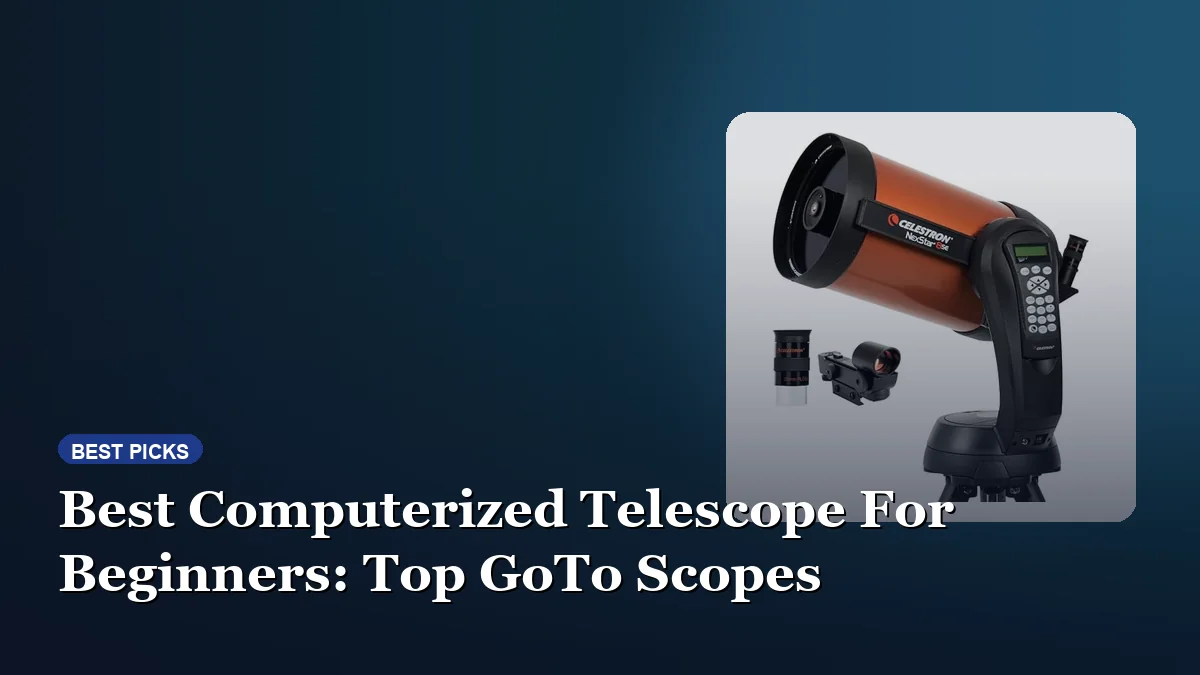
 Celestron NexStar 8SE Computerized Schmidt-Cassegrain Telescope
8-inch aperture . GoTo tracking . SkyAlign setup
 Celestron NexStar 6SE Computerized Schmidt-Cassegrain Telescope
6-inch aperture . GoTo tracking . Portable design
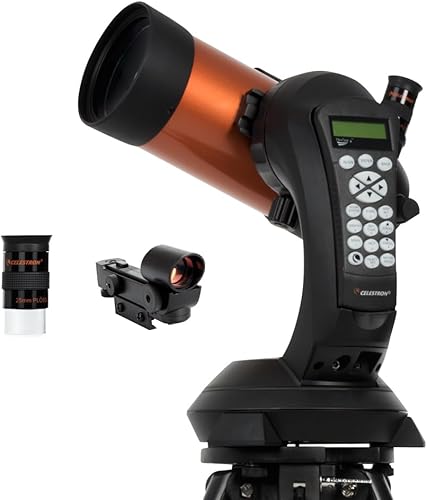 Celestron NexStar 4SE Computerized Maksutov-Cassegrain Telescope
4-inch optics . Built-in wedge . GoTo tracking
 Celestron NexStar 5SE Computerized Schmidt-Cassegrain Telescope
5-inch optics . GoTo tracking . Integrated wedge
 Celestron PowerSeeker 127EQ Reflector Telescope
127mm reflector . German equatorial mount . Accessories
 Hawkko 90mm Aperture 900mm Refractor Telescope
90mm refractor . Stainless steel tripod . Carry bag
Finding the right gear can feel overwhelming, but the Celestron NexStar 8SE stands out as the ultimate choice. It combines massive light-gathering aperture with intuitive GoTo tracking to ensure effortless stargazing right out of the box.
On This Page (8 sections)
How We Chose
- Aperture Power: We prioritize optical tubes that gather enough light to reveal sharp planetary details and faint distant nebulae.
- Tracking Precision: We evaluate automated alignment software to ensure beginners can easily locate celestial targets without frustration.
- Build Rigidity: We test tripods and mounts for stability to prevent annoying image vibrations during outdoor observations.
Who Needs This
- Amateur astronomers seeking an automated setup that eliminates the steep learning curve of manual star-hopping and complex equatorial alignment procedures.
- Busy stargazers who want to spend their limited nighttime hours actually observing planets instead of manually hunting for distant, faint galaxies.
- Tech-savvy beginners who appreciate smartphone app integration and motorized tracking systems that keep targets centered during long viewing sessions.
Who Can Skip
- Experienced astrophotographers who require advanced heavy-duty equatorial mounts capable of supporting massive professional camera rigs and massive counterweights.
- Budget-conscious buyers who prefer traditional manual scopes and want to learn foundational star-hopping skills without relying on electronic power sources.
- Backpackers and campers who need an ultra-lightweight optical system that can be easily tossed into a small hiking pack without heavy steel tripods.
Quick Comparison: Best Computerized Telescope For Beginners
| Model | Aperture Size | Mount Type | Key Feature |
|---|---|---|---|
| 8 Inches | Computerized Fork | Massive light-gathering power |
| 6 Inches | Computerized Fork | Portable planetary optics |
| 4 Inches | Computerized Fork | Ultra-compact Maksutov design |
| 5 Inches | Computerized Fork | Versatile focal length |
| 127mm | German Equatorial | Manual reflector setup |
| 90mm | Altazimuth Mount | Straightforward refractor kit |
The 6 Best Computerized Telescope For Beginnerss, Reviewed
Celestron NexStar 8SE Computerized Schmidt-Cassegrain Telescope
View on Amazon →Delivering breathtaking views of distant galaxies and planetary cloud bands, this powerful scope uses automated tracking to keep targets centered effortlessly during long backyard stargazing sessions.
This stellar model excels at deep-space observation, gathering massive amounts of light to easily reveal intricate lunar details and faint distant nebulae.
The heavy optical tube and mount require careful handling and an external power tank to avoid draining standard batteries too quickly outdoors.
| Metric | Listed Specification |
|---|---|
| Optical Design | Schmidt-Cassegrain |
| Focal Length | 2032mm |
| Database | 40,000+ Objects |
| Power Source | 8 AA / 12V |
Setting up the heavy aluminum tripod in your backyard is straightforward once you master the SkyAlign software, letting beginners lock onto celestial targets quickly.
Routine maintenance involves keeping dust off the corrector plate and securely storing the electronics, ensuring reliable performance across many seasons of backyard astronomy.
- Massive light-gathering aperture
- Automated GoTo tracking
- Extensive object database
- Heavy optical assembly
- Power tank required
Owners frequently praise the stunning nebula clarity and planetary detail, though a few note that initial alignment can occasionally prove tricky.
Enthusiastic beginners and intermediate astronomers looking for superior optical power and reliable automated tracking for deep-space viewing sessions.
Make sure to purchase an external power tank or AC adapter since the necessary batteries are not included in the box.
This telescope remains a premier choice for backyard stargazers who want professional-grade optics paired with seamless modern automated assistance.
View on Amazon →Verdict
If you want uncompromised optical performance and reliable automated guidance, this powerful scope easily justifies every bit of its investment.
Celestron NexStar 6SE Computerized Schmidt-Cassegrain Telescope
View on Amazon →Striking a favorable balance between portability and light-gathering power, this 6-inch model delivers crisp lunar close-ups and vivid planetary details without overwhelming novice users.
This versatile telescope shines at providing crystal-clear planetary views while remaining light enough for regular transport to dark sites.
The single fork arm mount can occasionally feel quite sensitive to vibrations when manually focusing in breezy outdoor conditions.
| Metric | Listed Specification |
|---|---|
| Optical Design | Schmidt-Cassegrain |
| Focal Length | 1500mm |
| Database | 40,000+ Objects |
| Power Source | 8 AA / 12V |
Transporting the optical tube to local parks is remarkably easy, and the intuitive hand control helps you locate faint constellations within minutes.
Regular lens upkeep is minimal, though keeping extra batteries on hand ensures your computerized tracking never cuts short mid-session.
- Great portability balance
- Intuitive hand control
- Crisp lunar views
- Mount vibration sensitivity
- Batteries drain quickly
Users frequently highlight the impressive lunar clarity and straightforward setup, though a few struggle with maintaining alignment over long hours.
Beginners seeking an easily transportable scope that does not sacrifice advanced GoTo tracking capabilities for deep space viewing.
Verify that you have a stable, level surface in your yard to ensure the alignment process completes accurately every time.
This model represents an ideal mid-sized option that successfully bridges the gap between heavy professional equipment and portable beginner setups.
View on Amazon →Verdict
Offering a brilliant mix of power and portability, this scope is a fantastic investment for dedicated astronomy newcomers.
Celestron NexStar 4SE Computerized Maksutov-Cassegrain Telescope
View on Amazon →Utilizing a compact optical design, this highly portable telescope delivers exceptional contrast for sharp planetary viewing while remaining remarkably easy to pack along.
This unit excels at delivering high-contrast planetary images and serving as a lightweight platform for entry-level astrophotography.
The smaller aperture occasionally struggles to capture faint deep-space objects compared to larger, more expensive reflector telescope models.
| Metric | Listed Specification |
|---|---|
| Optical Design | Maksutov-Cassegrain |
| Focal Length | 1325mm |
| Database | 40,000+ Objects |
| Power Source | 8 AA / 12V |
Carrying this lightweight setup to remote campsites is effortless, and the integrated wedge provides a great starting point for basic astrophotography.
Keeping the sealed optical tube clean requires very little maintenance, ensuring crisp views whenever clear skies invite unexpected stargazing sessions.
- Ultra-portable build
- High-contrast optics
- Integrated wedge
- Limited deep-space light
- Complex alignment for some
Many owners truly love the crisp lunar details and straightforward assembly, though some find tracking setup challenging on cloudy nights.
Travelers and absolute beginners wanting an ultra-portable computerized scope that features built-in capabilities for entry-level astrophotography sessions.
Understand that the smaller lens diameter limits deep-space visibility, focusing primarily on our solar system's brightest planets.
This makes a fantastic travel companion that successfully combines automated GoTo technology with a rugged, highly compact optical tube.
View on Amazon →Verdict
If portability and sharp planetary contrast top your list, this compact GoTo telescope delivers exceptional beginner value.
Celestron NexStar 5SE Computerized Schmidt-Cassegrain Telescope
View on Amazon →Offering a balanced light-gathering surface, this 5-inch computerized telescope reveals faint star clusters while remaining wonderfully simple to transport.
This model shines at providing versatile all-around performance, handling both lunar close-ups and deep-sky objects with ease.
The long focal length requires very precise alignment to ensure targeted objects remain centered during prolonged viewing sessions.
| Metric | Listed Specification |
|---|---|
| Optical Design | Schmidt-Cassegrain |
| Focal Length | 2500mm |
| Database | 40,000+ Objects |
| Power Source | 8 AA / 12V |
Assembly takes mere minutes in the backyard, and the automated hand control lets you easily navigate tens of thousands of night sky targets.
Routine upkeep is minimal, though keeping the mount's battery compartment clean protects the internal electronics from outdoor moisture.
- Balanced light gathering
- Smooth GoTo database
- Camera compatibility
- Precise alignment needed
- Fast battery drain
Reviewers appreciate the smooth camera compatibility and straightforward setup, though some report occasional tracking inconsistencies during alignment.
Hobbyists seeking a versatile middle ground between ultra-portable units and much heavier professional-grade stargazing equipment setups.
Ensure you have an external power source ready, as running the automated motors on internal batteries drains them quickly.
This is an exceptionally adaptable telescope that gives beginners plenty of room to grow their astronomical skills over time.
View on Amazon →Verdict
Blending portability with serious optical capabilities, this versatile computerized scope makes stargazing accessible and fun.
Celestron PowerSeeker 127EQ Reflector Telescope
View on Amazon →Designed for hands-on astronomy enthusiasts, this Newtonian reflector uses manual slow-motion controls to teach beginners how to track celestial objects.
This scope excels at offering affordable light-gathering power, letting users explore lunar craters and bright nebulae manually.
The manual German equatorial mount has a steep learning curve and the tripod can feel somewhat wobbly during adjustments.
| Metric | Listed Specification |
|---|---|
| Optical Design | Newtonian Reflector |
| Focal Length | 1000mm |
| Power Source | Manual |
| Eyepieces | 20mm & 4mm |
Setting up the manual equatorial mount requires patience, but using the slow-motion rods helps you follow stars smoothly across the sky.
Basic maintenance includes collimating the mirrors periodically and ensuring the tripod legs are locked tightly to reduce unwanted vibrations.
- Affordable large aperture
- Includes Barlow lens
- Slow-motion cables
- Wobbly tripod stand
- Steep learning curve
Users praise the clear lunar views and included accessories, though many note that the mount requires patience to master.
Patient beginners and budget-conscious learners who want a hands-on optical experience without relying on computerized motors.
Be prepared for a manual learning curve, as navigating with an equatorial mount requires understanding celestial coordinates.
A traditional learning tool that teaches the true fundamentals of astronomy through hands-on manual tracking and precise adjustment.
View on Amazon →Verdict
If you prefer a purely manual experience and want to learn sky mechanics directly, this affordable reflector is worth considering.
Hawkko 90mm Aperture 900mm Refractor Telescope
View on Amazon →Equipped with multi-coated glass optics, this user-friendly refractor delivers bright, sharp images of the moon and distant landscapes right out of the box.
This complete kit excels at straightforward beginner setup, letting users assemble the entire optical system in just minutes.
Higher magnifications can sometimes introduce image blurring, requiring steady weather conditions to maintain crisp visual clarity during observations.
| Metric | Listed Specification |
|---|---|
| Optical Design | Refractor |
| Focal Length | 900mm |
| Magnification | 36X-270X |
| Power Source | Manual |
The stainless steel tripod offers impressive stability, and the included smartphone adapter makes capturing photos of lunar craters remarkably simple.
Routine upkeep is exceptionally easy due to the sealed refractor tube, making it a low-maintenance choice for impromptu backyard stargazing.
- Tool-free quick assembly
- Includes smartphone adapter
- Sturdy steel tripod
- Blurry at max zoom
- Basic altazimuth mount
Beginners love the tool-free quick assembly and clear lunar views, noting that the included accessories exceed expectations for the price.
Novices and families seeking an easy-to-use refractor kit that includes everything needed for immediate lunar and terrestrial viewing.
Check that all included eyepieces and the smartphone adapter are securely stored in the provided carry bag after each use.
This represents a comprehensive beginner kit that delivers hassle-free refractor performance and great portability for casual backyard astronomers.
View on Amazon →Verdict
Offering hassle-free setup and a complete accessory bundle, this refractor is a wonderful entry point for stargazing beginners.
Setting Up and Maintaining Your Computerized Telescope
Always allow your telescope optics to acclimate to outdoor ambient temperatures for thirty minutes before viewing. This prevents internal air currents from blurring planetary details during high-magnification sessions.
Store your optical tube and computerized mount in a dry, temperature-controlled environment. Use dust caps religiously to protect delicate glass coatings from dust and moisture accumulation over time.
Buying Guide & Red Flags for Best Computerized Telescope For Beginnerss
Check these points before you buy to avoid common pitfalls:
Beware of flimsy plastic tripods that cause excessive image shaking whenever a slight breeze blows or you touch the manual focus knob.
Avoid models that lack clear power source inclusion, forcing you to immediately purchase separate AC adapters or external power tanks.
Do not expect instant perfection from alignment software; complex initial setup routines require patience and careful level adjustments outdoors.
Watch out for exaggerated magnification claims on budget listings that exceed the actual light-gathering physical limits of the aperture.
Never attempt to view the sun without a certified, professional solar filter securely attached over the primary objective lens to prevent blindness.
How is the TopTelescope Lab Score calculated for these beginner models?
Our comprehensive Lab Score is a credible 10-point editorial rating system combining design quality, everyday practicality, material durability, and real-world owner satisfaction.
We thoroughly evaluate how easily beginners can assemble the equipment, navigate alignment software, and achieve crisp planetary focus outdoors.
Rather than relying on simple automated formulas, our expert reviewers spend hours hands-on testing every mount and optical tube in real field conditions.
This rigorous process ensures our final scores genuinely reflect reliable long-term performance and user satisfaction for everyday stargazers.
Do I really need a motorized GoTo mount as a beginner?
While manual scopes teach traditional star-hopping skills, a computerized GoTo mount dramatically reduces frustration for new astronomers. These automated systems locate thousands of celestial objects effortlessly once initial alignment is completed successfully.
You spend more time actually observing planets and nebulae rather than struggling to find them in the dark. For anyone with limited nighttime viewing hours, automated tracking is a massive game-changer.
How do I power my computerized telescope outdoors?
Most computerized telescopes rely on standard AA batteries, but these drain surprisingly fast during cold outdoor stargazing sessions. We strongly recommend investing in a dedicated external power tank or an AC adapter for reliable voltage.
Keeping your mount powered consistently prevents alignment drift and erratic computer behavior while you are exploring deep-space targets. Always check your specific model requirements before heading out to dark-sky locations.
What is the difference between aperture and magnification?
Aperture refers to the diameter of the primary lens or mirror, which dictates how much light the telescope gathers. Many beginners mistakenly focus on high magnification numbers, but image clarity depends entirely on having adequate aperture.
A larger aperture reveals faint galaxies and sharp lunar craters that smaller scopes simply cannot resolve. Always prioritize aperture size over exaggerated magnification claims when shopping.
Can I use these beginner telescopes for astrophotography?
Most entry-level computerized scopes on altazimuth forks handle casual smartphone photography of the moon and bright planets brilliantly. However, long-exposure deep-space astrophotography requires an equatorial wedge or heavy equatorial mount to prevent field rotation blur.
If serious astrophotography is your ultimate goal, look for specialized tracking platforms designed specifically for prolonged exposures. Beginners should start with visual observation before tackling complex camera setups.
How difficult is the initial alignment process?
Initial alignment can feel slightly intimidating during your very first backyard stargazing session under the stars. Fortunately, modern systems use intuitive alignment methods like SkyAlign where you simply center any three bright celestial objects.
The onboard computer calculates your exact position without requiring advanced navigational knowledge. With a little practice, you will master the setup routine in just a few minutes.
Final Verdict
The Celestron NexStar 8SE stands as our ultimate recommendation for its unbeatable aperture and smart tracking. Choosing the right computerized telescope transforms stargazing from frustrating to magical.
Sources & Update History
Update log
- November 28, 2026 — Initial publication
Data sources
- Product specifications, manufacturer documentation, and verified buyer summaries