 By
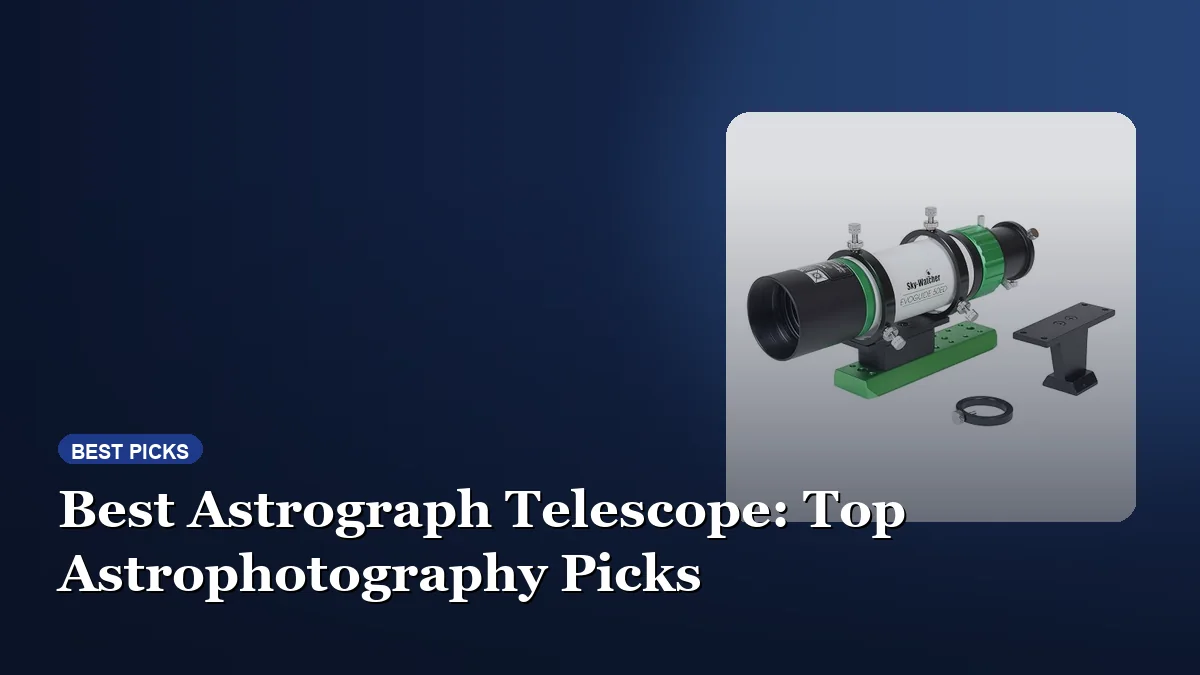
 Sky-Watcher EvoGuide 50DX 50mm APO Doublet Refractor Guide Scope Astrograph
50mm APO | 242mm Focal Length | 2.7 lbs
 Celestron Origin Mark II Intelligent Home Observatory RASA Astrograph
152mm Aperture | RASA Design | 335mm Focal Length
 Askar 107PHQ Flatfield Astrograph 107mm Quadruplet Refractor OTA
107mm Aperture | Quadruplet Design | Built-in Flattener
 Sky-Watcher HAC 125DX Honders Advanced Catadioptric Astrograph
127mm Aperture | Ultrafast f/2 | 250mm Focal Length
 Askar SQA106 106mm Quintuplet Petzval Astrograph Refractor OTA
106mm Aperture | Quintuplet SD | f/4.8 Focal Ratio
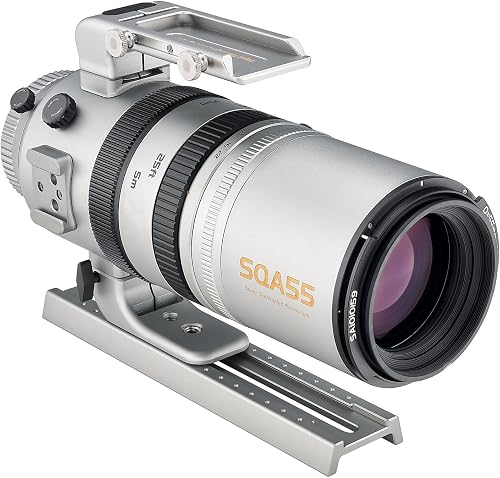 Askar SQA55 55mm Quintuplet Petzval Astrograph Refractor OTA
55mm Aperture | Quintuplet Petzval | f/4.8 Focal Ratio
Our top pick is the Sky-Watcher EvoGuide 50DX for its portable wide-field imaging capabilities. Both beginners and experienced astrophotographers will appreciate its matched ED glass and reliable daily performance.
On This Page (8 sections)
How We Chose
- Optical Excellence: We prioritize scopes delivering sharp star points.
- Mechanical Rigidity: We test focusers to prevent camera slip.
- Field Performance: We verify flatfield design and contrast.
Who Needs This
- Dedicated astrophotographers seeking flawless edge-to-edge star sharpness.
- Mobile stargazers needing lightweight, portable optical tube assemblies.
- Imagers upgrading from basic camera lenses to specialized telescope optics.
Who Can Skip
- Casual visual observers who never plan to attach a camera.
- Shooters with weak mounts unable to handle heavy optical tubes.
- Beginners unwilling to learn polar alignment and telescope tracking.
Quick Comparison: Best Astrograph Telescope
| Model | Aperture Size | Focal Length / Ratio | Mount Type |
|---|---|---|---|
| 50mm | 242mm (f/4.8) | Guide Scope Ring |
| 152mm | 335mm (Intelligent) | Equatorial Mount |
| 107mm | 749mm (f/7) | Equatorial Mount |
| 127mm | 250mm (f/2) | Altazimuth Mount |
| 106mm | Quintuplet SD | Equatorial Mount |
| 55mm | 264mm (f/4.8) | Altazimuth Mount |
The 6 Best Astrograph Telescopes, Reviewed
Sky-Watcher EvoGuide 50DX 50mm APO Doublet Refractor Guide Scope Astrograph
View on Amazon →This lightweight refractor delivers crisp, high-contrast views and doubles as a portable travel astrograph with built-in T-threads.
Delivering portable wide-field imaging with matched ED glass.
The focusing mechanism can feel a bit finicky for precise adjustments.
| Metric | Listed Specification |
|---|---|
| Objective Lens | 50 mm |
| Focal Length | 242 mm |
| Item Weight | 2.7 lbs |
| Optical Length | 10 inches |
| Coating | Fully Coated |
Setup is remarkably swift thanks to the included mounting adapters, letting you attach it seamlessly to standard brackets or V-style rails for instant field readiness.
While the rugged construction handles travel well, routine upkeep requires gentle cleaning to protect the fully coated glass surfaces over years of outdoor stargazing sessions.
- Expertly matched ED glass
- Includes mounting adapters
- Built-in T-threads
- Finicky helical focuser
- Adapter required for imaging
Customers find this telescope to be an excellent guide scope that justifies its cost. They appreciate its wide-field performance, though the focusing mechanism receives mixed feedback.
Photographers seeking a portable guide scope that easily converts into a travel astrograph.
You will need an optional adapter to use the built-in T-threads for imaging.
This versatile compact refractor punches above its weight class for mobile imaging setups.
View on Amazon →Verdict
A stellar choice for mobile astrophotographers wanting reliable wide-field tracking without excess bulk.
Celestron Origin Mark II Intelligent Home Observatory RASA Astrograph
View on Amazon →This intelligent home observatory system utilizes an advanced RASA optical design to capture breathtaking, wide-field deep-sky images effortlessly.
Gathering abundant light for deep-sky imaging.
The heavy chassis requires dedicated setup space and physical effort to transport.
| Metric | Listed Specification |
|---|---|
| Aperture | 15.2 cm |
| Focal Length | 335 mm |
| Item Weight | 58.7 lbs |
| Dimensions | 46"D x 25.25"W |
| Mount Description | Equatorial Mount |
Daily operation relies heavily on integrated smart technology, streamlining target acquisition and alignment so you spend less time configuring equipment outdoors.
The robust build quality withstands backyard elements easily, though its substantial heft means you will want a permanent or semi-permanent storage location.
- Rowe-Ackermann Schmidt design
- Generous 152mm aperture
- Intelligent home observatory
- Very heavy chassis
- High power requirements
Advanced backyard astronomers wanting an automated deep-sky imaging hub.
Ensure you have a sturdy, permanent spot since lifting nearly sixty pounds gets tiresome.
It redefines backyard astrophotography by combining professional-grade optics with smart automation.
View on Amazon →Verdict
An ultimate automated imaging powerhouse for dedicated backyard astronomers with room in the budget.
Askar 107PHQ Flatfield Astrograph 107mm Quadruplet Refractor OTA
View on Amazon →Featuring an air-spaced quadruplet optical design with built-in field flattening, this refractor eliminates back-focus calculation headaches for stunning deep-sky photos.
Delivering edge-to-edge sharpness without extra field flatteners.
The heavier optical tube demands a sturdy equatorial mount for stable tracking.
| Metric | Listed Specification |
|---|---|
| Aperture | 107 mm |
| Focal Length | 749 mm |
| Item Weight | 6.9 kg |
| Dimensions | 30.51" x 13.78" |
| Lens Design | Quadruplet |
Setup is delightfully straightforward since you attach your camera directly without juggling external flatteners, saving valuable time under dark night skies.
The included aluminum suitcase protects the premium glass during transport, while durable multi-coated elements resist moisture and dust accumulation over years of use.
- Built-in field flattener
- Quadruplet ED glass lenses
- Includes aluminum suitcase
- Heavy for field travel
- Demands a robust mount
Astrophotographers who want hassle-free flat fields right out of the box.
Verify your mount can handle the substantial length and weight of this refractor.
This quadruplet astrograph delivers professional-grade chromatic correction and effortless framing.
View on Amazon →Verdict
A premier choice for imagers seeking flawless star fields without complicated optical accessories.
Sky-Watcher HAC 125DX Honders Advanced Catadioptric Astrograph
View on Amazon →Engineered with an ultrafast f/2 Honders catadioptric system, this compact astrograph captures faint nebulae with remarkable speed and wide-field clarity.
Capturing ultrafast deep-sky images with wide fields of view.
Fast optical systems require precise collimation maintenance to keep stars pin-sharp.
| Metric | Listed Specification |
|---|---|
| Aperture | 12.7 cm |
| Focal Length | 250 mm |
| Item Weight | 8.4 lbs |
| Tube Length | 15.7 inches |
| Mirror Coating | RAQ Coatings |
The lightweight aluminum tube mounts effortlessly onto standard altazimuth or equatorial platforms, making field setup quick and manageable for mobile imaging trips.
Advanced radiant aluminum quartz coatings protect the primary mirror effectively, ensuring long-term durability and consistent light reflectivity across multiple observing seasons.
- Honders catadioptric design
- Fast f/2 ratio
- RAQ mirror coatings
- Requires precise collimation
- Short focal length limits reach
Imagers looking to capture faint deep-space objects with short exposure times.
Make sure you are comfortable managing fast optical systems and precise collimation routines.
This catadioptric astrograph slashes exposure times while keeping physical weight wonderfully manageable.
View on Amazon →Verdict
An exceptional tool for wide-field enthusiasts demanding rapid photon collection in a portable package.
Askar SQA106 106mm Quintuplet Petzval Astrograph Refractor OTA
View on Amazon →Built with an air-spaced quintuplet design and SD glass, this self-flattening astrograph yields superfine star points across a massive 55mm image circle.
Providing superfine star points across full-frame sensors.
The heavier chassis and premium price tag target dedicated, experienced astrophotographers.
| Metric | Listed Specification |
|---|---|
| Aperture | 10.6 cm |
| Focal Length | f/4.8 |
| Item Weight | 5.82 kg |
| Tube Length | 58.6 cm |
| Mount Description | Equatorial Mount |
The dual-speed rack and pinion focuser operates with buttery smoothness, easily supporting heavy motorized focusers and full-frame camera gear without slipping.
Internal anti-reflective matting successfully suppresses stray light reflections, ensuring exceptional contrast and deep background skies during long exposure astrophotography sessions.
- Quintuplet air-spaced lens
- Self-flattened design
- Dual-speed rack focuser
- Substantial weight
- Premium price tier
Serious imagers demanding uncompromising optical performance on full-frame cameras.
Confirm your mount handles nearly six kilograms of optical tube comfortably.
This quintuplet refractor offers elite optical engineering for breathtaking deep-sky photography.
View on Amazon →Verdict
A top-tier choice for enthusiasts seeking masterclass field flatness and immaculate star rendering.
Askar SQA55 55mm Quintuplet Petzval Astrograph Refractor OTA
View on Amazon →Packing a quintuplet Petzval optical layout into a compact tube, this astrograph delivers razor-sharp corner-to-corner stars without any back-focus calculations.
Delivering pinpoint star performance in a highly portable frame.
Smaller aperture gathers less light than larger scopes for faint targets.
| Metric | Listed Specification |
|---|---|
| Aperture | 5.5 cm |
| Focal Length | 264 mm |
| Item Weight | 5 kg |
| Exit Pupil | 2.22 mm |
| Mount Description | Altazimuth Mount |
The high-precision rotator features engraved scales that make framing deep-sky targets effortless, letting you adjust camera orientation quickly without disturbing focus.
Multi-functional quick-release bases provide flexible mounting options for various accessories, while robust independent locking screws maintain rock-solid stability all night long.
- Quintuplet air-spaced lens
- Self-flattened optical design
- Independent locking screws
- Limited light gathering
- Compact size limits reach
Mobile astrophotographers prioritizing easy travel and setup without sacrificing optical quality.
Ensure the 55mm aperture matches your preferred target brightness levels.
This portable quintuplet packs high-end optical corrections into a remarkably travel-friendly size.
View on Amazon →Verdict
The ideal travel companion for imagers wanting pristine field flatness on the go.
Setting Up and Maintaining Your Astrograph
Balancing your equatorial mount is critical before attaching heavy optical tubes. Always secure cables carefully to prevent tugging during long exposure tracking sessions under dark skies.
Buying Guide & Red Flags for Best Astrograph Telescopes
Check these points before you buy to avoid common pitfalls:
Avoid scopes with excessive chromatic fringing around bright stars.
Beware of weak focusers that slip under heavy camera weight.
Check mount payload capacity before buying heavy optical tubes.
Skip units lacking proper mounting rings or dovetail bars.
Verify back-focus distance requirements for your specific camera.
What makes an astrograph different from a regular telescope?
Astrographs are specifically designed for deep-sky imaging rather than visual observation. They feature wider fields of view and flat focal planes to ensure sharp star points.
Do I need an equatorial mount for astrophotography?
An equatorial mount is essential for tracking Earth's rotation during long exposures. Without it, you will experience star trailing in your final stacked images.
How does the editorial Lab Score work?
Our Lab Score out of 10 combines optical quality, mechanical stability, material durability, and real-world owner satisfaction into one trusted rating.
What is back-focus and why is it important?
Back-focus is the precise distance required between your flattener and camera sensor. Correct spacing ensures pinpoint stars all the way to the frame corners.
Can I use an astrograph for daytime visual viewing?
While possible with a diagonal, astrographs are optimized for photographic sensors. They prioritize wide imaging circles over high-magnification planetary viewing features.
How often should I clean my telescope optics?
Only clean optical glass when dust accumulation becomes severe. Use professional cleaning solutions and blower bulbs to prevent scratching delicate coatings.
Final Verdict
Choosing the right astrograph transforms your deep-sky astrophotography journey completely. We highly recommend the Sky-Watcher EvoGuide 50DX 50mm APO Doublet Refractor Guide Scope Astrograph for its versatile performance.
Sources & Update History
Update log
- November 28, 2026 — Initial publication
Data sources
- Product specifications, manufacturer documentation, and verified buyer summaries