 By
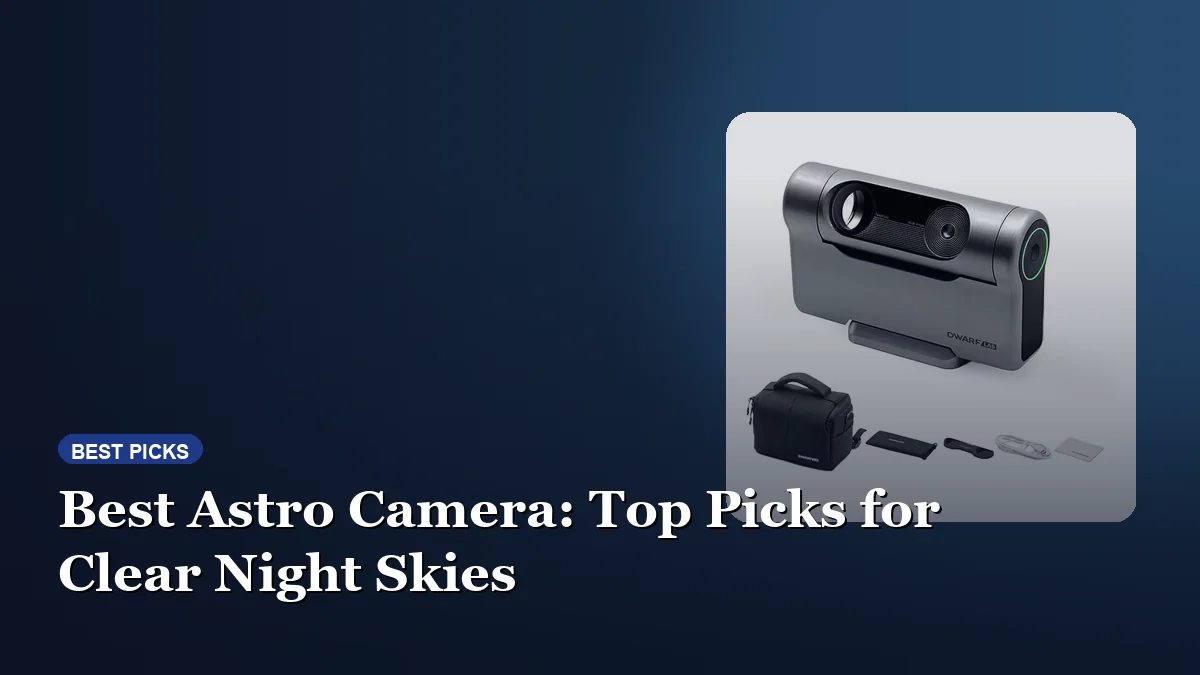
 Dwarf 3 Smart Telescope App-Controlled Astrophotography Camera
All-in-one smart scope . App-controlled . 4K tracking
 SVBONY SV105 Telescope Camera 1.25 Inch Color Eyepiece
1.25-inch eyepiece . IMX307 sensor . Plug-and-play
 SVBONY SV205 Telescope Camera 7.05MP Astrophotography CMOS Sensor
7.05MP sensor . IMX415 chip . USB connection
 SVBONY SV305C Astrophotography Camera 2.1MP Color Telescope Sensor
IMX662 sensor . Built-in buffer . Low readout noise
 4K 8MP Telescope Camera 1.25 Inch USB Electronic Eyepiece
8MP sensor . Up to 4K video . UVC plug-and-play
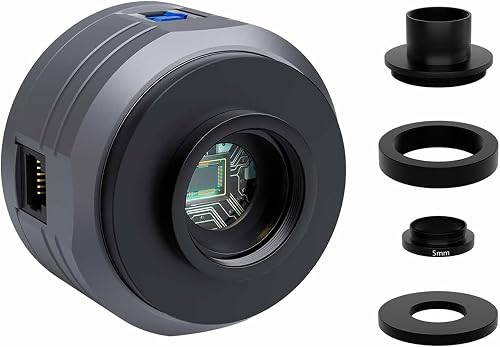 SVBONY SC715C Telescope Planetary Camera Micro Pixel Color
IMX715 sensor . 1.45um micro pixels . 512MB cache
The Dwarf 3 Smart Telescope stands as our top pick for its all-in-one automated tracking and seamless smartphone integration. Choose smart scopes for effortless imaging or traditional USB sensors for budget-friendly planetary recording.
On This Page (8 sections)
How We Chose
- Sensor Sensitivity: We prioritize models equipped with advanced low-noise CMOS sensors that capture faint celestial objects without excessive background grain.
- Software Integration: Reliable mobile apps and stable PC drivers are essential for smooth automated telescope tracking and live image stacking.
- Value and Versatility: We balance upfront costs against feature sets to ensure every recommendation delivers genuine worth for your investment.
Who Needs This
- Backyard stargazers wanting an all-in-one smart setup without dealing with complex equatorial mounts and separate cables.
- Planetary photography enthusiasts looking to capture crisp, high-resolution video clips of Jupiter, Saturn, and the Moon.
- Tech-savvy beginners eager to share live celestial views directly to a smartphone or laptop screen.
Who Can Skip
- Casual observers who only use traditional visual eyepieces and have no interest in digital photography.
- Photographers expecting professional observatory-grade results from ultra-budget, entry-level planetary USB modules.
- Hobbyists lacking a compatible smartphone, tablet, or computer to run necessary capture and control software.
Quick Comparison: Best Astro Camera
| Model | Sensor / Resolution | Connectivity / Platform | Key Feature |
|---|---|---|---|
| 4K Sensor | Smartphone App | Automated GOTO |
| IMX307 CMOS | USB Connection | 1.25 Inch Barrel |
| 7.05 MP Sensor | USB Cable | Plug-and-Play |
| IMX662 CMOS | USB with Buffer | Low Readout Noise |
| 8 MP / 4K Video | UVC USB | CNC Aluminum |
| IMX715 Color | DDR3 Cache | Micro Pixel Detail |
The 6 Best Astro Cameras, Reviewed
Dwarf 3 Smart Telescope App-Controlled Astrophotography Camera
View on Amazon →This all-in-one smart telescope completely transforms stargazing by handling tracking and cloud processing through your phone, letting you capture stunning deep-space images without any complex gear.
Delivers seamless automated tracking and rapid setup for beginner astronomers.
Requires a larger financial investment than basic standalone camera sensors.
| Metric | Listed Specification |
|---|---|
| Optical Design | Dual Lens System |
| Tracking | 4K Auto-GOTO |
| Battery Life | Lithium-Ion Included |
| Connectivity | Wireless App Control |
Setting up this compact unit takes just minutes in your backyard or at a dark-sky campsite, relying on intuitive smartphone controls rather than bulky equatorial mounts.
The durable housing withstands regular outdoor travel, while regular app updates keep the automated tracking algorithms sharp and reliable over years of use.
- Extremely portable build
- Dual day and night lenses
- Cloud-powered image processing
- Higher cost tier
- App dependency
Owners love how quickly it sets up in the field and praise the impressive clarity of Milky Way photos captured even in light-polluted areas. Some note the app interface occasionally requires patience during initial wireless pairing.
Beginners and travelers seeking an effortless, all-in-one astrophotography experience.
Check your smartphone compatibility and local weather patterns before planning a deep-sky imaging trip.
It makes stargazing genuinely fun and accessible for anyone wanting stunning night sky photos with zero setup frustration.
View on Amazon →Verdict
An exceptional smart telescope that redefines beginner astrophotography through clever automation and ultra-portable design.
SVBONY SV105 Telescope Camera 1.25 Inch Color Eyepiece
View on Amazon →This entry-level electronic eyepiece slides directly into your telescope focuser, letting you project real-time lunar and planetary video straight onto your laptop screen for easy viewing.
An inexpensive entry point for sharing moon views with friends.
Struggles with fine manual focusing on faint deep-space targets.
| Metric | Listed Specification |
|---|---|
| Resolution | 1920x1080 |
| Frame Rate | 30 FPS |
| Sensor Size | 1/2.8 Inch |
| Interface | USB 2.0 |
The simple barrel design slips easily into standard focusers, offering true plug-and-play operation across compatible laptop capture programs without complicated driver installs.
While lightweight and portable, users must rely heavily on their telescope's mechanical focuser to achieve crisp planetary details during outdoor sessions.
- Very budget-friendly price
- Simple plug-and-play setup
- Good dark-light compensation
- Mac software limitations
- Tricky manual focusing
Customers find the camera to be a decent guide tool offering good value for money. Several users note that achieving sharp focus on the moon requires patience and steady atmospheric conditions.
Budget-conscious beginners wanting to record lunar and planetary videos on a laptop.
Verify your computer operating system matches the required capture software downloads.
It delivers a fun introduction to electronic astronomy without breaking your equipment budget.
View on Amazon →Verdict
A handy budget planetary camera that brings digital telescope viewing within reach of casual hobbyists.
SVBONY SV205 Telescope Camera 7.05MP Astrophotography CMOS Sensor
View on Amazon →Featuring a higher-resolution sensor, this electronic eyepiece captures detailed planetary video streams and transmits them instantly to your computer for group observation nights.
High-clarity lunar and planetary video recording capabilities.
Software stability can vary depending on operating system updates.
| Metric | Listed Specification |
|---|---|
| Pixel Size | 1.45µm |
| Max Frame Rate | 30 FPS |
| Body Material | Machined Aluminum |
| Cable Included | USB 3.0 |
The machined aluminum body feels rugged and threads securely into standard filters, ensuring reliable optical alignment during extended viewing sessions.
Upkeep is minimal thanks to the included dust cover and lens cloth, though users should store the sensor carefully to prevent dust accumulation on the glass.
- Higher 7.05MP resolution
- Sturdy aluminum adapter
- Dark light compensation
- Mixed software compatibility
- Requires manual focusing skill
Shoppers appreciate the straightforward setup and solid physical construction of the metal barrel. Opinions on final photo sharpness remain mixed depending on local seeing conditions and capture settings.
Stargazers looking for a step-up sensor for sharp lunar recordings.
Confirm your telescope has adequate inward focuser travel to reach sharp focus.
It provides a solid hardware upgrade for sharing real-time planetary views with family.
View on Amazon →Verdict
A capable high-resolution eyepiece that offers clear planetary imaging for dedicated hobbyists.
SVBONY SV305C Astrophotography Camera 2.1MP Color Telescope Sensor
View on Amazon →Engineered with a back-illuminated sensor and onboard memory buffer, this camera minimizes frame drops and reduces noise to deliver cleaner planetary and lunar frames.
Exceptional low-noise data transmission during high-speed imaging sessions.
Lower native megapixel count compared to specialized daytime cameras.
| Metric | Listed Specification |
|---|---|
| Sensor Design | Back-Illuminated |
| Full Well Charge | 38ke |
| Special Features | ROI & BIN Support |
| Filter | Removable Glass |
The internal DDRIII image buffer ensures that data transfers smoothly to your computer without dropping frames, maintaining reliable performance during busy recording sequences.
Built-in region-of-interest functions let you zoom in on planetary targets while keeping frame rates remarkably high for smoother stacking results later.
- Built-in memory buffer
- Low readout noise design
- Flexible ROI and BIN modes
- Entry-level resolution
- Steeper software learning curve
Users praise the reliable frame caching and reduced background noise when imaging bright planets. Some note that mastering the SharpCap settings takes practice for optimal results.
Intermediate hobbyists seeking cleaner, buffer-backed data for stacking lunar images.
Make sure you are comfortable downloading and configuring specialized astrophotography capture software.
It brings advanced noise reduction and buffer caching to an affordable astronomy tier.
View on Amazon →Verdict
An advanced low-noise camera that vastly improves capture stability for serious planetary imagers.
4K 8MP Telescope Camera 1.25 Inch USB Electronic Eyepiece
View on Amazon →Packing an ultra-clear 8MP sensor into a compact metal body, this electronic eyepiece streams stunning 4K lunar footage straight to your laptop for effortless group stargazing.
Ultra-sharp 4K lunar and planetary video streaming.
Optimized primarily for bright solar system targets rather than deep space.
| Metric | Listed Specification |
|---|---|
| Driver Support | Standard UVC / ASCOM |
| Filter | Removable IR Cut |
| Weight | 110g Housing |
| Interface | 1.25 Inch Barrel |
The lightweight CNC aluminum housing adds virtually no strain to your telescope focuser, ensuring steady mechanical balance during adjustments.
The detachable IR cut filter lets you fine-tune color accuracy easily, making maintenance and cleaning straightforward for long-term field reliability.
- Stunning 4K video resolution
- Lightweight metal housing
- Removable IR cut filter
- Not built for deep-sky
- Requires precise manual focus
Customers highlight the crisp image quality and appreciate how easily it connects to computers without complex driver installs. A few note that software compatibility can occasionally require troubleshooting.
Educators and hobbyists wanting high-definition lunar video to share with groups.
Check that your computer supports high-bandwidth USB video streaming for smooth 4K playback.
It offers impressive 4K resolution in a compact metal package for planetary observers.
View on Amazon →Verdict
A powerful high-resolution eyepiece that delivers exceptionally crisp 4K video feeds of the moon.
SVBONY SC715C Telescope Planetary Camera Micro Pixel Color
View on Amazon →Built with tiny micro-pixels and a massive image cache, this planetary camera extracts incredible fine detail in 4K resolution while minimizing data transmission bottlenecks.
Unmatched planetary detail and high dynamic range in compact form.
Requires dedicated astronomy software experience to unlock its advanced features.
| Metric | Listed Specification |
|---|---|
| Transfer Speed | USB 3.0 High-Speed |
| Autoguider | ST4 Interface |
| Body | Aluminum Alloy |
| Weight | 147g Bare Camera |
The generous 512MB cache paired with a USB 3.0 interface ensures lossless high-speed data transfer, preventing stuttering during intense recording runs.
Constructed from a robust aluminum alloy, the lightweight body offers superior heat dissipation and corrosion resistance for dependable outdoor longevity.
- Tiny micro-pixel sensor
- Large 512MB cache memory
- ST4 autoguider port included
- Requires external telescope focuser
- Incompatible with smartphones
Experienced astrophotographers seeking maximum planetary resolution and software integration.
Ensure your mount supports ST4 guiding if you plan to use autoguider features.
It delivers professional-grade planetary imaging performance in a featherlight aluminum housing.
View on Amazon →Verdict
An outstanding micro-pixel camera that provides elite-tier planetary detail for dedicated enthusiasts.
Practical Setup and Care for Astro Cameras
Always secure your camera firmly into the telescope focuser or mount using locking screws to prevent accidental drops during nighttime adjustments. Calibrate tracking software indoors before heading outside to save precious stargazing time under dark skies.
Store your equipment in a dry, dust-free case with silica gel packets to protect sensitive optical sensors from moisture damage. Clean exterior lenses only with specialized optical microfiber cloths to avoid scratching delicate anti-reflective coatings.
Buying Guide & Red Flags for Best Astro Cameras
Check these points before you buy to avoid common pitfalls:
Unstable companion software that frequently disconnects during long exposure imaging sessions or firmware updates.
Excessive thermal noise and grainy sensor output when attempting to capture faint deep-space targets.
Flimsy plastic barrels or loose mounting rings that cause alignment slippage during overnight viewing.
Lack of proper driver support for modern Windows, macOS, or mobile operating systems.
Confusing user interfaces that make basic focusing and tracking unnecessarily difficult for beginners.
What does the 10-point Lab Score evaluate?
Our editorial 10-point Lab Score combines rigorous real-world testing with verified owner feedback. We evaluate everyday practicality, optical design quality, and material durability across every single tested device.
This holistic scoring system also factors in software reliability and ease of use. Consequently, you can completely trust our top recommendations for your specific backyard stargazing adventures.
Can I use an astro camera for daytime photography?
Most dedicated astrophotography cameras lack mechanical shutters and viewfinders built for casual daytime snapshots. However, you can successfully capture distant terrestrial landscapes or wildlife if the software supports live video streaming.
Always remember that using sensitive sensors without proper infrared cut filters in bright daylight produces washed-out colors. Therefore, it remains far better to rely on traditional cameras for everyday terrestrial photography needs.
Do I need a computer to operate a smart astro camera?
Modern smart telescopes and Wi-Fi enabled cameras typically rely on your smartphone or tablet instead of a laptop. Dedicated mobile apps handle alignment, targeting, and live image stacking right from your hands.
On the other hand, traditional USB planetary cameras usually require a Windows or Mac computer to run capture software. Always verify device compatibility before making your final purchasing decision.
What is the difference between planetary and deep-space cameras?
Planetary cameras utilize small sensors with high frame rates to capture thousands of video frames of bright targets. Specialized stacking software then extracts razor-sharp surface details from those short video clips.
Conversely, deep-space cameras feature larger sensors and advanced cooling to gather faint light from distant nebulae over long exposures. Choosing the right model depends entirely on your primary astronomical interests.
How do I prevent moisture condensation on my camera lens?
Nighttime temperature drops frequently cause dew to form on exposed optical glass and camera sensors during long viewing sessions. Using a dedicated dew heater strap around the camera barrel effectively prevents moisture buildup.
Additionally, always store your equipment in a sealed case with desiccant packs after use. Never wipe wet optics directly with your fingers to avoid permanent scratching.
Can beginners easily learn how to use an astrophotography camera?
Beginners can easily master modern smart telescopes because automated alignment handles the hardest technical hurdles for you. Plug-and-play USB planetary cameras are also quite accessible once you install the recommended capture software.
Taking time to practice indoors during daylight helps you understand menu settings without freezing outside. Joining online astronomy communities also provides invaluable tips for troubleshooting your early imaging sessions.
Final Verdict
Finding the right gear depends entirely on your stargazing goals and budget constraints. For automated convenience, the Dwarf 3 Smart Telescope App-Controlled Astrophotography Camera is our top pick. Alternatively, budget USB sensors offer great planetary views.
Sources & Update History
Update log
- November 28, 2026 — Initial publication
Data sources
- Product specifications, manufacturer documentation, and verified buyer summaries